Facebook
 Google
 GitHub
 Linkedin
Solving Grid Congestion: How GETs Maximize Renewable Integration
Grid-enhancing technologies can increase grid capacity for renewable energy sources and reduce curtailment.
Renewable energy technologies are being integrated into the grid at higher rates than ever to decarbonize the grid. In 2023, 507 GW of renewable energy electricity capacity was added to the global grid―a 50% increase from 2022―and this growth is expected to continue. The global renewable energy capacity could reach between 7,300 and 8,130 GW by 2028, and intermittent technologies (solar and wind) are expected to make up 96% of this extra capacity.
What are the benefits of dynamic line ratings? Video used courtesy of PPL Electric
While renewables are helping to decarbonize the grid, their intermittent nature is also causing congestion issues, especially as many renewable energy plants are located far away from consumers, leading to more transmission facilities and transmission capacity in the grid. Grid-enhancing technologies (GETs) are one solution for unlocking more transmission capacity from existing grid assets. GETs prevent the need to build new infrastructure, which is crucial when renewables are rapidly deployed. Real-world examples of GETs are already working effectively in the U.S. power grid.
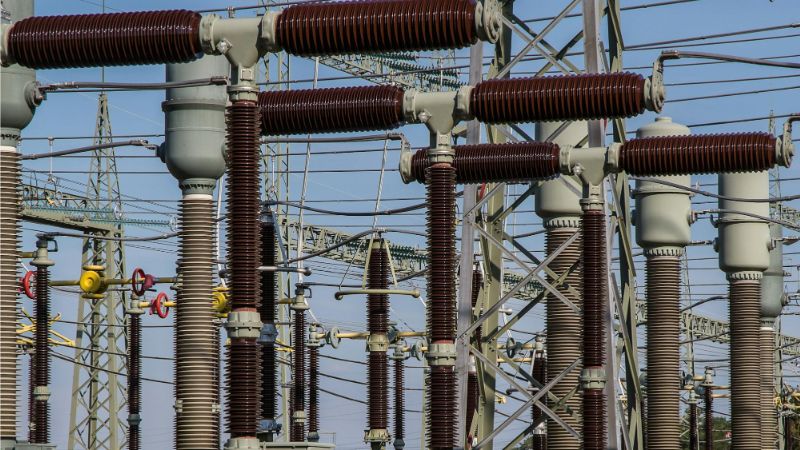
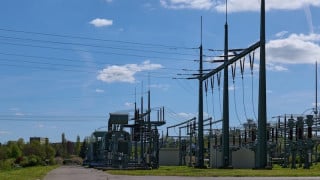
Transmission station. Image used courtesy of Pixabay
Grid Congestion
The increasing number of intermittent renewables makes the energy supply more variable and difficult to control. This variability can cause power peaks and high loads, particularly in areas with a high concentration of renewables in the local grid. Too much power can cause transmission lines to overheat, creating physical limits in the transmission line materials and leading to congestion. Since many transmission lines are old, they are not designed to withstand these energy levels, so congestion is becoming more commonplace.
Grid congestion is a worldwide issue. In 2018, around 6,500 GWh of solar energy was curtailed in the U.S., Germany, Chile, and China. Congestion costs in the U.S. also doubled between 2020 and 2021 and grew again by another 56% from 2021 to 2022, leading to higher electricity prices. It was estimated that congestion costs in 2022 amounted to $20.8 billion in the U.S., while congestion cost European power grids €4.2 billion in 2023.
What Are Grid-Enhancing Technologies?
GETs are being used to remove transmission congestion and maximize transmission capacity in the grid. They are hardware and software upgrades deployed into the grid that enable transmission assets to be more flexible and respond to changing grid conditions. This is vital for grids with intermittent energy sources, as the transmission loads can change quickly and often. GETs also improve transmission capacity and reliability in the grid and can be rapidly deployed to improve grid transmission. In comparison, upgrades to the new grid infrastructure are costly and time-consuming.
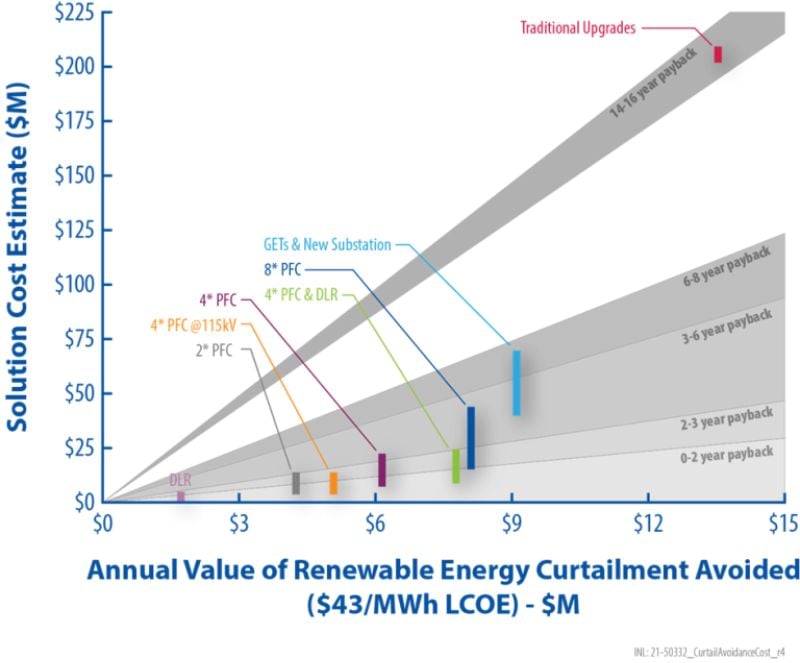
GETs solutions cost less and are more effective in reducing curtailment. Image used courtesy of Idaho National Laboratory
Common GETs include:
- Dynamic line ratings (DLR)
- Dynamic transformer ratings
- Power flow controls
- Topology optimization
- Advanced conductor technologies
- Energy storage systems
- Demand response technologies
GETs can be integrated as either a single solution or together. Compared to a single approach, using multiple GETs can increase grid stability and capacity improvements, as they can simultaneously remove several bottlenecks. The effectiveness of GETs has already been shown in projects around the world. Successful pilots in North America, Asia, and Europe have alleviated grid congestion, provided better renewables interconnection, increased grid flexibility, and reduced curtailment.
DLR Use in the US: A Case Study
One example of GET deployment in the U.S. is a joint project that started in October 2022 between PPL Electric and Ampacimon to integrate DLRs into the grid. DLR monitors the transmission lines by clamping on sensors (powered by the electricity running through the line) to provide real-time data on the electrical capacity of the line.
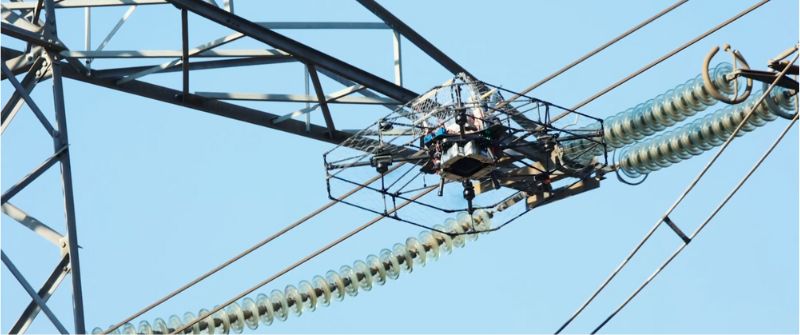
A drone attaches a DLR sensor to a transmission line. Image used courtesy of Ampacimon
The DLR sensors also detect anomalies that might indicate imminent faults and failures, allowing a predictive and preemptive approach to maintenance. The DLRs have enabled PPL Electric to make data-driven decisions to monitor the health of different transmission assets, make real-time adjustments to the amount of electricity flowing through the transmission lines, and reduce congestion.
The initial project was performed on three historically congested 230 kV transmission lines and has since expanded, with several more lines being added each year. Some of the key benefits to date that have been realized through GET integration include:
- The ability to forecast energy requirements to create baseline energy use metrics for analyzing and predicting future usage
- A reduction in transmission congestion costs on a single line by $65 million compared to the previous winter
- 16% more capacity than the previously used static line ratings
- Delayed the need for building new infrastructure, saving approximately $50 million
Georgia Tech and Smart Wires DOE Project
Georgia Tech received around $2.1 million in funding from the Department of Energy in 2023 to optimize the Georgia and Alabama electric grids with advanced power flow control (APFC) technology from Smart Wires. The utility company, Southern Company, will implement the project. The APFC uses DLR software to identify areas with extra power capacity and move the energy from congested to underutilized lines. The APFC technology has been successfully used before, but the latest project with Georgia Tech (concluding in 2025) is the first large-scale technology deployment on statewide electric grids.