Facebook
 Google
 GitHub
 Linkedin
Breaking the Backlog: How To Solve Europe’s Wind Delays
Wind farms wait for months for grid connection. What’s causing the delays, and what will it take to streamline the process?
In Europe, wind farm development continues steadily, but hundreds of wind turbines sit idle, waiting for permits and grid connections.
The backlog is growing, delaying some wind projects by years, according to WindEurope. In a detailed report, the Belgium-based wind association identified 500 GW of wind capacity waiting for grid connection in 10 European countries.
Why the delays? WindEurope says insufficient grid capacity and inefficient procedures are holding up wind farms and slowing down renewable energy and net-zero goals.
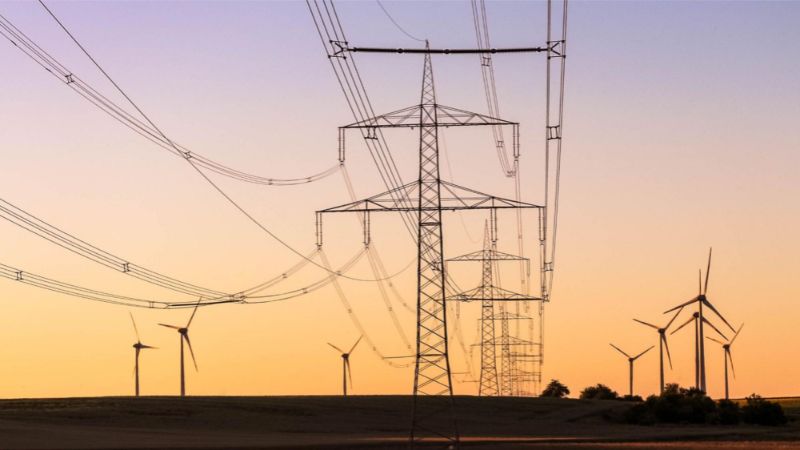
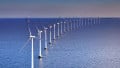
What will speed up wind farm grid connections? Image used courtesy of Adobe Stock
Why Wind Delays Happen
Wind developments face problems common to all infrastructure expansion: rising costs and supply chain problems. In New Jersey, a 2,400 MW offshore wind farm has been delayed because the developers, Invenergy and EnergyR, can’t procure the wind turbines it needs. The setback came just a year after Danish wind company Ørsted withdrew its plans for another New Jersey wind development, citing financial concerns and supply chain woes.
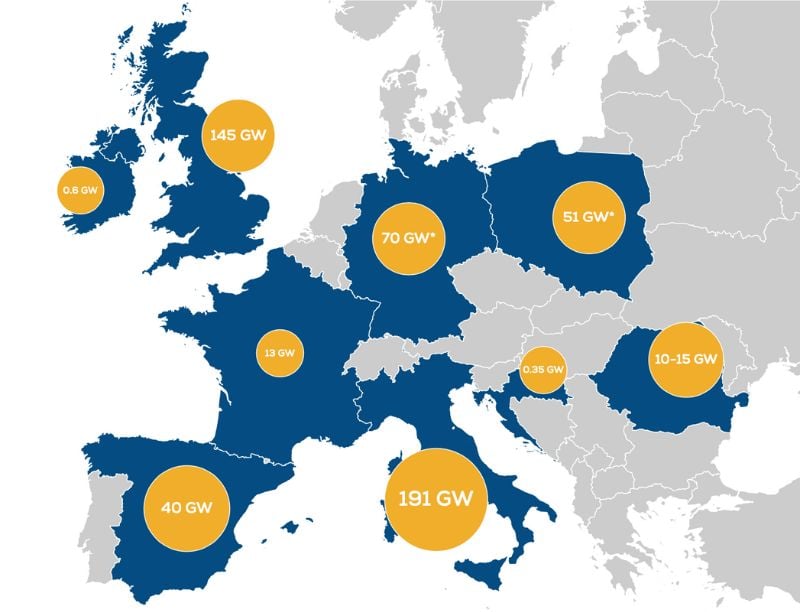
Potential wind energy waiting for grid connection. Image used courtesy of WindEurope
Yet, wind developers frequently face two other major challenges when ready for grid connection: inadequate infrastructure and a bureaucratic bottleneck.
In many areas, grid infrastructure is outdated, overburdened, or unable to handle renewable energy needs. Additional transmission lines, high-voltage substations, or other asset upgrades may be needed. Lack of consistent digitalization also poses connection problems.
Even if connection is possible, grid owners may limit how much wind-generated electricity they will accept due to existing congestion. Some wind farms and other renewables lack energy storage systems for excess energy. The outdated grid has difficulty handling intermittent and often unpredictable renewable energy production.
Obtaining the necessary permits can take months or more than a year. According to WindEurope, the grid connection process lacks transparency and doesn’t consider renewable energy needs. Wind and other renewable developments must compete with traditional sources. The approval process is often “first-come, first served,” regardless of the project’s readiness to connect. Further, the rules vary widely, depending on national and regional laws.
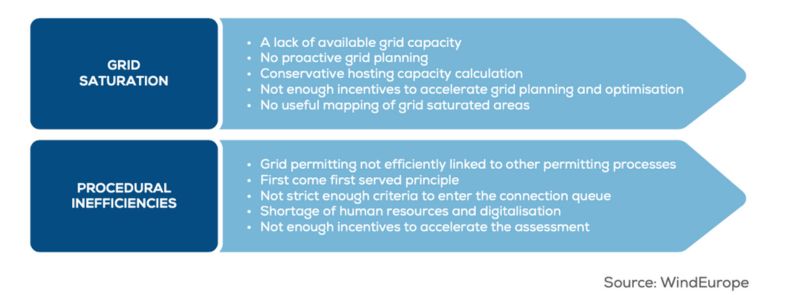
Grid delay reasons. Image used courtesy of WindEurope. Image used courtesy of WindEurope
In the U.S., the backlog for grid connection also affects wind and other renewable sources. Lawrence Berkeley National Laboratory reported that the queue grew by 30% in 2023, with 2,600 GW waiting for grid connection. The reasons for the bottleneck are similar to Europe’s: uncertainty in permitting processes and requirements, lagging energy storage, strict timelines, and high costs.
Solutions to Wind Delays
Grid modernization will take careful planning and additional funding, according to WindEurope. To plan a future with renewable energy, grid owners must consider a hybrid grid that can accommodate both conventional and renewable sources. Co-locating renewable and conventional sources to share a common grid access point can streamline the energy transition.
While energy developers pay fees for grid connection, the total cost and payment timing can be uncertain. Government subsidies or incentives can create another level of bureaucratic backlog. WindEurope recommends better transparency in fees.
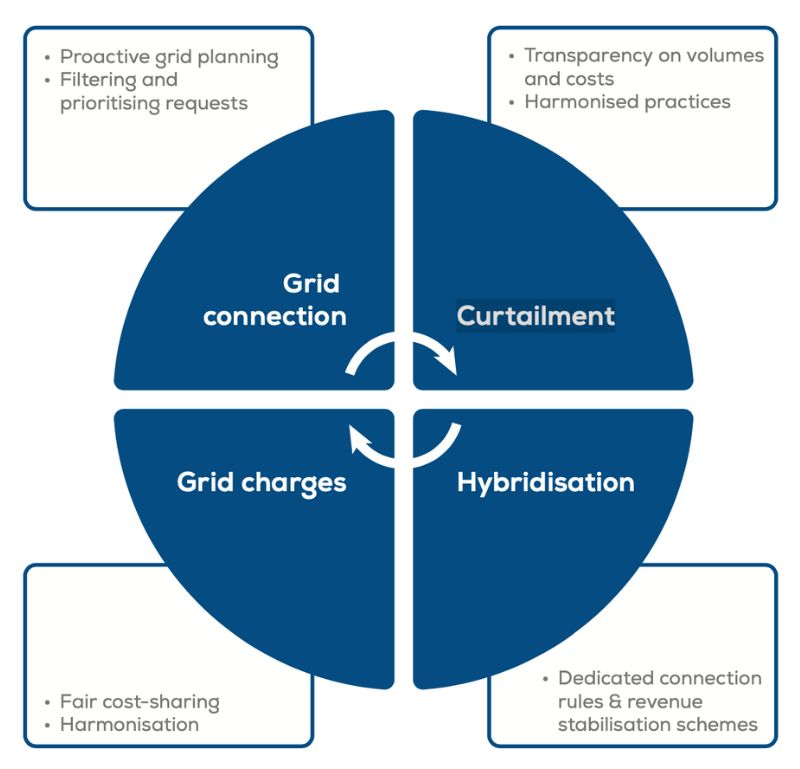
Strategies to improve wind farm grid connection. Image used courtesy of WindEurope
Permitting can also be accelerated by eliminating “first-come, first-served” and clarifying the permit application criteria and procedures. In Europe, it may be possible to harmonize, if not standardize, procedures through EU legislation and regulation enforcement. International and interagency cooperation is also essential.