Facebook
 Google
 GitHub
 Linkedin
How Do Renewables Affect Grid Reliability?
New research challenges the assumption that renewable energy sources weaken the grid.
As renewable energy sources replace fossil fuels, many worry about the intermittent nature of sun, wind, and other natural forces. Weather, seasonal, and daily fluctuations could affect grid functionality and reliability.
However, a study in Nature Energy challenges the assumption that renewable energy sources weaken grid performance. Instead, this study suggests that power grids with more renewables are less vulnerable to blackouts. Outages are less frequent, have shorter durations, and affect fewer users.
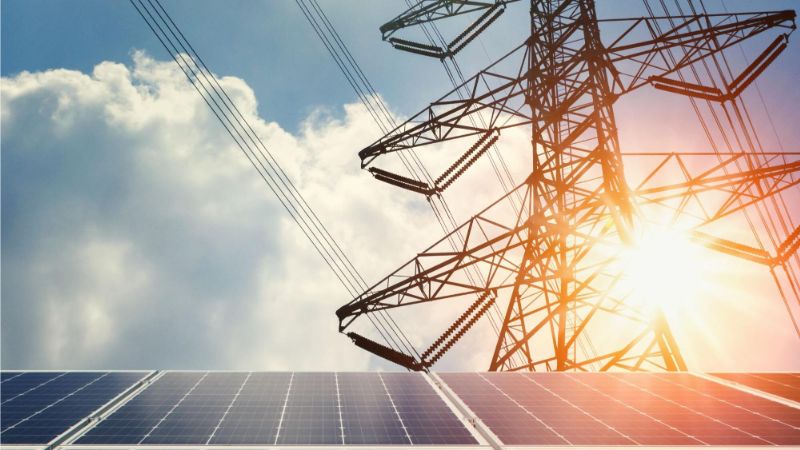
Grid-integrated solar energy. Image used courtesy of Adobe Stock
Renewable Energy and Variability
The assumption that renewables such as wind and solar negatively impact grid stability stems from their variability and unpredictability. Because these energy sources depend on weather conditions, they fluctuate rapidly, making ensuring a consistent power supply challenging. This variability could theoretically cause imbalances in supply and demand, leading to beliefs that renewables increase the likelihood of blackouts during extreme weather events. Additionally, the lack of inertia in renewable-based grids—provided by spinning turbines in conventional power plants—has been cited as a potential vulnerability in maintaining frequency and voltage stability.
Research has highlighted challenges such as the "duck curve," which visualizes how solar energy production peaks during the day but sharply declines in the evening, coinciding with high electricity demand.
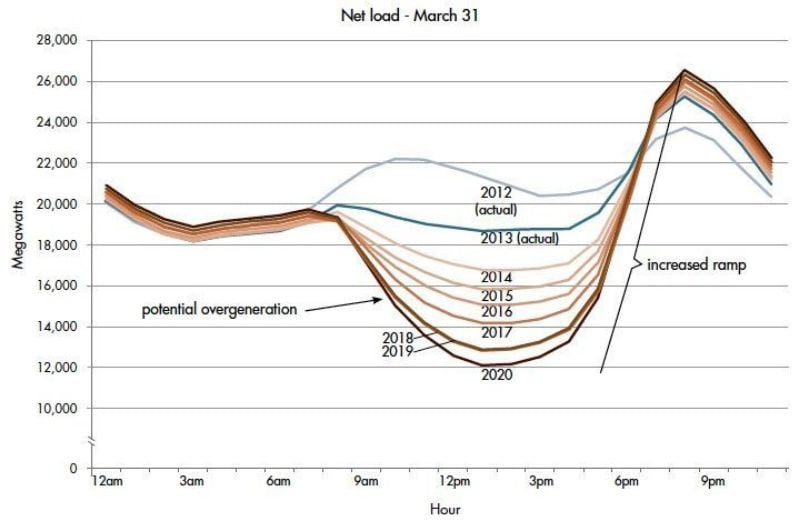
Data plot of the duck curve. Image used courtesy of the Department of Energy
This curve necessitates a rapid ramp-up of alternative sources to fill the gap, adding operational complexity. Grid operators' ability to forecast and balance renewable output effectively has also caused concerns. With an increased dependence on renewable energy sources, issues like reverse power flow, grid congestion, and the need for more flexible and responsive grid operations become apparent.
As renewable energy development has increased and provided more solar and wind power to the grid, strategies like energy storage, real-time grid management, and advanced forecasting are developed to improve grid flexibility and resilience. While these interventions will ultimately serve effective energy management regardless, this study in Nature suggests that fundamental assumptions about the adverse influence of renewable energy sources on grid functionality are incorrect.
A New Perspective on Renewables’ Grid Impact
Researchers at the University of Tennessee in Knoxville used a massive data analysis to understand the impact of renewables on the grid. The study analyzed 2,156 blackout events across the U.S. from 2001 to 2020, correlating them with weather data and renewable penetration levels. The study found that higher renewable energy penetration does not increase blackout vulnerability. In fact, the opposite is true, and the results indicated that grids with greater renewable integration showed lower blackout frequency, reduced outage duration, and fewer affected customers, even during extreme weather.
The analysis revealed that while extreme weather is the dominant factor causing blackouts, the role of renewables during such events is minimal. For example, high-penetration renewable grids displayed a reduced likelihood of severe blackouts compared to their low-renewable counterparts. This resilience is attributed to modernized planning and interconnected systems often associated with renewable energy integration. When researchers used blackout intensity metrics—such as affected areas and demand loss—they found a consistent decline as renewable penetration increased.
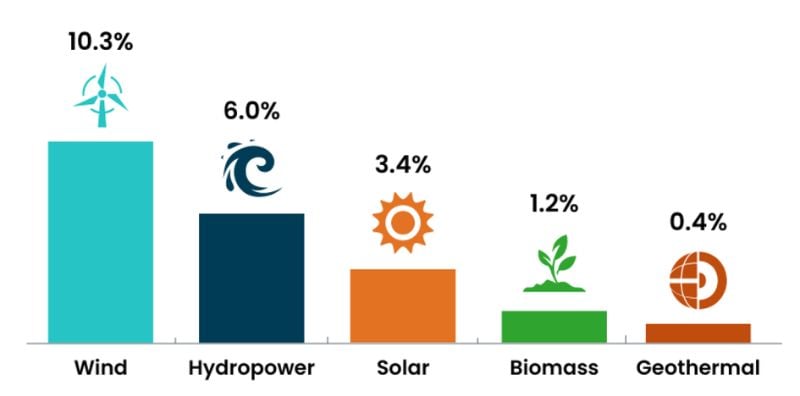
Renewable sources generate about 20% of U.S. energy. Image used courtesy of the Department of Energy
Renewable Grid Impact: More Work Needed
The study emphasizes the need to focus on mitigating the direct impacts of extreme weather and improving grid infrastructure rather than assuming renewables are problematic. When properly managed, the researchers concluded that renewable-rich systems offer stronger performance than traditional grids with fewer renewable sources. The authors state that further studies are needed to confirm these findings across regions and grid structures.
These results undermine the broad misconception that renewables inherently destabilize power systems and show how careful data-based analysis is critical for guiding the transition from fossil fuels to renewable energy sources. Even though extreme weather is a factor in blackouts and utility grid vulnerability, it is not a simple causal factor, and more research needs to be done on the intersection of renewables and utility grid stability.