Facebook
 Google
 GitHub
 Linkedin
Renewable Grid Capacity: Overcoming Transmission Challenges
Renewable energy projects wait months for grid connection, partly due to inadequate transmission lines and other infrastructure. Can UHV and HVDC help?
Renewable energy is useless unless it is transported to locations where people need it. Worldwide, grid connection queues are long, partly due to inadequate transmission lines and other infrastructure.
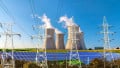
How does HVDC compare to other strategies for increasing grid capacity for renewables? Image used courtesy of National Renewable Energy Laboratory
Multiple efforts are underway to remedy the situation. In Europe, GE Vernova is developing an offshore wind project with a 110-km sea-to-shore system. China is building ultra-high-voltage (UHV) lines. In the U.S., several projects are expanding high-voltage direct current (HVDC) lines. In fact, an Excel Energy official recommended flipping the process by proactively building HVDC infrastructure.
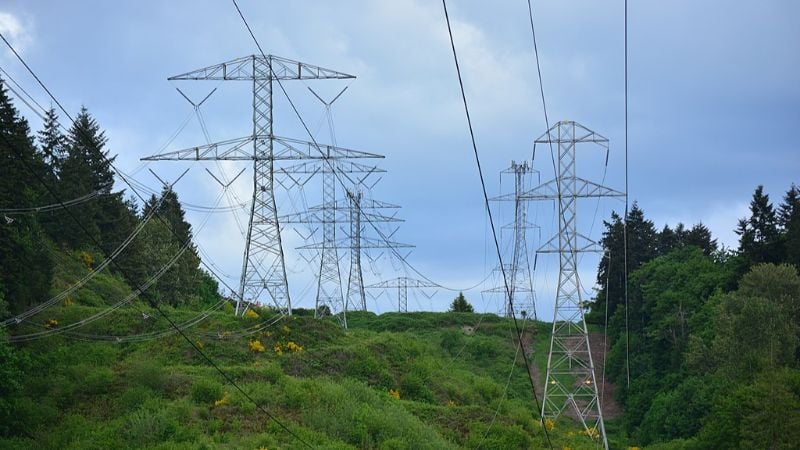
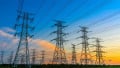
High-voltage transmission lines in Washington state. Image used courtesy of Wikimedia Commons
GE Vernova’s Ostwind 4
GE Vernova will work with Drydocks World to supply HVDC technology and other assets to transport energy from the Ostwind 4 project in the Baltic Sea to power 2 million households in Germany. The bipolar HVDC transmission system operates at 525 kV to minimize losses over long distances. The 2 GW line will span 30 km from the wind farm’s offshore converter to the mainland. An onshore converter station will connect to the German grid.
The advanced HVDC transmits three times the power while reducing losses by half. A voltage-sourced converter controls and stabilizes the power flow, which is a plus for integrating renewable energy into the grid.
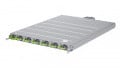
GE Vernova and Drydocks World will provide high-voltage transformers, voltage-sourced converters, air-core reactors, grid-automation equipment, and g3 gas-insulated switchgear.
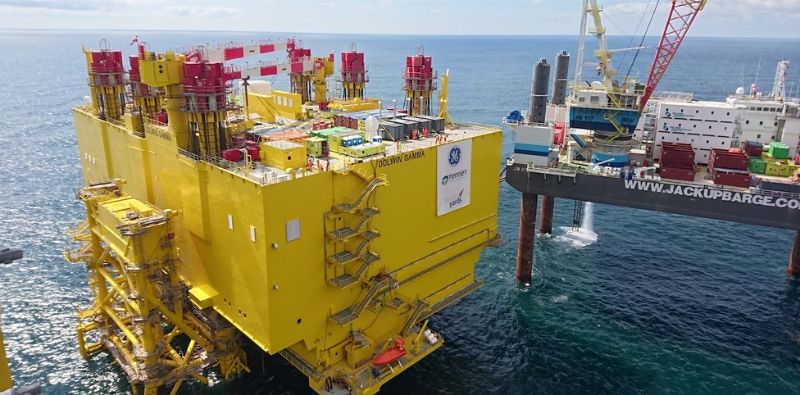
An example of GE Vernova’s HVDC transmission platform for offshore wind. Image used courtesy of GE Vernova
The switchgear is free from sulfur hexafluoride (SF6), which contributes to greenhouse warming. High-voltage transmission and equipment have traditionally used SF6 gas as an insulator, but it is the most potent greenhouse gas. Once released in the atmosphere, it can remain for centuries.
GE Vernova’s switchgear uses g3, a more environmentally friendly alternative. In tests, g3 shows about a 99% greenhouse gas reduction.
GE Vernova’s HVDC Competence Center, the company’s renewable energy center in Berlin, will assist in grid integration and stability.
Drydocks World will design, construct, and install the offshore converter platform. 50Hertiz is developing Ostwind 4, the fourth phase in the German Baltic Sea project.
China Chooses Ultra-High Voltage
More than one-third of China’s 1.4 billion people live in rural and often remote areas far from power-generating facilities. Developers are employing a relatively new technology to transport renewable energy: ultra-high-voltage transmission.
UHV lines carry AC at 1,000 kV or DC at voltages as high as 800 kV. The technology is so fast that the Chinese call UHV “bullet trains” for power.
China has used UHV for AC and DC transmission since about 2009. The latest project is a 750 kV line carrying power across 800 km of desert between two counties in northwestern China. Construction finished in late 2024.
In 2024, China had more than 38 UHV lines, and more are planned for 2025. Other nations, such as Brazil and India, have also installed UHV lines.
HVDC: Flipping the Process?
The alternative to UHV is HVDC, which is gaining traction in Europe. Many projects have been developed over the last two years, including the 1400 km subsea Viking Link.
In the U.S., HVDC still lags, partly due to high costs. Only five lines are in operation, with some dating back to 1970, according to the National Renewable Energy Laboratory. Grid owners choose less expensive methods of accommodating renewable energy, such as dynamic line rating, to optimize capacity. However, that could be changing. In November 2024, the U.S. Department of Energy allocated $11 million to advance HVDC research and technology.
Developing new transmission lines can take years and involve land acquisition, permitting, engineering, and construction. The Lawrence Berkeley National Laboratory estimates grid connection queues will increase by 30% in 2023.
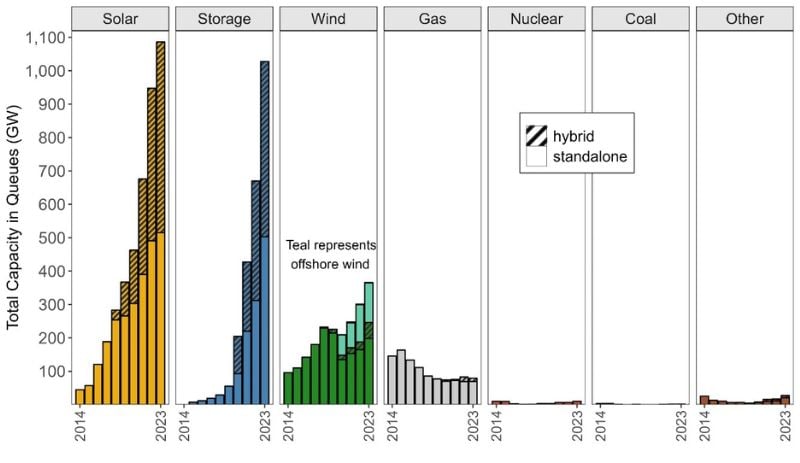
Increase in energy waiting for grid connection. Image used courtesy of Lawrence Berkeley National Laboratory
However, an Xcel Energy executive said the process is backward. Rather than building renewable energy systems and then expanding infrastructure, transmission lines should be constructed first. The transmission infrastructure would then be in place for new renewable energy developments.
Planning for Renewables
Renewable energy projects are projected to double by 2030. While smart grid technologies can increase efficiency and capacity, the need to transport power—sometimes across long distances—will still be needed. UHV and HVDC may be the future of energy transmission.