 Facebook
 Google
 GitHub
 Linkedin
Brief: Reaching for Data Center Power and EV Charging Solutions
Navitas, Nvidia, Power Integrations, Ideal Power, Siemens, FuelCell Energy, and Honda have new power solutions for AI data centers and electric vehicle charging.
The search for AI data center power solutions is bringing together power players in the electronics industry. Navitas Semiconductor and Nvidia have created a 24 kW power delivery board to convert 800 VDC directly to 12 VDC, while Power Integrations and Ideal Power are partnering to develop always-on solid-state circuit breakers for 800 VDC data center architectures. Meanwhile, Siemens and FuelCell Energy are working on scalable fuel cell systems for data centers and industrial plants.
Electric vehicle charging also continues to evolve. Honda is the latest automaker to jump into the race to build a highway-embedded, dynamic charging system for moving vehicles.
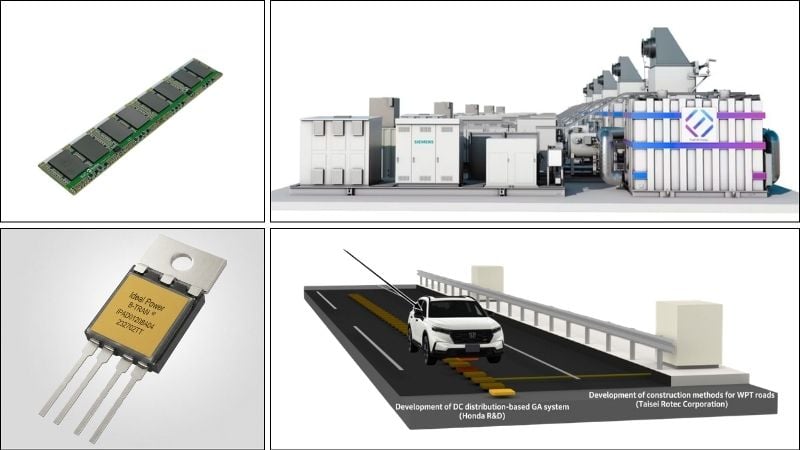
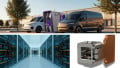
![]() Strategies to meet data center and EV charging power needs
Strategies to meet data center and EV charging power needs
Navitas and Nvidia Partner for 800 V-to-12 V Power Delivery Board
Navitas Semiconductor has partnered with Nvidia to unveil a 24 kW power delivery board that converts 800 VDC directly to 12 VDC for AI data centers. The single-stage direct DC-DC conversion platform eliminates the traditional 50 V intermediate bus stage, raising system efficiency and shrinking board footprint.
The power board fits Nvidia’s 400 mm by 60 mm compute tray specification, allowing the board to sit adjacent to processor chips. Target specifications include 97% full-load power conversion efficiency and a volumetric power density exceeding 2,000 W/in³.
The primary side uses 16 NV6034 GaNFast power transistors rated for 650 V and 18 mω on-resistance. The devices use a stacked half-bridge topology in dual-cooled, 8 mm by 8 mm DFN surface-mount packages.
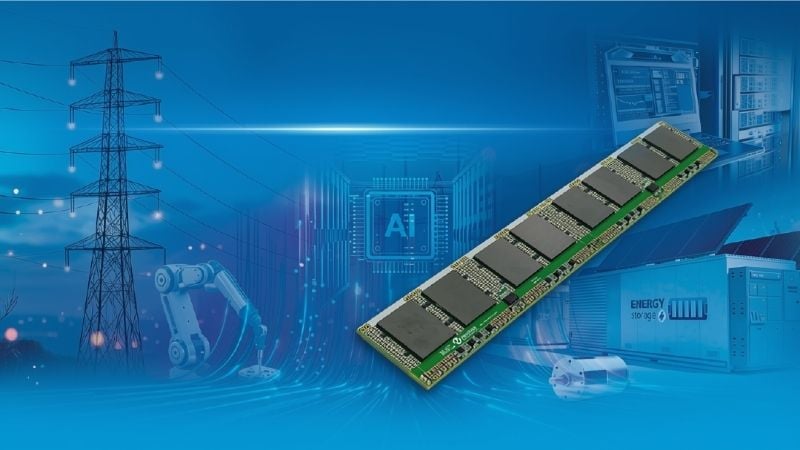
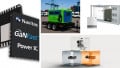
The power delivery board. Image used courtesy of Navitas
Navitas created the platform to support the Nvidia MGX ecosystem for AI data centers, following an earlier 20 kW version designed for 800 V-to-6 V conversion.
Power Integrations Teams Up With Ideal Power for Solid-State Circuit Breakers
Power Integrations and Ideal Power have collaborated to develop high-efficiency, always-on solid-state circuit breakers targeting 800 VDC AI data center power architectures. The joint architecture addresses critical power conversion, control, and system protection challenges while enabling rapid fault isolation for high-voltage server racks.
The solution integrates Power Integrations' InnoMux-2 offline switcher integrated circuit with Ideal Power's B-TRAN bidirectional semiconductor power switch technology. The InnoMux-2 device converts the 800 V input into multiple independently regulated outputs that directly power control electronics, gate drivers, sensing modules, and auxiliary circuitry without requiring a secondary external auxiliary supply.
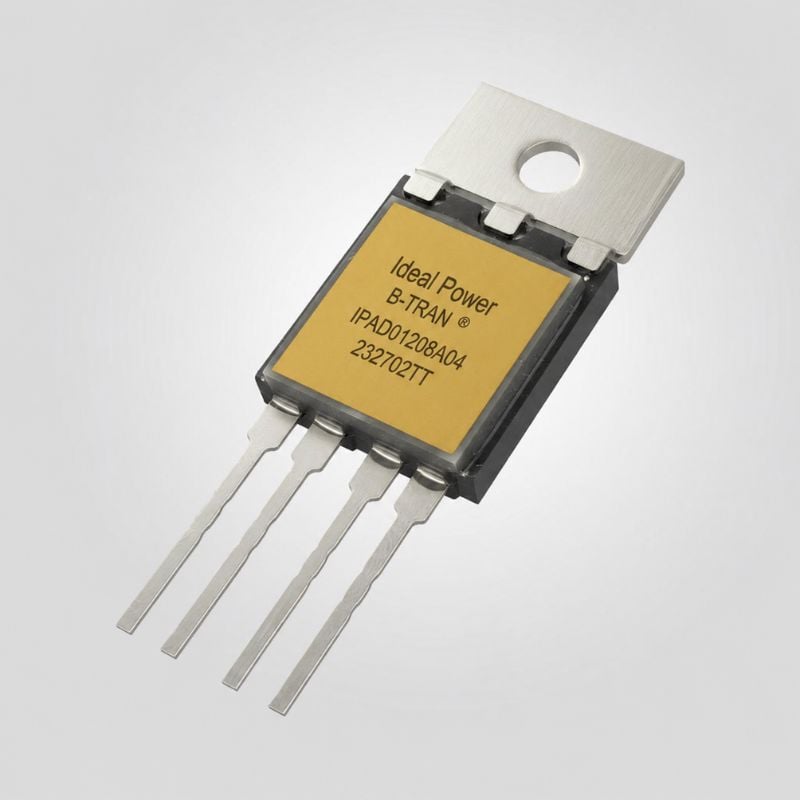
The B-TRAN semiconductor switch. Image used courtesy of Ideal Power
Ideal Power's B-TRAN semiconductor switch uses the InnoMux-2 IC's isolated secondary rails to monitor and manage the primary 800 V power delivery path feeding the AI workloads. By combining low-power-loss semiconductor switching with integrated multi-output auxiliary power conversion, the platform bypasses the speed constraints of mechanical circuit breakers and the thermal inefficiencies of legacy solid-state circuit breaker designs.
Siemens and FuelCell Energy To Work Together on Fuel Cell-Based Generation
Siemens and FuelCell Energy have partnered to produce scalable fuel cell systems to accelerate the deployment of low-emission, on-site power for data centers and industrial plants. The joint effort aims to shorten construction timelines and lower capital costs for large energy installations.
Under the memorandum of understanding, Siemens will supply the electrical balance-of-plant hardware, enabling rapid deployment for commercial projects exceeding 100 MW. The engineering integration combines fuel cells with battery storage, microgrid controls, and medium-voltage electrical gear.
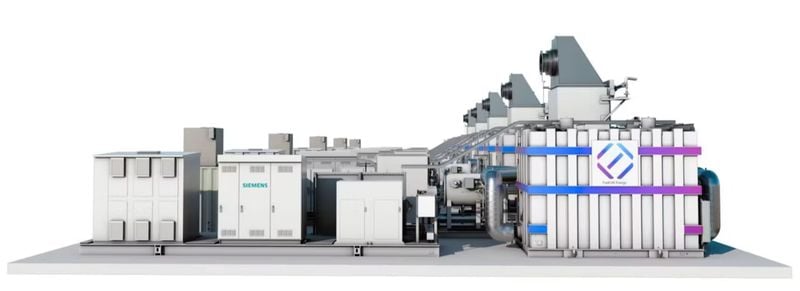
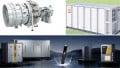
Scalable fuel cell solutions by FuelCell Energy and Siemens. Image used courtesy of Siemens
Both companies will run joint pilot programs to test modular systems and medium-voltage DC power delivery. Proven pilot concepts will transition into commercial deployments across targeted global growth markets.
Honda To Test In-Motion Wireless EV Chargers
Honda R&D Co. and Taisei are developing technology that could charge moving electric vehicles wirelessly on highways. The two companies have created the underlying technology for a magnetic-coupling wireless power-transfer road system. The dynamic charging network beams electricity to moving EVs.
The system places a DC ground assembly unit inside the roadbed. This road unit combines an internal inverter and secondary transmission coil into a single modular unit to simplify installation during road construction or resurfacing operations. Vehicles are equipped with a unit that receives high-power electrical transfers while driving.
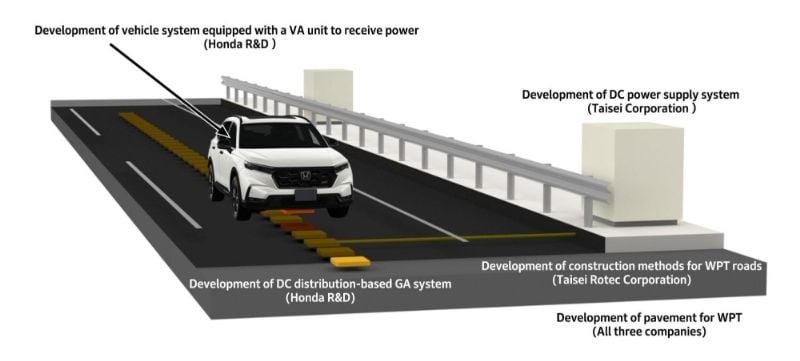
The wireless power transfer road system. Image used courtesy of Honda
The partners plan to build a dedicated test track in late 2026 to run a one-million-wheel durability trial at a 49-kilonewton wheel load. Power transfer tests will evaluate energy throughput up to 150 kW alongside electromagnetic shielding effectiveness.
Ground testing has already validated pavement durability under load forces from 20-ton commercial trucks.
The next step will be field evaluation on public highway trials in 2027. The companies have identified a stretch on the Tateyama Expressway in Chiba, Japan. The team will validate power-delivery efficiency for heavy trucks operating at high highway speeds.
Wireless in-motion charging can increase range, reduce battery-charging stops, and increase fleet operations.