Facebook
 Google
 GitHub
 Linkedin
Briefs: EV Chargers for Ford Museum, Fleet Charging, and AI Power
Voltpost, Tual, M.C. Dean, Bells Power Group, Engie North America, and Ares have moved forward with energy projects.
As electric vehicles become more widespread, companies are preparing to meet future energy demands. In Detroit, Voltpost has placed electric vehicle chargers at the Henry Ford Museum. In the U.K., Tual has raised funds to expand battery-buffered EV charging for fleet operations.
Meanwhile, data centers and industrial electrification are prompting companies to expand power infrastructure. M.C. Dean has acquired Bells Power to provide integrated power solutions for AI infrastructure and more, and Engie and Ares are teaming up to develop more solar and wind projects.
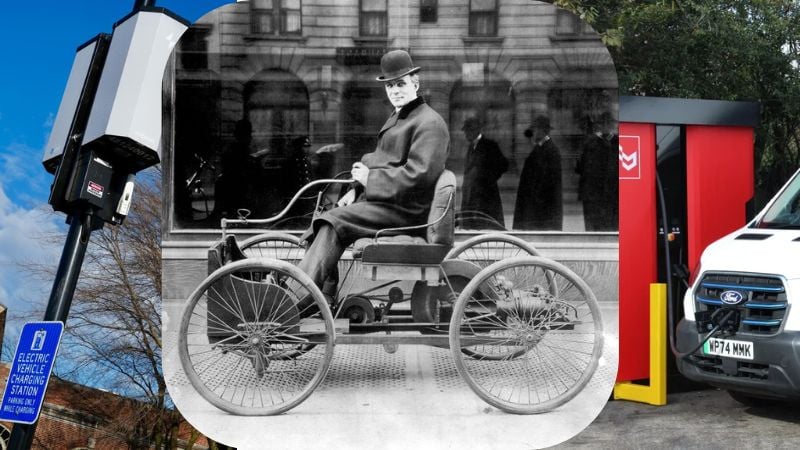
EV drivers can charge their vehicles at the Henry Ford Museum, home of the 1896 quadricycle. Adapted from image used courtesy of Wikimedia Commons
Future Meets Past: Henry Ford Museum Installs EV Chargers
Electric vehicle chargers are the newest addition to the Henry Ford Museum, which houses Ford’s earliest vehicle, the 1896 Ford Quadricycle, and other antique and vintage vehicles.
Voltpost has installed three of its next-generation chargers, Voltpost Air, in the museum’s parking lot. The Level 2, dual-port chargers can charge up to six vehicles simultaneously and are mounted on existing lampposts. The charging cable retracts to prevent vandalism and protect the equipment from adverse weather.
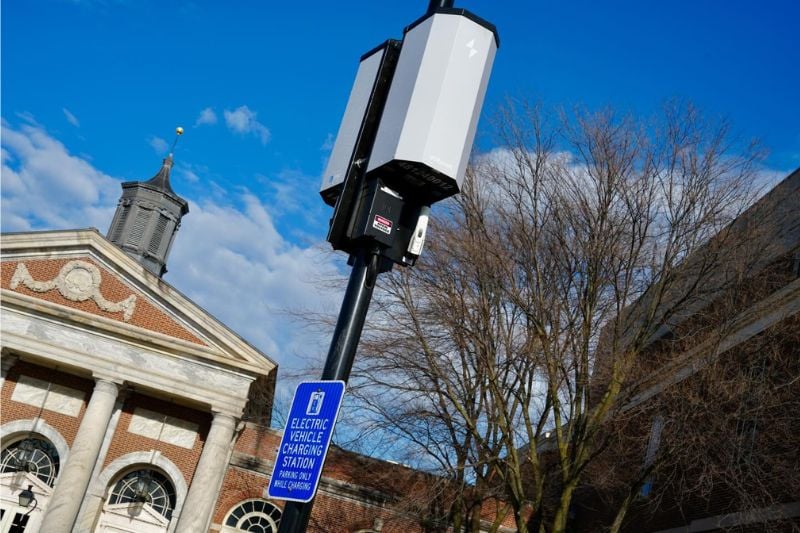
Voltpost charger at the Henry Ford Museum. Image used courtesy of Voltpost
The company has partnered with AT&T to use IoT connectivity for wireless connection, real-time usage monitoring, and remote diagnosis.
The installation is part of a broader initiative to expand charging access in Michigan. Voltpost will install more than 20 charging stations in Detroit and has plans to expand in New York, Illinois, California, and several New England states.
Tual Raises £1.5M To Scale Its Battery-Buffered EV Fleet Chargers
U.K.-based startup Tual has secured £1.5 million in funding to accelerate production of its battery-buffered, high-power charging infrastructure for commercial electric vehicle fleets.
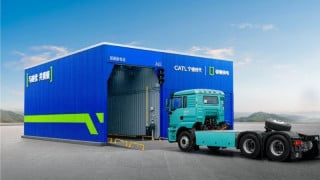
The PowerUp charger delivers up to 200 kW of power with a standard 11 kW grid connection and an integrated battery storage. The system is designed to ease grid constraints and provide charging infrastructure without waiting years for utility-level grid reinforcements.
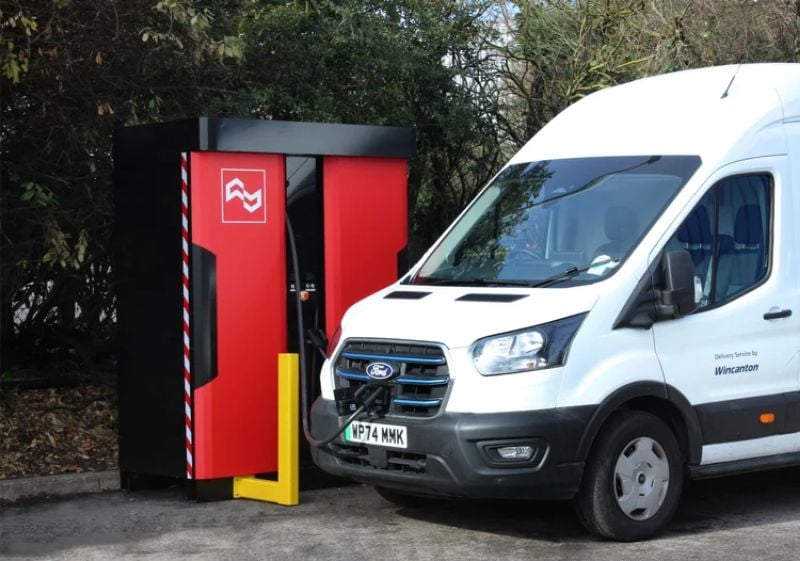
Tual charger. Image used courtesy of Tual
Tual’s technology is designed for intensive-use or mission-critical fleets that need to avoid downtime, such as emergency services, utilities, and logistics operations. The chargers require minimal construction and can be easily deployed in areas where grid access or capacity may be limited.
European investor PT1 led the funding, with participation from Ascension Ventures and P3A.
M.C. Dean Acquires Bells Power Group for AI Infrastructure
Virginia-based M.C. Dean has acquired a majority stake in U.K.-based Bells Power Group, which specializes in integrated power solutions, including design, installation, and maintenance of backup power systems. The strategy will enable the expansion of power-ready AI infrastructure and related technologies.
The deal aims to leverage Bells Power’s expertise in power generation, control systems, and hydrogen microgrid applications for AI infrastructure. M.C. Dean addresses electrical power systems, electronic security, automation and controls, and other systems.
The acquisition also expands M.C. Dean’s footprint in the U.K., Europe, and the Middle East.
Engie and Ares Collaborate To Add 730 MW of Solar and Wind in the U.S.
Engie North America has expanded its partnership with Ares Infrastructure Opportunities to add 730 MW of renewable energy assets, including two solar and one wind project. The new projects are currently operating within the ERCOT grid in Texas.
Engie retains a controlling interest in the portfolio and will direct daily operations and management of the facilities. The expansion brings Engie and Ares’ portfolio to about 4.3 GW of solar, wind, and storage in the U.S. Engie aims to reach 95 GW of renewable energy and storage by 2030.