Facebook
 Google
 GitHub
 Linkedin
Briefs: Solutions for EV Chargers, BESS, and Grid Infrastructure
From components to manufacturing, Aratas, A123 Systems, Sunraycer, e-Strorage, and Siemens Energy are addressing energy demands.
Electric vehicles, industrial electrification, and AI data centers are increasing energy demand, but also providing opportunities for companies to innovate and expand. In product news, Aratas has released a high-power relay for electric vehicle chargers and battery storage systems.
Battery technology is also stepping up to meet demand. Wanxiang A123 has unveiled semi-solid-state batteries and cooling systems to address battery fires, and Sunraycer and e-Storage have partnered on a 503 MWh battery storage project in Texas. Finally, Siemens Energy is investing $1 billion and creating energy jobs by expanding U.S. manufacturing for grid infrastructure equipment.

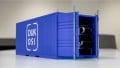
Innovations for EV chargers, battery storage, and grid infrastructure.
Aratas Adds Screw-Terminal Power Relays for High Current Loads
Aratas has introduced the G9EK-1-EX, a high-power addition to its G9EK series of screw-terminal DC power relays. Rated at 250 A and 500 VDC, the model is designed for use in electric vehicle chargers, battery storage systems, and solar inverters.
The relay’s optimized internal structure achieves a low contact resistance of 15 mΩ and a coil power consumption of 4 W, which minimizes heat generation. Response times are 50 ms operating time and 30 ms release time. The mechanical longevity is 200,000 operations. The G9EK-1-EX has the same footprint as existing models (47.7 x 86 x 64.2 mm).
While many high-capacity relays use pressurized gas, the G9EK series uses a gasless architecture to improve safety and help designers meet carbon-neutral manufacturing goals. The relay can handle interruption currents up to 1,000 A at 400 V and withstand voltage pulses up to 4,000 V. It is designed for harsh environments and can endure shocks of up to 100 g.
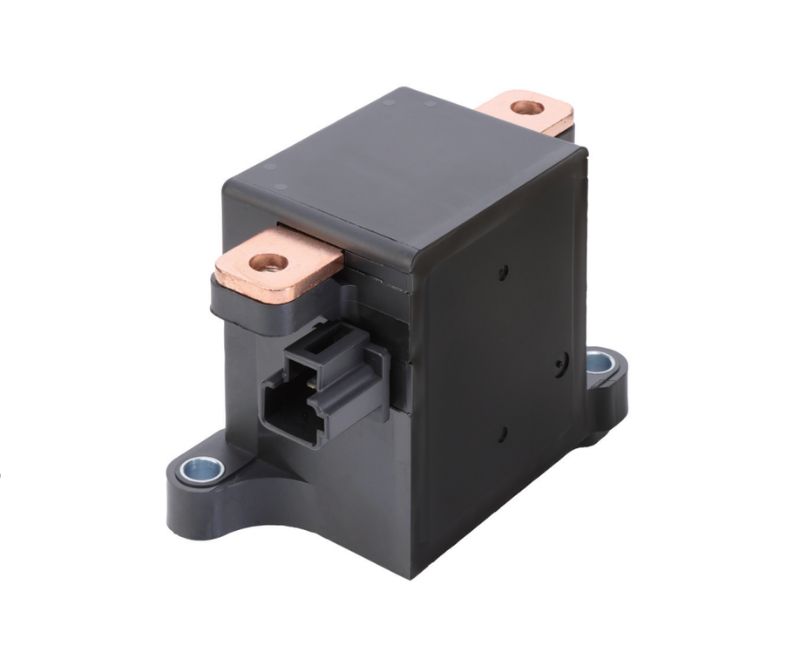
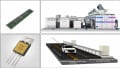
The G9EK-1-EX. Image used courtesy of Aratas
The G9EK-1-EX offers safety isolation in EV charging stations, battery storage systems, and solar inverters. It may also be suitable for industrial autonomous guided vehicles and other e-mobility.
Wanxiang A123 Intros Tech Addressing Battery Fires and Semi-Solid State Cooling
Wanxiang A123 Systems has released solutions aimed at two persistent problems in battery technology: battery fires in energy storage systems and the need for safe, semi-solid-state battery cells.
The company’s wireless battery management system (BMS) can provide safety warnings up to 10 minutes earlier than conventional monitoring devices. The system uses pressure sensors to detect internal problems and issue warnings. When used in 800 V data center architectures, the BMS can improve efficiency by over 4%. The BMS is available in durable, IP68-rated cabinets and in modular 5- and 20-foot containers.
A123’s second development is its Star Series semi-solid-state battery with immersion cooling systems. The batteries use semi-solid-state electrolytes, which demonstrate a higher safety level than traditional lithium-ion batteries. In puncture tests using 10 steel needles simultaneously, the battery cells showed no fire, smoke, or thermal propagation.
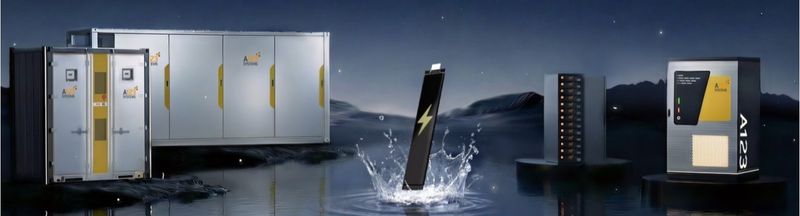
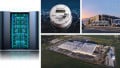
A123’s new battery technology. Image used courtesy of Wanxiang A123
The cells also include an internal Safety Grid and an external Armor Coating to prevent short circuits in extreme temperatures.
In an adjacent technology, the Star River Series provides thermal management via immersion cooling. The system immerses battery cells in a dielectric insulating liquid that maintains low variance between cells in temperatures up to 45°C (133°F). This creates a thermal shield that absorbs heat and prevents fire from spreading.
Sunraycer and e-Storage Team Up for 503 MWh Battery Storage Projects in Texas
Renewable Energy Developer Sunraycer and e-Storage, a subsidiary of Canadian Solar, have partnered for two standalone battery energy storage projects totaling 503 MWh in Franklin County, Texas. The projects will use e-Storage’s SolBank 3.0 battery energy storage systems (BESS), which use Canadian Solar’s battery cells.
The Lupinus Projects will include two phases, with Lupinus 2 (301 MWh) starting construction later this year. Lupinus 1 (202 MWh) will begin construction in Q1 2027. Both projects will be operational by mid-year 2027.
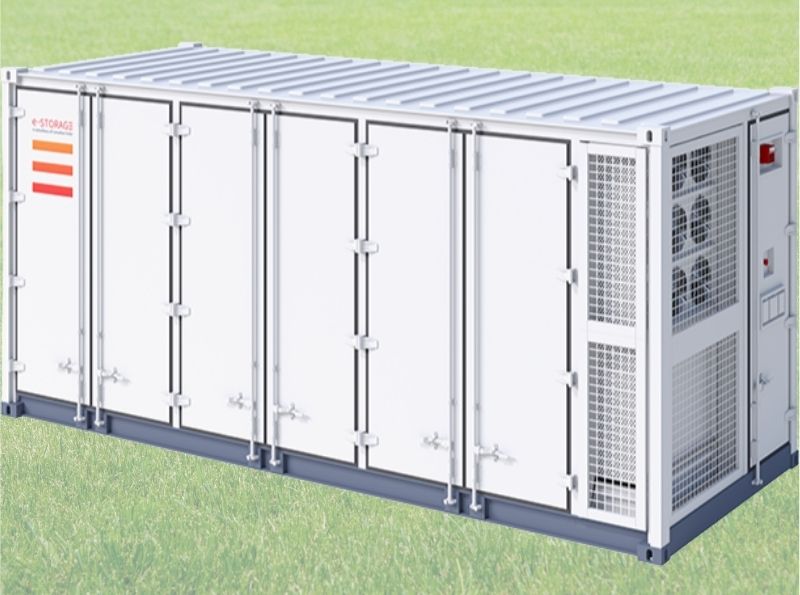
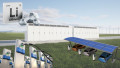
The SolBank. Image used courtesy of e-Storage
The agreement includes a 10-year service agreement with e-Storage covering system reliability, performance, and availability.
Siemens Energy Invests $1B in U.S. Manufacturing
Siemens Energy will invest $1 billion to expand its manufacturing for grid infrastructure materials and components. The company stated it aims to address the surge in energy demand led by AI data centers and industrial electrification.
The projects include the Mississippi Greenfield Project, a $300 million factory for high-voltage switchgear, which will create 300 jobs and include a training center. In Charlotte, North Carolina, Siemens will revive a gas turbine manufacturing plant, which it had closed in 2020. The expanded production will add 500 jobs in the area.
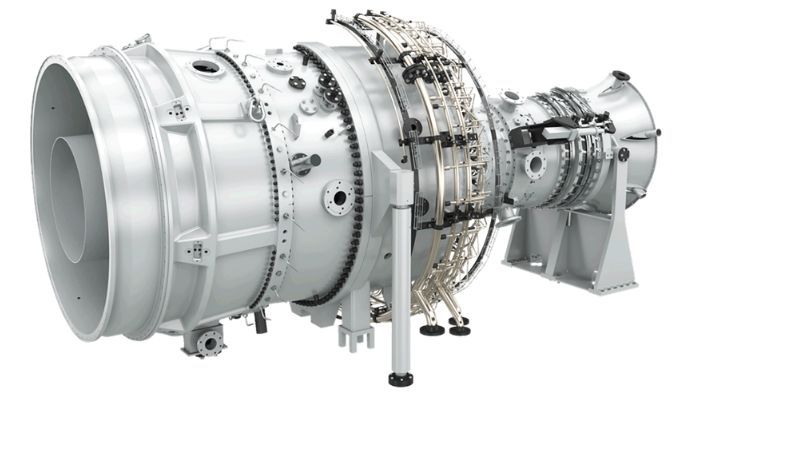
One of Siemens Energy’s gas turbines. Image used courtesy of Siemens Energy
Siemens Energy is partnering with Nvidia to establish an AI digital grid technologies laboratory at its Orlando, Florida, facility. It will also expand its Tampa turbine component factory and relocate its regional headquarters to Lake Nona, Florida.
In Alabama, increased production of copper and generator insulation components will create 120 additional jobs. Finally, in New York and Texas, Siemens will upgrade its facilities to enable the manufacturing and servicing of gas and liquid pipeline compression equipment.