Facebook
 Google
 GitHub
 Linkedin
Will Fusion Power the Grid by 2030?
The world’s first commercial grid-connected nuclear fusion reactor is expected to be built in Virginia early in the 2030s.
Nuclear fusion energy has received another big vote of confidence. Commonwealth Fusion Systems (CFS) will build the world’s first grid-scale commercial fusion power plant in Chesterfield County, Virginia. CFS will collaborate with Dominion Energy Virginia in the leasing rights for the eventual fusion power plant at the James River Industrial Center.
What are CFS’ plans for the world’s first commercial fusion plant? Video used courtesy of CFS
Present-day nuclear power uses fission, which splits uranium atoms and produces heat used to create steam to spin a turbine that powers an electrical generator. The nuclear waste generated by fission is highly radioactive and must be safely stored for generations. By contrast, fusion creates energy with virtually no radioactive waste.
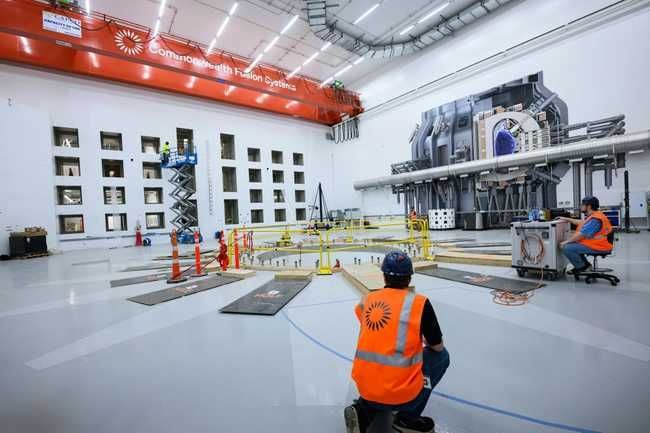
CFS’s SPARC technology. Image used courtesy of Commonwealth Fusion Systems
Typical Fusion Process
Nuclear fusion occurs when two hydrogen atoms are fused together, producing a helium atom, heat, and high-energy neutrons. This energy can be captured and used to create steam and electricity. The fusion process uses two hydrogen isotopes (typically a mixture of deuterium and tritium), resulting in almost no radioactive waste.
Because the hydrogen atoms must be fused at temperatures and pressures similar to the sun, they must be contained in a plasma in a device called a tokamak. This donut-shaped machine uses powerful magnetic fields to confine and control an extremely hot plasma, creating conditions similar to those found in the core of stars. Thus far, the challenge has been maintaining the plasma used to contain the fusion reaction for longer than a few seconds.
Smaller, More Affordable
CFS is working with the MIT Plasma Science & Fusion Center to develop and manufacture high-temperature superconducting magnets for smaller, lower-cost tokamak systems (called ARC), which will create viable commercial nuclear fusion machines.
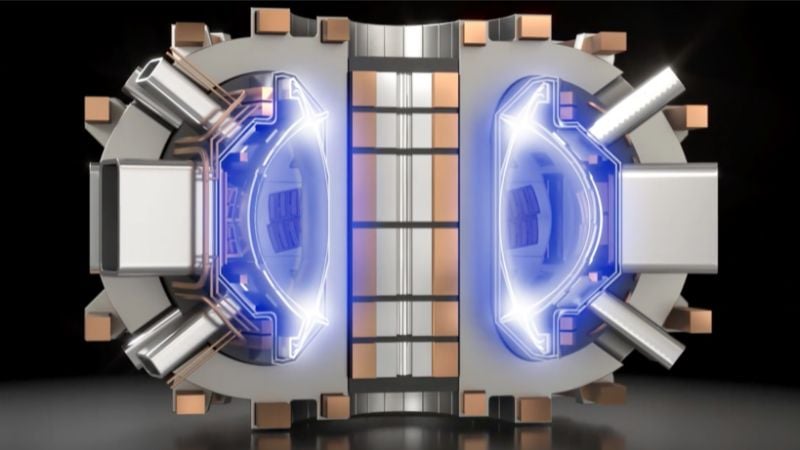
SPARC fusion technology. Image used courtesy of CFS
CFS is completing the development of its fusion demonstration machine (called SPARC) at the company’s headquarters in Devens, Massachusetts. If all goes well, SPARC will produce its first plasma in 2026 and net fusion energy not long after. CFS expects its ARC commercial reactor in Virginia to deliver power to the grid in the early 2030s.
Virginia Makes Sense
Virginia has between 250 and 300 data centers, including more than 35% (150) of the world’s known hyperscale data centers. It is estimated that 70% of global internet traffic is routed through Northern Virginia. According to Bloomberg, Virginia’s power grid is already under strain, and meeting demand has resulted in increased fossil fuels (primarily natural gas) usage, resulting in significant increases in U.S. greenhouse gas emissions.
The growth of artificial intelligence—particularly machine learning models like deep neural networks—demands immense computational resources, which, in turn, demand ever-increasing amounts of electricity to power the servers and maintain cooling systems to prevent overheating.
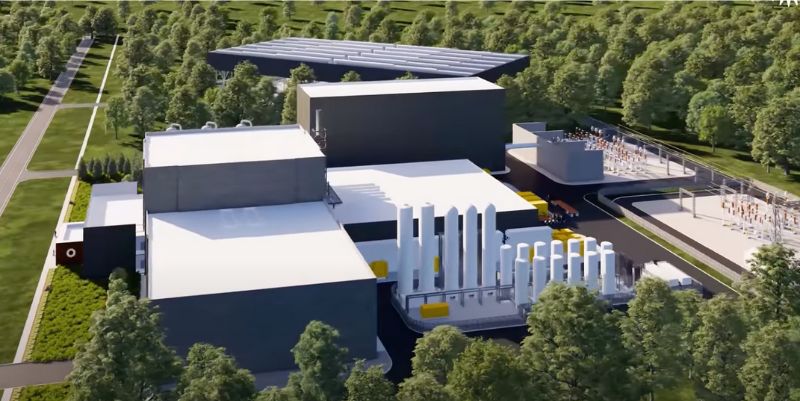
Rendering of future fusion plant. Image used courtesy of CFS
The CFS ARC plant is expected to produce about 400 MW of electricity, so placing it in Virginia could provide electricity for up to 150,000 homes and feed AI’s insatiable need for more electricity.
CFS spun out of MIT in 2018. Since then, it has raised more than $2 billion in private capital. The company has also received $16.5 million in U.S. Department of Energy grants, including a $15 million grant in June 2024 in the Milestone-Based Fusion Development Program. The project also received $1 million from the Virginia Clean Energy Innovation Bank, matched with a $1 million grant from Chesterfield County.