Facebook
 Google
 GitHub
 Linkedin
Fact or Fantasy? The Elusive Promise of Nuclear Fusion
In the first part of this two-part series on nuclear fusion, we delve into the fundamentals: What exactly is nuclear fusion, and what are its key technical challenges?
It’s fair to say nuclear fusion powers the Earth. The sun, a giant hydrogen-hydrogen fusion reactor sitting a mere 93 million miles away, provides energy converted to electricity using photovoltaic solar panels. It heats the atmosphere, causing the wind to power wind turbines. Plants even use it through photosynthesis to capture carbon from the atmosphere—carbon that becomes fossil fuels after a few million years beneath the Earth’s surface.
The fusion process that powers the sun seems fairly simple. Under immense pressure at millions of degrees of temperature, two hydrogen atoms are forced together, creating a helium atom. But the helium atom weighs slightly less than the two hydrogen atoms, and the extra mass is converted to energy, as Einstein’s famous E=MC2 formula describes.
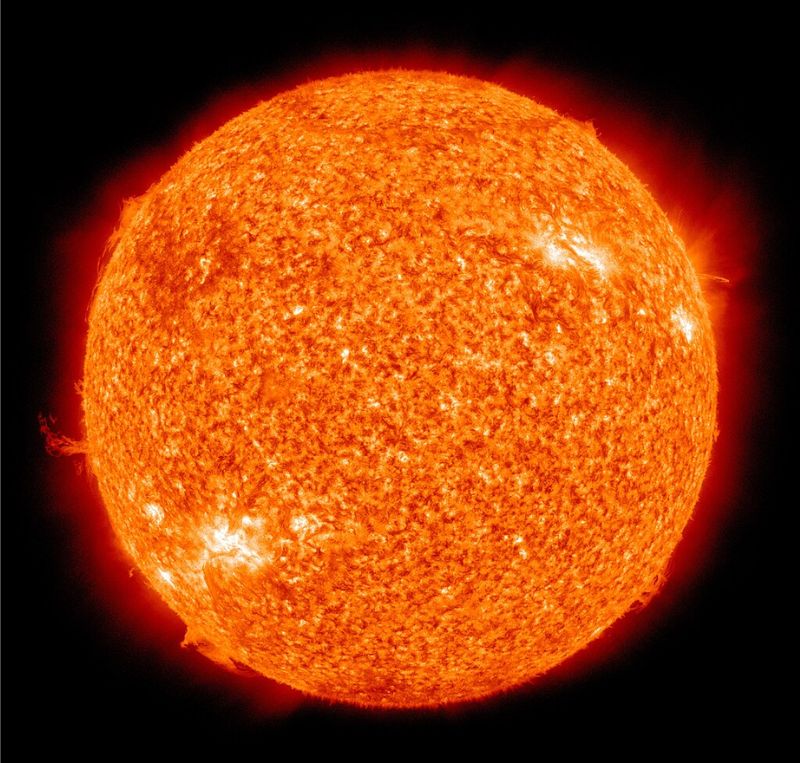
The sun uses nuclear fusion to create energy. Image used courtesy of Wikimedia Commons
But what if instead of using the energy provided to us by the sun’s nuclear fusion reactions, we could duplicate the process here on Earth to create another source of energy? In the first part of this two-part series, we’ll examine nuclear fusion and detail some challenges scientists and engineers working in this field face. In the second part, we will highlight some of the latest breakthroughs and review the ideas making news in the world of nuclear fusion.
Nuclear Power: Fission or Fusion?
Around 20 percent of electricity already comes from nuclear fission reactors. These operate by splitting uranium or plutonium atoms with neutrons to obtain energy, but the process results in highly radioactive nuclear waste that must be dealt with. They also have a somewhat less-than-stellar safety record, as evidenced by adverse incidents in places like Chernobyl in what was then the Soviet Union (1986) and Fukushima in Japan (2011).
The promise of nuclear fusion has been around for more than seventy years, but as usual, the devil is in the details, and in this case, the challenges those details present are formidable. Recall the conditions within the sun promoting the hydrogen-hydrogen nuclear reactions, which include both immense pressure and extremely high temperatures. The hydrogen atoms exist in a plasma under such conditions, and containing such a plasma here on Earth, even for a few seconds, has proven extremely difficult. So much energy is required to duplicate the conditions found within the sun here on Earth, but only in the past year has a fusion reaction been produced with at least as much or more energy than was used to cause the reaction. This is called breakeven.
Using the Right Hydrogen Fuel
Fueling an Earth-bound fusion reactor is also not easy. Although water covers more than 70 percent of our planet, and water is made of hydrogen and oxygen, splitting the hydrogen—usually accomplished through electrolysis—takes a large amount of energy. It also turns out that simple H2 isn’t the form of hydrogen best used for creating the hydrogen-to-helium fusion reaction.
Atomic hydrogen consists of one proton and one electron. The deuterium isotope contains one proton and one electron but adds one neutron. Deuterium is fairly common, comprising about 1 in every 5,000 hydrogen atoms in seawater.
The tritium hydrogen isotope has one proton, one electron, and two neutrons. It is radioactive, has a half-life of 12.3 years, and occurs naturally high in the atmosphere, where it is formed in minute quantities when cosmic rays interact with atmospheric gases. Tritium can also be artificially created by irradiating lithium metal in a nuclear reactor.
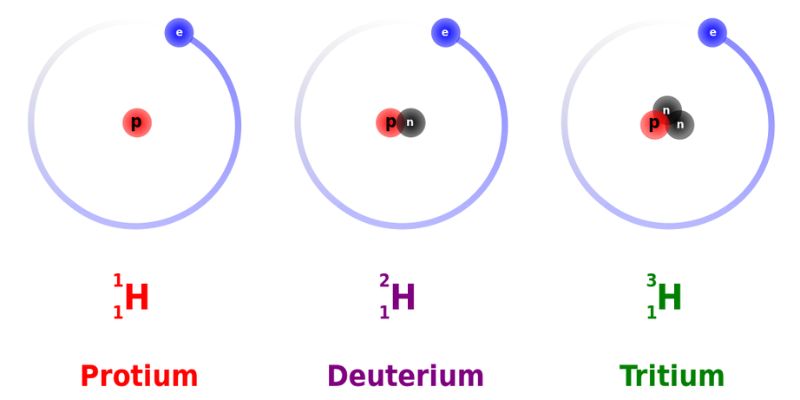
Hydrogen isotopes. Image used courtesy of Wikimedia Commons
One idea is to create a tritium breeding blanket from lithium inside the fusion reactor. When tritium and deuterium undergo a fusion reaction, it produces a helium nucleus with two protons and two neutrons. It also releases a great deal of energy along with an energetic neutron. The energy produced can be used to convert water into steam to create electricity with a turbine and generator. The fusion reaction occurs at lower temperatures than other elements, and they are expected to release more energy during the fusion reaction, making deuterium and tritium the fuel of choice for nuclear fusion.
The Details of Nuclear Fusion
So far, so good, but once again, the details are getting in the way. Tritium is exceedingly rare and is the fourth most valuable substance on earth, currently costing around $30,000 per gram. This makes it difficult for researchers to obtain and use in any reasonable quantities.
Nuclear fusion requires extremely high pressures and temperatures. The hydrogen plasma must be heated to temperatures about six times hotter than the sun core’s. Magnetic containment using superconductors must confine the hydrogen plasma long enough for fusion to occur. Researchers know how to do this on an extremely small scale, but creating a full-size fusion reactor will present challenges for materials scientists.
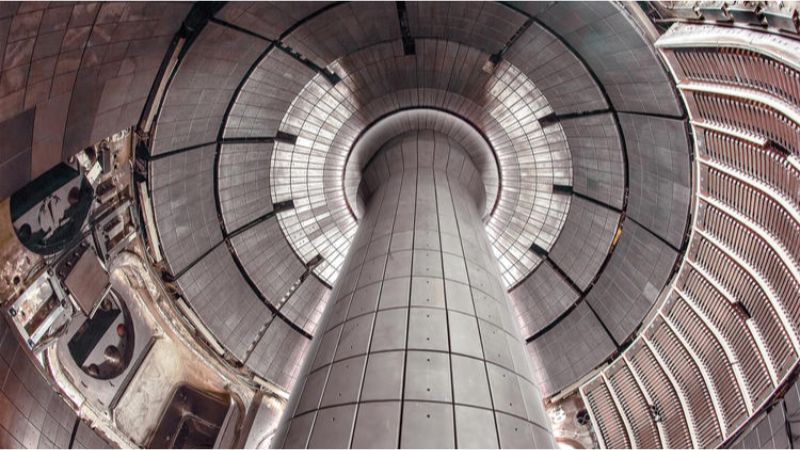
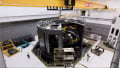
The National Spherical Torus Experiment-Upgrade nuclear fusion facility. Image used courtesy of Lawrence Berkeley National Laboratory
Thus far, private industry has done the majority of fusion research, financed by government grants. The U.S. government has set a goal to create a commercial nuclear fusion facility within 10 years. Last year, the Department of Energy provided $46 million to eight fusion companies to help them develop designs for pilot versions of nuclear fusion plants. The current administration has proposed major increases in the Office of Science’s Fusion Energy Sciences program.
Moving Forward in Nuclear Fusion
Despite its challenges, nuclear fusion has seen a recent uptick in funding, research, and public interest. In part two of this series, we will investigate the latest news and trends and evaluate how they might predict the future of fusion.