Facebook
 Google
 GitHub
 Linkedin
Can Solar Mini-Grids Power the World?
Mini-grids and solar-home systems can bring electricity to countries with limited power grids.
Energy access remains a critical challenge for 750 million people worldwide, particularly in sub-Saharan Africa, which accounts for 80% of the global population without electricity. However, technologies like mini-grids and solar-home systems are transforming how last-mile populations access power, bringing renewable energy to some of the most remote corners of the globe.
The International Energy Agency (IEA) estimates that achieving universal energy access by 2030 would require 135 million new connections annually, a significant scale-up from recent years’ trends. The United Nations established this goal in 2016, aiming to bring electricity to the global population by 2030. Decentralized solutions like mini-grids and standalone solar systems are the most cost-effective way to meet the challenge.
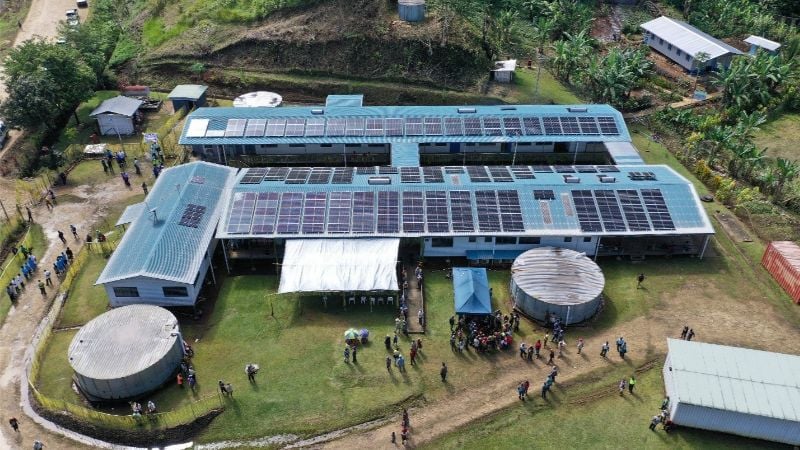
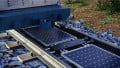
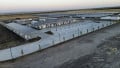
A solar mini-grid in Papua New Guinea. Image used courtesy of the U.S. Department of State
What Are Solar Mini-Grids?
Mini-grids operate independently from the national grid, allowing power to reach communities in rural areas. These systems typically have 10 kW to several megawatts of power capacity and comprise one or more energy generation resources, such as solar photovoltaic (PV) panels paired with battery energy storage, hybrid solar and diesel, or biomass. Some incorporate standard diesel generators for backup power in locations where the PV system is insufficient to meet high-demand peaks.
Mini-grids are distinct from microgrids, systems of interconnected loads that can be connected to the main grid or operate off-grid in island mode. While both applications function without a main grid connection, microgrids typically serve existing residential and commercial users who’ve already been connected to the grid. Mini-grids are a way to supplement costly transmission expansions to energize remote communities.
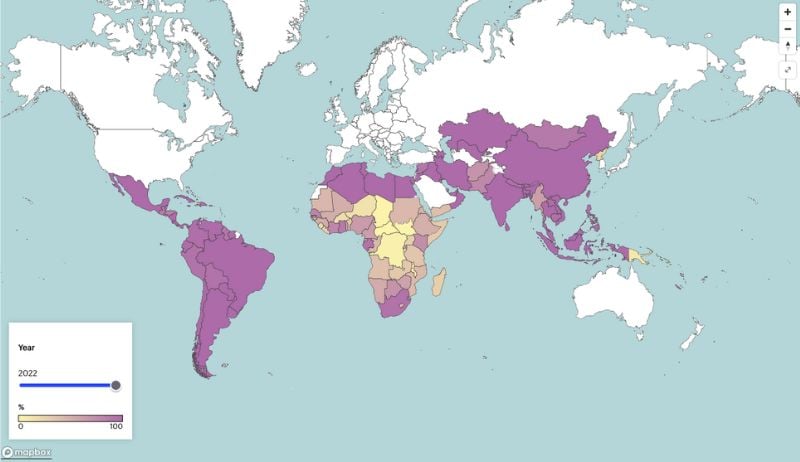
Electricity access rates under the United Nations’ Sustainable Development Goal 7, targeting universal penetration by 2030. Image used courtesy of the IEA
According to recent data from the Mini-Grids Partnership, global mini-grid installations have increased sixfold since 2018, with growth particularly concentrated in sub-Saharan Africa. Around 40 million people in sub-Saharan Africa accessed electricity through mini-grids in 2023, per IEA data. Permitted and registered mini-grid licenses continue to accelerate across Uganda and Nigeria.
Mini-grid tech providers are scaling up their fleets to meet demand in Asia and Africa. U.S.-based Husk Power Systems secured millions in funding last year to install 1,400 mini-grids with 300,000 new connections in rural South Asia and sub-Saharan Africa. India-headquartered Tata Power and the Rockefeller Foundation plan to install 10,000 renewable microgrids in India by 2026.
Developers increasingly prefer simplified designs and containerized units that are easy to deploy in any environment. AlphaESS and JINKO Solar offer pre-wired systems for easy on-site installation. Zhyphen’s modular plug-and-play Instant Grid system, which lets users add multiple blocks according to demand, is being used to power rural health clinics in Malawi. Also, the Institute of Transformative Technology developed a preassembled Utility-in-a-Box system for mini-grids in India, which only takes a few days to install.
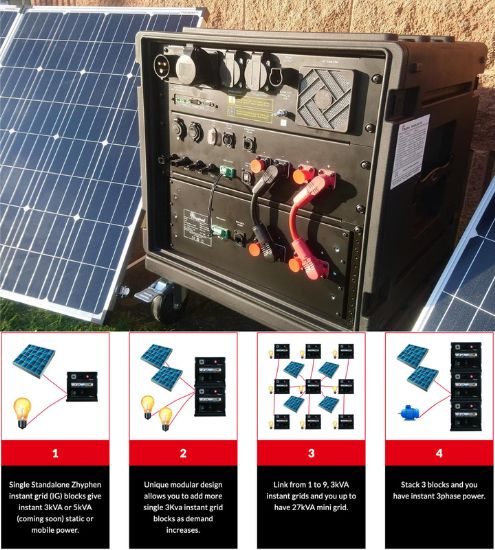
Zhyphen’s modular Instant Grid system. Image used courtesy of Zhyphen
Off-Grid Solar-Home Systems
Small-scale solar-home systems (SHS) are another emerging solution in remote areas where grid connections aren’t feasible. These off-grid systems combine PV modules, a charge controller, and a standalone inverter and battery system to charge low-power appliances like lights, computers, and TVs.
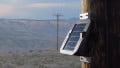
These standalone systems typically operate at 12 V, with a peak power output of 10-100 Wp, but some are even smaller. Pico solar devices, for example, generate just a few watts from a small portable PV panel.
Solar home systems are gaining record sales in southern and western Africa, led by Nigeria. They accounted for over one-third of the region’s new connections in 2023, compared to negligible levels 10 years ago. Millions of people in sub-Saharan Africa use them to charge essential devices or receive backup power.