Facebook
 Google
 GitHub
 Linkedin
2024 Wrap-Up: Will Nuclear Fusion Be the Next Renewable Energy?
Nuclear fusion has progressed in 2024, but questions about future nuclear fusion remain.
Many say that wind and solar energy alone cannot typically provide reliable baseload power for electrical grids. For intermittent renewables to work as a baseload supply, they need to have some type of energy storage, usually a battery energy storage system. However, these systems add cost and complexity, resulting in greenhouse gas emissions for mining battery raw materials, manufacturing, and transporting them to their final location.
How is fusion different from fission? Video used courtesy of the Department of Energy
Nuclear power is still a candidate for supplying base load power to the electricity grid. Nuclear fission plants can fill this need, but they have drawbacks. Instead, scientists are researching nuclear fusion as the next clean energy source.
In 2024, interest in fusion was stronger than ever, with significant developments from both public and private sectors.
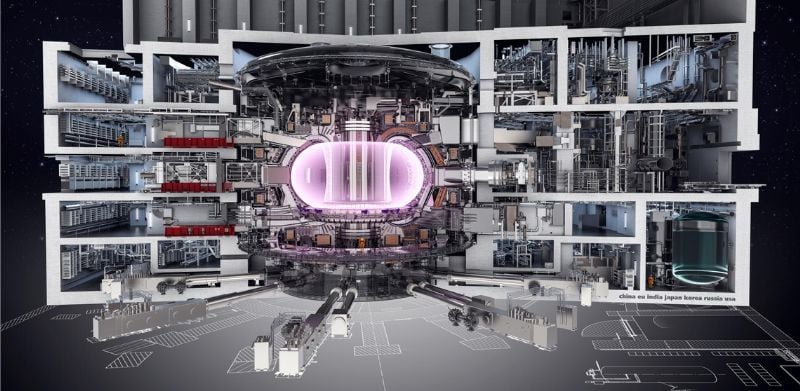
Nuclear fusion chamber. Image used courtesy of ITER
Renewable Energy
Wind and solar are rapidly becoming the common form of new energy generation installation. They are expected to dominate global electrical production by 2050. Solar electricity costs fell by 89 percent from 2010 to 2022 and is expected to decrease by another 60 percent by 2050. Wind and solar have become the cheapest options for generating electricity in nearly all regions of the world.
Hydroelectric power can provide nearly continuous electrical power in large quantities as long as rivers can keep dams and reservoirs filled. Unfortunately, the world’s changing climate is reducing rainfall in some previously hydroelectric strongholds, and this form of clean energy may not be as available in the future.
Nuclear Fission
Nuclear energy has been around commercially for almost 70 years but has never quite lived up to its promise of clean, safe, and affordable electrical power. Commercial nuclear reactors split radioactive uranium or plutonium atoms to release huge amounts of heat energy to convert water into steam to power a turbine and electrical generator.
Spent uranium fuel is highly radioactive and must be safely stored for up to 10,000 years before it can be considered safe. Initially, it was predicted that nuclear power would be “too cheap to meter.” However, costs have risen due to safety measures, regulations, materials, fuel, and spent nuclear fuel disposal. These factors have made nuclear power from fission among the most expensive electricity produced. Today, about 19 percent of electricity in the U.S. is generated by nuclear power plants.
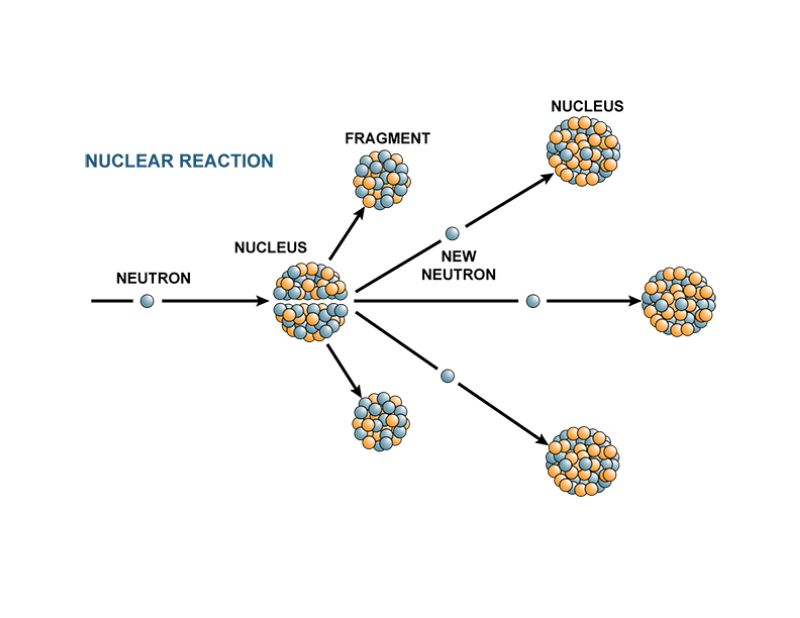
Nuclear fission. Image used courtesy of Nuclear Regulatory Commission
Operating a nuclear power plant creates almost no climate-warming carbon dioxide or methane. However, nuclear fission does create highly dangerous nuclear waste, and accidents at power plants have had devasting impacts on local environments.
Nuclear Fusion
Unlike a fission reaction that splits an atom, fusion combines atoms of the hydrogen isotopes deuterium and tritium in a plasma to form a helium atom, along with highly energetic neutrons. This process powers stars like the sun and releases enormous amounts of energy. According to the International Atomic Energy Agency, nuclear fusion’s energy per kilogram of fuel is up to four times that of a normal uranium-fission nuclear reactor. Nuclear fusion produces almost four million times the energy per kilogram created by burning fossil fuels like oil or coal.
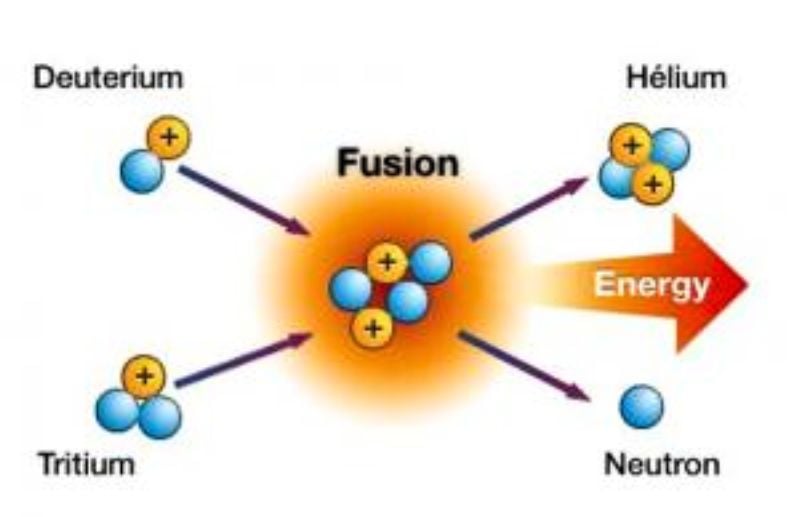
Fusion process. Image used courtesy of National Ignition Facility & Photon Science
Nuclear fusion requires heating the hydrogen plasma to about six times hotter than the temperature at the sun's core. Superconducting magnets create magnetic fields that contain the hydrogen plasma. Controlling the plasma within a full-size fusion reactor presents enormous challenges for materials scientists and engineers. Duplicating the conditions found within the sun on Earth is difficult, and it was only two years ago researchers at Lawrence Livermore National Laboratory achieved breakeven—the fusion reaction produced at least as much or more energy than was used to cause the reaction.
2024—A Strong Year for Fusion
Breakeven has been repeated several more times, and that milestone has jump-started fusion research worldwide. Significant advancements have been made in magnetic containment, materials, superconducting materials operating at high temperatures, and artificial intelligence to help control plasma stability. Scientists have also studied protecting the reactor vessel materials from bombardment by high-energy neutrons and using those neutrons to interact with a lithium layer on the reactor vessel’s walls to promote tritium formation as a fusion fuel.
There has also been significant investment in nuclear fusion. The Fusion Industry Association (FIA) 2024 Global Fusion Industry Report stated the total industry investment in fusion energy exceeds $7.1 billion, with more than $900 million invested in 2024. Total government funding worldwide has increased 57% in the past year, rising to $426 million.
In total, the U.S. has spent $790 million for the DOE’s Office of Fusion Energy Sciences and another $690 million to support laser inertial fusion research at the National Ignition Facility allocated through the National Nuclear Security Administration. Private investment is also increasing dramatically around the globe. The U.S. has 25 fusion industry companies in the survey, followed by the U.K., Germany, Japan, and China, all with three. Switzerland now has two fusion companies, while Australia, Canada, France, Israel, New Zealand, and Sweden each have one.
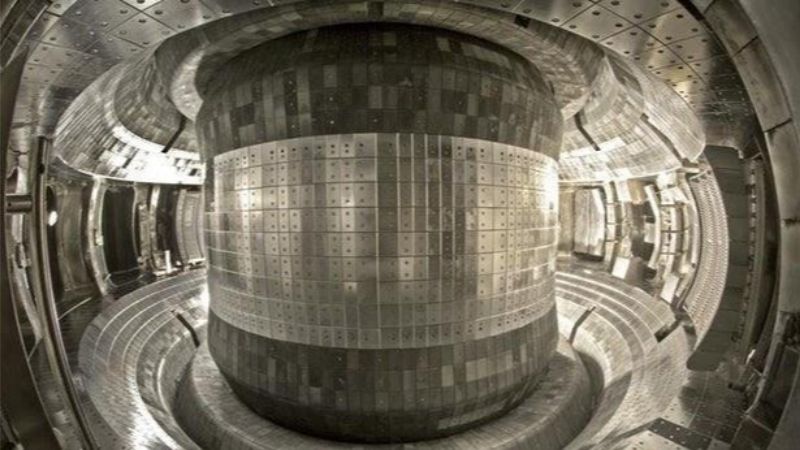
Experimental Advanced Nuclear Superconducting Tokamak in China. Image used courtesy of Princeton Plasma Physics Laboratory
According to the World Economic Forum, China is spending between $1 billion and $1.5 billion annually on fusion research—nearly double the amount allocated by the U.S. government for fusion research in 2024. The China Fusion Engineering Test Reactor will be built later this decade. Its initial power output of 200 MW will eventually be increased to over 1 GW, demonstrating China's commitment to fusion power.
Europe’s International Thermonuclear Experimental Reactor (ITER) is under construction in southern France. It is a collaborative effort involving 35 nations, including the United States, China, India, Japan, Korea, Russia, and the European Union, designed to produce 500 MW of fusion power from 50 MW of input heating power, with startup expected in 2029.
A Fusion Future?
The FIA 2024 Report indicated that 89 percent of the 45 companies surveyed expect fusion energy to contribute commercial electricity to the grid by the end of 2030s, with 70 percent saying it could occur by the end of 2035. Respondents were professionals in the nuclear fusion industry, so it’s not surprising that the results were bullish. However, since renewables are coming on so strongly, is nuclear fusion even necessary for electrical power generation?
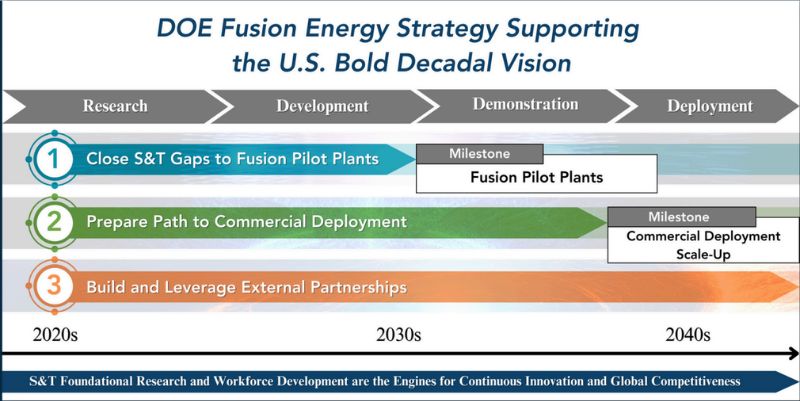
Timeline for fusion commercialization. Image used courtesy of the Department of Energy
Many argue that if fusion can be perfected, it could provide baseload electrical power to the grid without producing carbon dioxide or resulting in problems associated with high-level nuclear waste disposal. Fusion uses hydrogen isotopes deuterium, found in seawater, and tritium, which can be produced within the fission reactor by bombarding lithium with high-energy neutrons.
If the not-insignificant problems of containing a stable plasma at extreme temperatures and pressures can be solved, fusion should be a candidate for base load generation. It is all but impossible to estimate what this energy generation will cost. Remember that nuclear fission was predicted to be much cheaper than the reality. Building nuclear fusion reactors will require huge amounts of steel and concrete, contributing to the technology’s overall carbon footprint.
While fusion shows promise as a future clean energy source, it is not expected to contribute significantly to power grids for at least two to three decades. During that time, wind, solar, and battery storage will continue to progress and may become so efficient and inexpensive that fusion will be a non-starter. Between now and then, continued research and development and large-scale investments will be needed to overcome the scientific and engineering challenges before fusion can become a practical energy source.
Meanwhile, to limit the detrimental effects of climate change, the power industry must reduce or eliminate its carbon dioxide and methane emissions, primarily by burning coal, oil, and natural gas. Natural gas, claimed to burn much cleaner, is replacing coal. However, methane, a main component of natural gas, is up to 80 times more warming than carbon dioxide. It leaks during production and transportation, which can partially offset the advantage of natural gas, making it much less attractive.