Facebook
 Google
 GitHub
 Linkedin
Sigenergy Unveils Solar-Powered Bidirectional EV Charger With Backup
The electric vehicle chargers can power homes during outages or emergencies.
Electric vehicles promise to make transportation cleaner. When paired with power from renewable sources, they offer an emissions-free way to travel. But could they do even more? Could an EV be used as a portable power pack?
Sigenergy has introduced a solar-powered bidirectional EV charger that can provide backup power when needed.
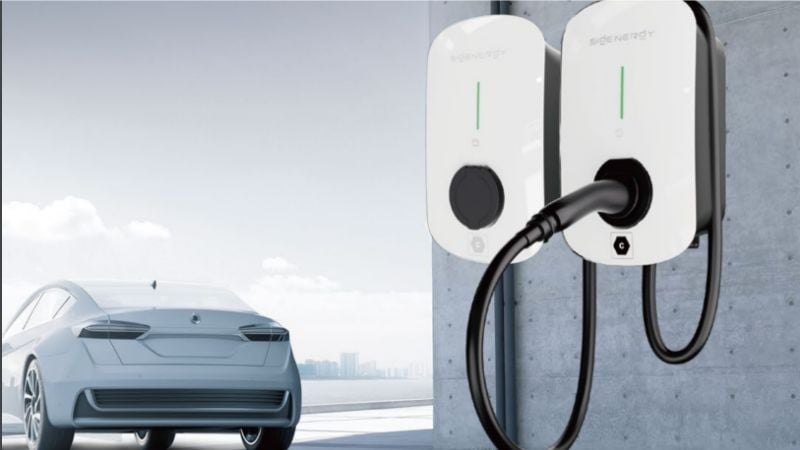
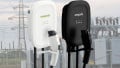
Sigenergy solar EV chargers. Image used courtesy of Sigenergy
Standard EV Charging
One issue with EV adoption has been ensuring drivers have adequate resources to charge their rides. Currently, three levels of EV chargers are in use.
Level 1
Level 1 charging is the default charger included with an EV purchase. Plugging into a standard 120-volt outlet, it does not need additional wiring. However, it’s slow. While it’s ideal for charging an EV overnight, it’s not appropriate for roadside stops.
Level 2
Level 2 chargers operate on a 240-volt outlet, which requires an electrician to install special wiring. These operate six to eight times faster than Level 1. These chargers are often located at roadside charging stations. However, it can still take a couple of hours to add the necessary range to an EV.
Level 3 Fast Charging
DC fast chargers can add 100 to 250 miles in just 30 to 45 minutes. Tesla’s Superchargers, EVgo, and Electrify America make fast chargers. These super-fast chargers are far too cost-prohibitive for most home users, but they’re crucial to creating the infrastructure necessary to electrify America’s fleet.
How Sigenergy’s Bidirectional Charging Works
Bidirectional charging allows EVs to draw power for charging and return energy from the EV to the grid. The charger also enables EV owners to power homes during a power outage.
Sigenergy offers two bidirectional products in its portfolio intended for home EV charging:
- The Sigen EVAC charger uses solar energy to power the EV, making it emissions-free from start to finish. It comes in 7, 11, and 22 kW power ranges.
- The Sigen EVDC Wall Charger combines a fast-charging module with the SigenStor energy system. This model allows charging directly from solar panels or batteries for faster EV charging. It delivers approximately 130 km per hour of charge.
Both products use smart charging technology to manage schedules during off-peak hours.
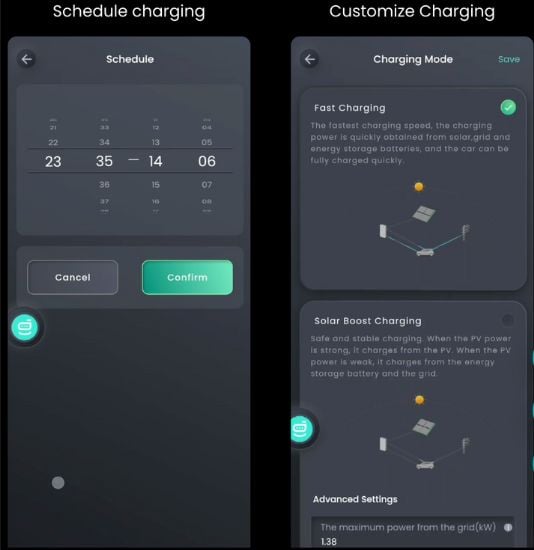
Smart charging app. Image used courtesy of Sigenergy
In addition to home charging solutions, Sigenergy is the first to demonstrate bidirectional charging in a commercial setting successfully.
Benefits of Bidirectional Charging
With bidirectional charging, an EV can return energy to the grid, a home, or a large home device, such as a refrigerator.
EV drivers can also use their cars to reduce their energy bills. For example, during daytime hours, bidirectional chargers can send electricity back to the grid. Owners can then charge their cars during off-peak hours for a reduced price. They may also actualize savings by using the EV to power their homes during peak hours when utility rates are highest.
Vehicles Offering Bidirectional Charging
Not every EV is compatible with bidirectional charging. The following models currently offer this capability:
- The Nissan Leaf offers proprietary bidirectional charging on 2013 and later models but is only compatible with the Fermata Energy charger. However, 2024 models and beyond offer V2X capability, meaning they can use any compatible device.
- Hyundai, Genesis, and Kia models 2024 and later can power appliances and provide backup power when necessary. Their onboard charging module also supplies energy to electric bikes and camping equipment.
- The Lucid Air RangeXChange function lets this luxury vehicle charge other electric cars.
- The Tesla Cybertruck and Ford F-150 Lightning can each power the average home for up to three days.
Sigenergy’s Bidirectional EV Charging
Sigenergy’s breakthrough promises to expand the nation’s energy grid and make power more secure for individual homeowners.