Facebook
 Google
 GitHub
 Linkedin
Smart Grid Solutions Could Solve EV Charging Conundrum
Artificial intelligence, smart charging, and other innovations can address electric vehicle charging’s strain on the power grid.
Electric vehicle adoption represents a rapid and major shift in the transportation sector. EVs promise substantial environmental benefits and a move toward sustainable mobility.
However, this transition brings complex challenges, particularly in how EV chargers interact with the existing power grid. As these cars become more prevalent, their impact on grid infrastructure becomes more pronounced.
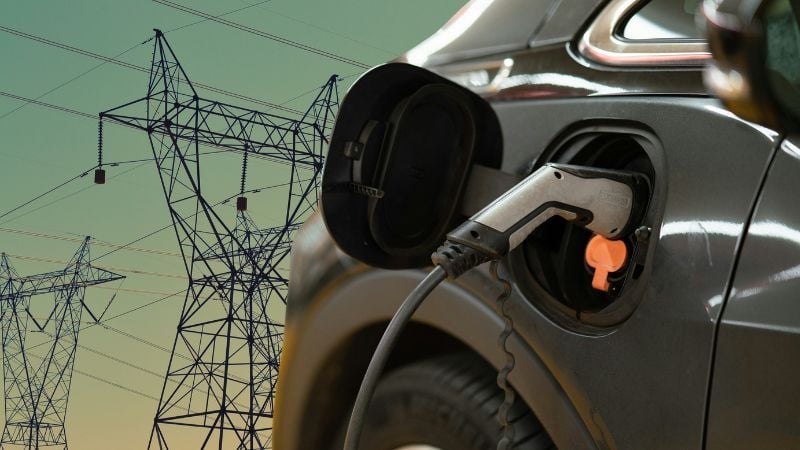
Electric vehicle and power lines. Image adapted from Canva and Unsplash
EV Charger Deployment
Governments worldwide are leading the charge with initiatives to install EV charging stations in urban areas, such as shopping centers, public parking lots, and residential neighborhoods.
As of 2023, over 137,000 charging ports were deployed across the U.S., growing as more people switch to EVs. This strategic placement aims to make charging convenient and integrate it into daily life, encouraging more people to switch without worrying about running out of power.
The private sector—including car manufacturers and energy companies—is also heavily involved. They’re investing in building extensive, easy-to-use charging networks across different vehicle brands. Standardization efforts are progressing, ensuring chargers are compatible with all electric car brands to simplify the user experience and support widespread adoption.
Despite the advances, challenges remain, especially in rural and less populated areas where installing chargers is less cost-effective. EV growth also depends on grid capacity and incorporating renewable power into charging infrastructure.
EV Charging Challenges to the Power Grid
Integrating EV chargers into the power grid presents several challenges that must be addressed for grid stability and efficiency. These issues have become particularly pronounced as the number of EVs on the road grows rapidly, placing unprecedented demands on current infrastructure. Key points include the following.
Increased Demand and Peak Load
EV’s widespread adoption dramatically increases overall electricity consumption, particularly during peak hours, when many EV owners are likely to charge their vehicles simultaneously. This demand surge can strain the grid, potentially overloading it and causing blackouts if the infrastructure isn’t prepared. Utilities must invest in upgrades and smart technologies to manage this increased load effectively.
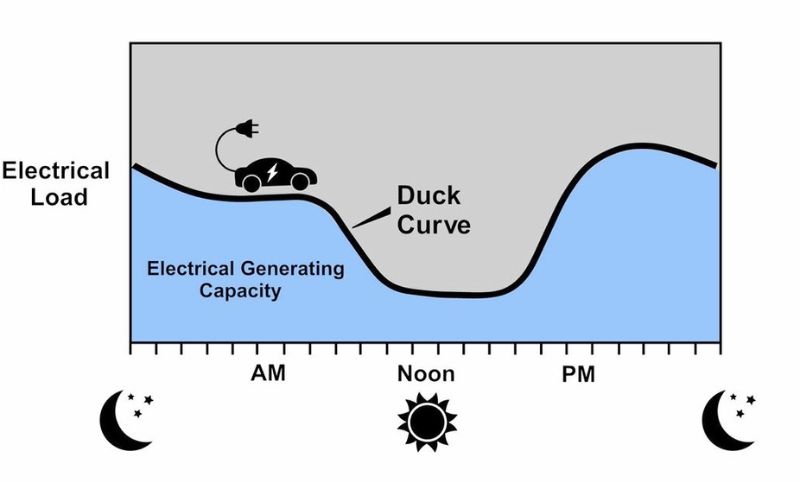
Smart charging can even out EV charging energy demand. Image used courtesy of Pacific Northwest National Laboratory/Mike Perkins
Localized Demand Spikes
The uneven distribution of charging stations can cause localized demand spikes, especially in cities with a high concentration of EV chargers. These areas may experience significant stress on the local power infrastructure, causing voltage fluctuations and potential service interruptions. Strategic planning and investment in localized grid enhancements are essential to ensure reliable service.
Grid Capacity and Infrastructure
The existing power grid in many regions isn’t designed to accommodate the additional load from widespread EV charging. Upgrading the grid to handle this new demand requires substantial transmission and distribution infrastructure investment. Upgrades like smart grid technology, improved transmission infrastructure, energy storage solutions, microgrid development, and modernization initiatives ensure the grid can handle higher demands.
Renewable Energy Integration
Integrating wind, solar, and other renewable electricity sources into the charging infrastructure presents another challenge. While they can provide cleaner power sources for EVs, they’re inherently dependent on weather conditions. Balancing this intermittent supply with the constant demand for electric vehicle charging necessitates advanced energy storage components for a stable, reliable power supply. Grid management systems are also necessary.
Solutions and Strategies
Researchers are developing and implementing various strategies and solutions to address these challenges. These approaches aim to enhance grid capacity, improve load management, and integrate renewable energy sources more effectively.
Artificial Intelligence
Artificial intelligence can optimize grid operations by analyzing vast data sets in real time, predicting electricity demand patterns, and optimizing energy distribution. Machine learning algorithms can forecast renewable power generation from sources like wind and solar, improving stability and reducing reliance on backup sources.
AI-powered smart grids can dynamically adjust electricity supply based on live demand fluctuations, enhancing efficiency and resilience. Additionally, AI-driven predictive maintenance helps utilities identify and address possible equipment failures before they occur, minimizing downtime and improving grid reliability.
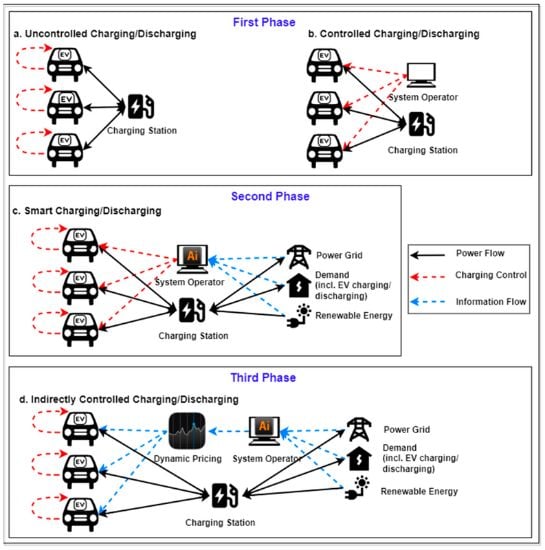
AI-enhanced smart charging. Image used courtesy of the authors
Grid Upgrades and Modernization
One primary solution to address the EV charger challenge is modernizing the grid. This includes enhancing transmission and distribution infrastructure by installing new transformers, upgrading substations, and reinforcing power lines.
Transformers, for example, are crucial for improving energy efficiency. Building operations consume approximately 40% of electricity in the U.S. Transformers can adjust the final voltage in power distribution systems. By increasing the grid’s capacity and reliability, utilities can better accommodate the additional load from EV charging without compromising service quality.
For instance, smart grid technology integrates digital communication technologies through the electrical infrastructure. This allows for real-time monitoring of electricity consumption, generation, and distribution. Smart grids can automatically adjust the supply and demand, optimizing power flow and reducing inefficiencies. They also support integrating renewable energy sources by managing their variability more efficiently.
Upgrading transmission lines and substations is also crucial for increasing grid capacity. High-voltage transmission lines can carry more electricity over longer distances with less energy loss, and upgraded substations facilitate smooth transfer between transmission lines and local distribution networks.
Smart Charging Technologies
Smart charging technologies are crucial in managing the increased demand. Public charging stations and home vehicle-to-grid (V2G) chargers with smart charging capabilities can significantly optimize energy usage. These technologies enable EVs to charge during off-peak hours when electricity demand and energy prices are lower. Smart chargers communicate with the grid to adjust charging rates based on current electricity availability and grid conditions, balancing supply and demand.
This strategy balances the grid’s load for a more stable power supply. Additionally, smart chargers can prioritize charging from renewable electricity sources, further reducing the environmental impact.
Distributed Energy Resources
Integrating distributed energy resources (DER), such as wind turbines, solar panels, and battery storage systems, can provide localized power generation and storage. DERs can alleviate stress on the central grid by supplying power directly to EV chargers, especially during peak demand periods. Energy storage systems can store excess renewable electricity generated during low-demand periods and release it when high demand ensures a consistent supply.
Vehicle-to-Grid Technology
Vehicle-to-grid technology allows EVs to draw from the grid and feed power back into it. This bidirectional electricity flow can stabilize the grid by providing additional capacity during peak hours. EVs connected to V2G systems act as mobile energy storage units, discharging power when necessary and recharging during off-peak times. This dynamic interaction enhances grid resilience and efficiency.
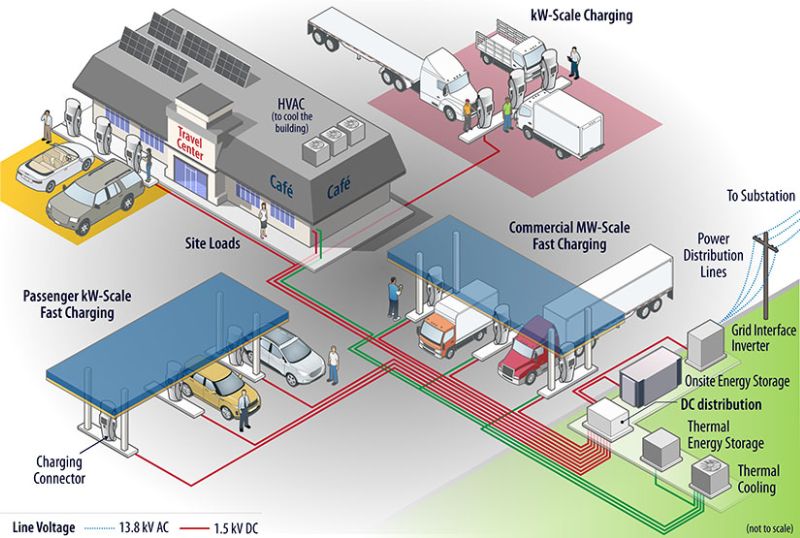
Vehicle-to-grid charging. Image used courtesy of National Renewable Energy Laboratory/Al Hicks
Policy and Incentive Programs
Governments and regulatory bodies can implement policies and incentive programs to support the development of charging infrastructure and grid improvements. Financial benefits for installing smart chargers, subsidies for grid upgrades, and mandates for renewable energy integration can encourage utilities and private sector stakeholders to invest in necessary infrastructure improvements. Clear regulatory frameworks and long-term planning are essential to transition toward a more sustainable and resilient grid.
Public and Private Sector Collaboration
Collaboration between the public and private sectors is vital for addressing EV charger deployment challenges. Public-private partnerships can provide resource sharing, expertise, and investment to expand infrastructure and upgrade the grid. Joint efforts can lead to innovative solutions such as integrated energy management systems and ensure a coordinated approach to supporting electric mobility growth.
Strengthening the Grid
As electric vehicle adoption accelerates, the power grid must evolve to meet the demands. The challenges EV chargers pose are significant, but they’re not insurmountable. Strategic grid upgrades, smart technologies, and other innovative solutions can mitigate these impacts effectively. Additionally, supportive policies and robust collaborations are crucial in fostering an adaptable and resilient grid infrastructure.