Facebook
 Google
 GitHub
 Linkedin
Briefs: Tech Advancements Target Data Centers and Batteries
Amazon, Terrestrial Energy, Riot Platforms, Nvidia, Infineon, Corning, d-Matrix, and many more are innovating in technology to support data centers and battery recycling.
Data center power needs continue to dominate innovations and strategies in power electronics. Amazon is investing in geothermal and solar energy for its data centers planned in Nevada. Terrestrial Energy will work with Riot Platforms to develop large-scale data centers powered by small modular reactors.
Both Nvidia and Infineon are focusing on the inner workings of data centers, with Nvidia partnering with Corning to develop advanced optical connectivity and Infineon teaming up with d-Matrix to enhance the efficiency and performance of high-speed AI data center operations.
Research also continues in batteries, which are critical to grid stability. In Germany, Fraunhofer IPA and others are developing automated methods to safely prepare used batteries for recycling or reuse.
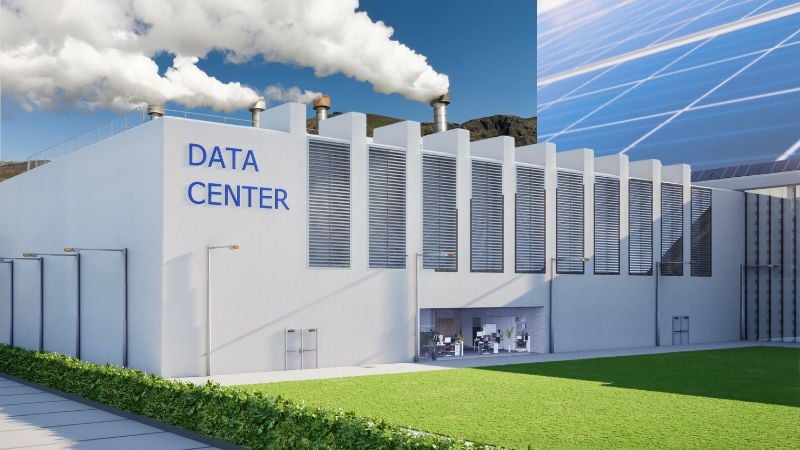
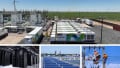
![]() Geothermal, solar and a data center. Adapted from images used courtesy of Canva
Geothermal, solar and a data center. Adapted from images used courtesy of Canva
Amazon Backs Geothermal and Solar for Nevada Data Centers
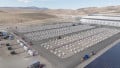
Amazon is investing in carbon-free energy to power its future data centers near Reno, Nevada. The 700 MW of capacity will include 100 MW of geothermal power from Zanskar and 600 MW of solar-plus-storage from Primergy. Amazon will coordinate the project with NV Energy, the local utility.
NV Energy has signed a 20-year power purchase agreement with Zansker for the geothermal energy, subject to approval by the Public Utilities Commission of Nevada. The agreement covers a portfolio of greenfield geothermal projects that Zanskar will construct and operate. Zanskar uses AI and advanced geoscience to develop its projects.
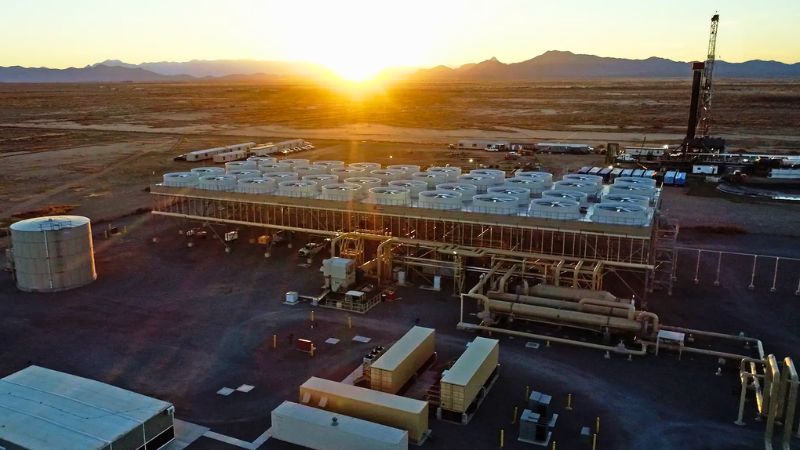
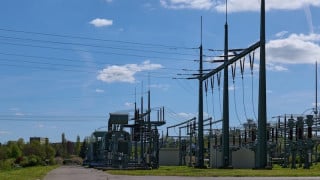
A geothermal energy plant. Image used courtesy of Zanskar
Primergy already has significant solar-plus-storage facilities in Nevada, totaling about 2.65 GW of solar and 1.5 GW of battery storage.
Amazon claims the investment will cover all costs associated with powering its data centers. The tech giant proposes a large-scale plant in Storey County.
Terrestrial Energy To Provide Nuclear Reactors for Large-Scale Data Centers
Terrestrial Energy and Riot Platforms will collaborate to use nuclear power for future data centers in Texas, Kentucky, and other sites. The partners aim to co-locate the data centers with nuclear power plants, deploying 390 MW, or about 4 GW, of IMSR plants.
Terrestrial uses integral molten salt reactor (IMSR) technology to develop small modular reactor power plants. It uses standard-assay low-enriched uranium (SALEU), which is easier to source than high-assay uranium (HALEU). Riot Platforms designs, develops, and operates data centers, including hyperscale data centers.
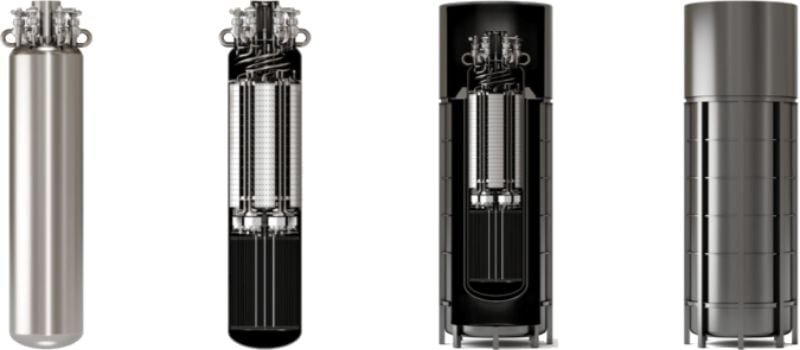
The IMSR core. Image used courtesy of Terrestrial Energy
Terrestrial Energy aims to begin commissioning these IMSR plants in the early 2030s. The project may include using natural gas as a bridge to accelerate the timeline and enhance power resilience during the nuclear plant development.
Nvidia and Infineon Plan Separate Projects to Support Data Center Tech
Two separate partnerships will focus on advancing power infrastructure for AI data centers. Nvidia has signed a multiyear partnership with Corning, Inc., for advanced optical connectivity solutions. Infineon will partner with d-Matrix to manage high AI power demands.
In collaborating with Nvidia, Corning will supply optical connectivity for hyperscale data centers that use Nvidia’s technology, including GPUS. The deal includes expanding three advanced manufacturing facilities in North Carolina and Texas. The expansion will increase its manufacturing capacity by 10 times and expand its U.S. fiber production capacity by more than 50%.
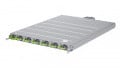
Infineon will work with d-Matrix, a provider of highly interactive, low-latency AI inference compute for data centers. The project will enhance the efficiency of high-speed AI data centers by integrating Infineon’s OptiMOS power modules into d-Matrix’s Corsair inference accelerator, enabling high-density boards to save energy and integrate systems. The power modules use vertical power delivery to maximize space and performance, with a dense power output of 1.0 A/mm2 for AI workloads.
German Researchers Create Robotic System for Repurposing EV Battery Cells
Fraunhofer IPA is working with RoB@t2Cell in a research project to provide automated solutions for disassembling used batteries for reuse or recycling.
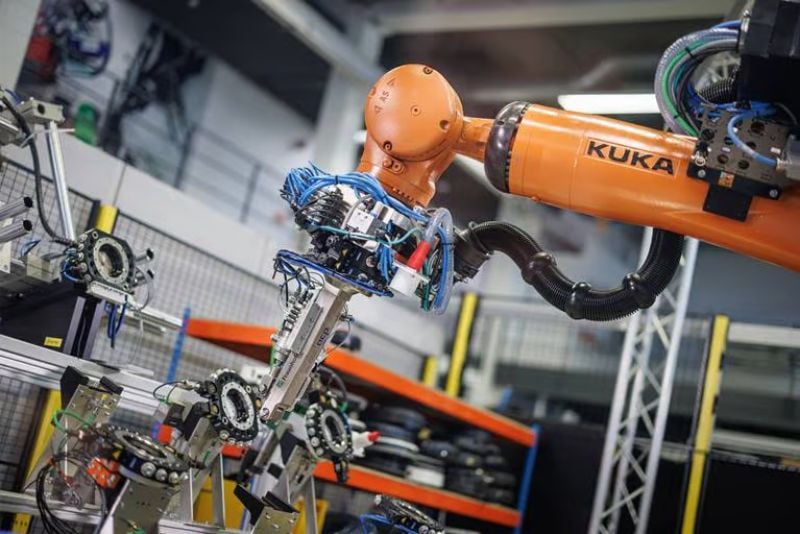
A robot disassembling batteries using the DeMotBat technology. Image used courtesy of Kuka
The RoB@t2Cell research team aims to develop a system that discharges battery cells and modules based on their next use. A battery destined for recycling is fully discharged. If it is intended for reuse, such as in a battery energy storage system, the charge is adjusted to a specific power level to prevent damage to valuable materials.
The project is developing a method to combine automated contacting, intelligent characterization, real-time decision-making, and demand-based discharge. An advanced robotic cell will carry out the disassembly process. Fraunhofer IPA will contribute its expertise in automated disassembly, recycling, machining and separation technology, and battery systems life cycle analysis.
For recycling, the project is developing automated methods to disassemble and open the cells, which are then processed through a water-based recycling process that can safely handle the batteries, even if they still hold a charge. The goal is to improve the recovery of critical raw materials.
The project will build on “DeMoBat,” a previous Fraunhofer IPA venture that demonstrated the technical feasibility of dismantling battery systems.
The system will be tested in an industrial pilot project at Umicore. Other members of the project team include Fraunhofer Institute for Recycling and Resource Strategy, acp systems, and the University of Stuttgart.