Facebook
 Google
 GitHub
 Linkedin
2024 EV Takeaways: Driving Forward With Caution
Electric vehicles had a strong year in the U.S., but electrification faces headwinds moving forward.
Despite political turmoil, market turbulence, and consumer uneasiness, 2024 was a strong year for electric vehicles in the U.S. By autumn, EVs had accounted for 8.9% of new car sales in the U.S.—a new high. This figure represents only fully electric vehicles and does not include plug-in hybrids (which made up about 2% of the 2024 U.S. market share).
EV growth in the U.S. over the past five years has been significant, going from about 2% in 2018 to 7.6% last year, representing about 1.2 million EVs sold. Some states have significantly higher EV adoption rates. For example, in 2023, California had a 19.6% EV market share, while Washington state had 18.8%.
Despite some setbacks, EV adoption steadily climbed in 2024.
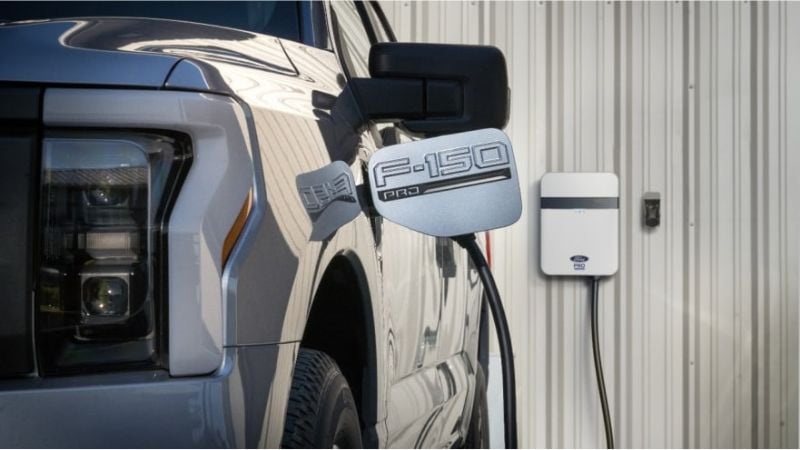
Ford electric truck, charging. Image used courtesy of Ford Media Center
Price Matters
As of October 2024, the average price of a new electric car was $56,351, while the average gasoline-powered vehicle was $48,623. This represents a price difference of $7,728, or approximately 16% higher for EVs.
It's worth noting that EV prices have been declining. In June 2022, average new EV pricing was at $66,997. Several factors contribute to EVs’ higher prices, including the advanced battery technology that significantly increases EV production costs and limited production scale. The cost of lithium-ion batteries has decreased markedly. 2019, the average global lithium-ion battery pack price was $156/ kilowatt-hour (kWh). Battery pack costs for 2024 are expected to have dropped to between $80/kWh and $128/kWh as manufacturing processes continue to improve.
Many automakers are still ramping up EV production, which affects economies of scale. As more EVs are produced, the costs are projected to drop. In addition, many early EV models targeted the luxury segment, inflating average prices.
Table 1. The price difference varies across vehicle segments.
| Gas Models | EVs | |
| Subcompact SUVs | $28,990 | $40,917 |
| Compact SUVs | $35,722 | $53,048 |
| Midsize cars | $32,035 | $49,554 |
| Large SUVs | $78,774 | $101,145 |
While EVs currently have higher upfront costs, the total cost of ownership, including fuel and maintenance expenses, can be lower in the long run.
Bumpy Road for EVs
Despite EVs' significant growth in 2024, several major automakers have delayed or scaled back their EV programs and vehicle launches due to lower-than-expected sales and changing market conditions.
Ford
- Canceled plans for a large, three-row all-electric SUV
- Delayed the introduction of its next electric pickup truck
- Reduced annual capital expenditure on EVs from 40% to 30%
- Shifted focus to hybrid models for three-row SUVs
General Motors
- Postponed plans for a new electric Buick
- Delayed an electric truck manufacturing facility
- Postponed a new battery production site
Volvo
- Abandoned its goal of selling only fully electric cars by 2030
- Now aims for 90-100% of global sales to be electric by 2030
Mercedes-Benz
- Reportedly canceled the MB.EA Large electric vehicle platform
- Extended its electrification timeline by five years, pushing it to 2030
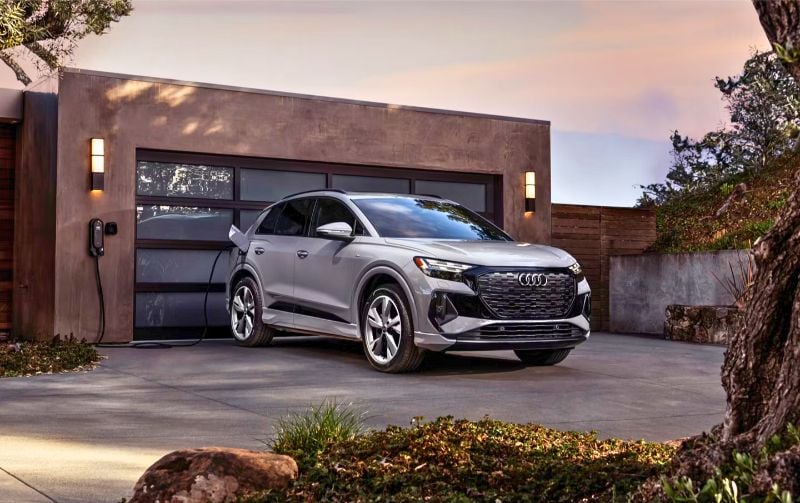
Audi Q-4 etron. Image used courtesy of Audi
Audi
- Considering the early end of production for the Q8 e-tron model
- Potential closure of the Brussels factory, impacting up to 3,000 workers
Toyota
- Pushed back the start date for EV manufacturing in the US to an undisclosed time in 2026
Porsche
- Abandoned its previous goal of having EVs account for 80% of new sales by 2030
- The company plans to stick with combustion engines for "much longer" than initially intended
- May re-engineer its future cars developed as EVs for hybrid powertrains
- The company will refresh its combustion engine cars, including the Panamera and Cayenne13
- Porsche will continue to rely on plug-in hybrids
Volkswagen
- Considering closing German factories as part of its transition to EVs
EV Market Uncertainty
These changes reflect a broader industry trend of automakers adjusting their EV strategies in response to slower-than-anticipated demand growth, challenges in achieving profitability, and increased competition, particularly from Chinese manufacturers.
They might also reflect uncertainty in the U.S. marketplace following the November 2024 presidential election. The previous administration strongly supported EVs through the Inflation Reduction Act, which extended tax credits up to $7,500 for new EV purchases and up to $4,000 for used EVs. These incentives help lower consumers' upfront costs, making EVs more affordable and appealing. The act also included incentives for electrifying heavy-duty vehicles, such as school buses, expanding the market for electric transportation beyond passenger vehicles.
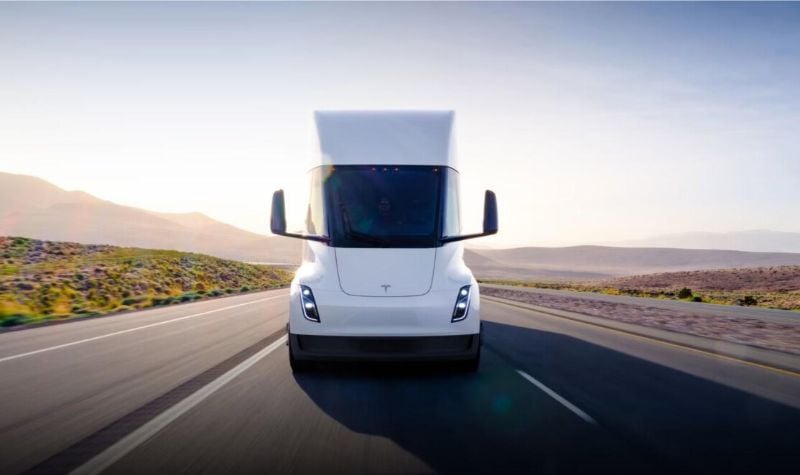
Tesla semi-truck. Image used courtesy of Tesla
The new administration has stated that it favors eliminating the EV tax incentives. This could slow EV sales and keep more fossil fuel-powered vehicles on the roads. It also favors repealing the IRA, which could discourage further investment in EVs, slowing technological advancements by U.S. automakers.
If the U.S. faces an uncertain market, China is still moving ahead with its New Energy Vehicle policy at a furious rate. EVs and plug-in hybrids accounted for 53.8% of total passenger vehicle sales in August 2024 and exceeded 1 million EV sales in a single month (August 2024) for the first time. In Europe, EV sales dominate, with around 25% market share and over 5% year-on-year growth. Some European countries, like Sweden, have reached 60% EV market penetration.
Many Choices (Finally)
One problem U.S. consumers have faced is the limited number of EV models available. That is finally changing, and manufacturers currently offer a range of EV models in every market segment.
Sedans and Hatchbacks
- Audi e-tron GT
- BMW i4
- BMW i5
- Chevrolet Bolt EV
- Fiat 500e
- Ford Mustang Mach-E
- Genesis Electrified G80
- Hyundai Ioniq 6
- Lucid Air
- Mini Cooper SE Hardtop
- Nissan Leaf
- Polestar 2
- Tesla Model 3
SUVs and Crossovers
- Audi Q4 e-tron
- Audi Q8 e-tron
- BMW iX
- Cadillac Lyriq
- Chevrolet Blazer EV
- Chevrolet Equinox EV
- Faraday Future FF 91
- Fisker Ocean
- Ford Mustang Mach-E
- Genesis GV60
- Genesis Electrified GV70
- Hyundai Ioniq 5
- Hyundai Kona Electric
- Jaguar I-Pace
- Kia EV6
- Kia EV9
- Kia Niro EV
- Mercedes-Benz EQB
- Mercedes-Benz EQE SUV
- Mercedes-Benz EQS SUV
- Nissan Ariya
- Rivian R1S
- Subaru Solterra
- Tesla Model X
- Tesla Model Y
- Volkswagen ID.4
- Volkswagen ID.Buzz
- Volvo C40 Recharge
- Volvo XC40 Recharge
Pickup Trucks
- Chevrolet Silverado EV
- Ford F-150 Lightning
- GMC Hummer EV Pickup
- Rivian R1T
- Tesla Cybertruck
Luxury and Performance
- BMW i7
- GMC Hummer EV SUV
- Mercedes-Benz EQE
- Mercedes-Benz EQS
- Rolls-Royce Spectre
- Tesla Model S
- Porsche Taycan
Several highly anticipated electric vehicles are coming in the near future. These include an affordable compact electric hatchback from Volkswagen called the ID.2, an electric SUV from Polestar, a luxury electric SUV from Acura called the ZDX, a new electric Range Rover, several EV offerings from Jeep, an electric Maserati called the GranTurismo Folgore, and an electric version of Porsche’s entry-level Boxster sports car. At least 25 new EV models will be introduced or available in 2025.
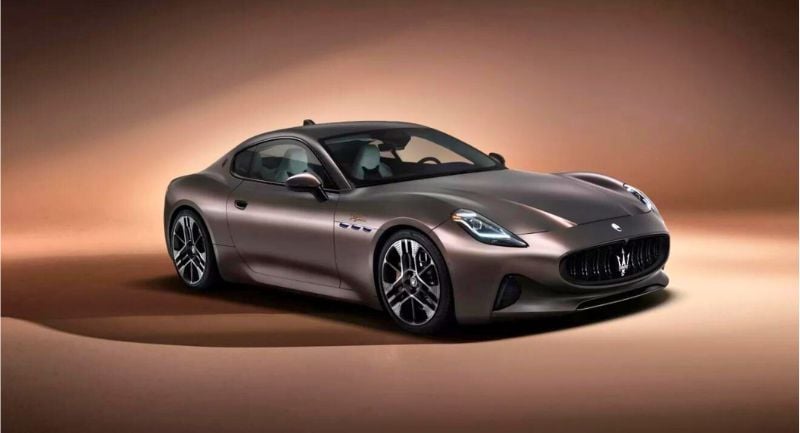
Gran Turismo Folgore EV. Image used courtesy of Maserati
Whether or not U.S. consumers will finally embrace transportation electrification will depend on a range of factors, including EV price reductions to reach parity with gasoline-powered models, improved nationwide charging infrastructure, and implementing policies that promote EV adoption and infrastructure development. 2024 was a strong year for EVs in the U.S.; it remains to be seen what the future holds.