Facebook
 Google
 GitHub
 Linkedin
Substation Commissioning and Testing—Part 1: Scope and Workflow
Learn how substation commissioning verifies design intent and system integration through FAT, SAT, cold (pre-energization), and hot (post-energization) phases—reducing risk and ensuring safety.
Commissioning transforms a built substation into an operational asset by verifying that design intent, equipment performance, protection logic, and operational controls all work together safely and reliably. Unlike construction QA/QC or equipment factory tests in isolation, commissioning treats the substation as an integrated system, validating individual devices and the interactions among protection, control, communications, and the primary plant. The result is reduced technical and operational risk at energization and a credible record for future operation and maintenance.
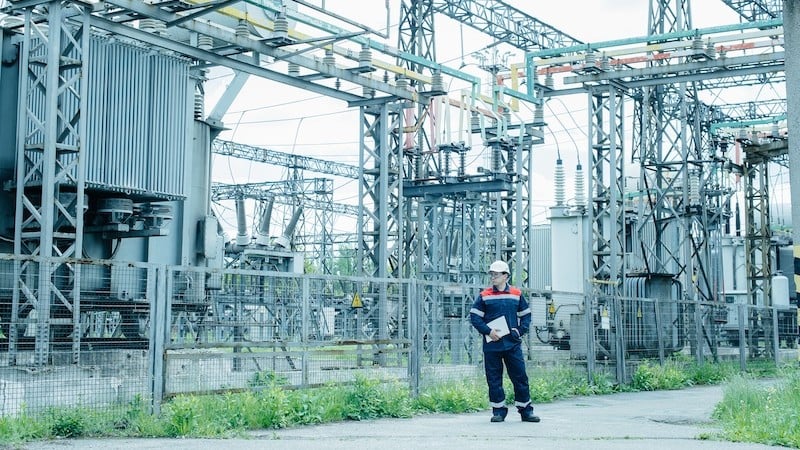
Figure 1. Shown here, an engineer inspects the modern equipment of an electrical substation before commissioning. Image from Adobe Stock (licensed).
Purpose and Scope of Commissioning
Commissioning bridges design, construction, and operation. At the device level, it confirms each component meets specifications; at the system level, it proves scheme selectivity, interlocks, and data paths from process to SCADA. This end-to-end perspective complements acceptance testing specifications such as ANSI/NETA ATS, which guide field tests and inspection to assess suitability for initial energization and performance within manufacturers’ tolerances.
Because acceptance testing and commissioning are often discussed together and their boundaries are not always clearly defined, it is helpful to distinguish among factory acceptance testing (FAT), site acceptance testing (SAT), and commissioning:
- FAT occurs at the vendor facility before shipment, demonstrating conformance in a controlled setting and catching wiring, logic, or build issues early.
- SAT occurs after installation, proving the system functions correctly in the actual environment and interfaces properly with adjacent systems.
- Commissioning encompasses staged verification (pre‑energization and post‑energization) of the total installation, including protection selectivity, interlocks, communications, and operational procedures. Established Industry practice describes this progression consistently: FAT pre‑shipment, SAT post‑installation on site, both feeding the broader commissioning and final acceptance.
Inadequate commissioning can leave latent failures that surface as misoperations, outages, or safety events. ReliabilityFirst (RF) reported a 7.22% protection system misoperation rate in 2024 across its region; leading contributors included relay failures, incorrect settings, and as‑left errors—factors that robust commissioning can expose and correct before service.
Risk-Reduction Process
Commissioning is equally a safety and risk‑reduction process. Lockout/tagout, methodical isolation, and job briefings are embedded through OSHA 29 CFR 1910.269 requirements for hazardous energy control during servicing and testing of electric power generation, transmission, and distribution equipment. NFPA 70E further expects a documented risk assessment before any energized work, defining protective measures based on likelihood and severity.
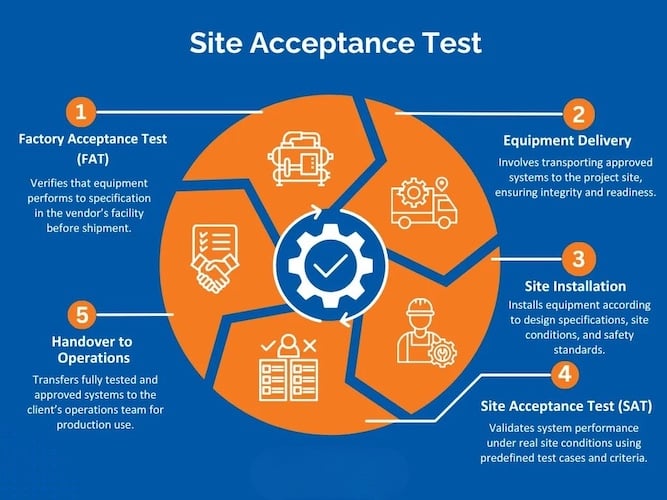
Figure 2. Factory Acceptance Test (FAT) vs. Site Acceptance Test (SAT). Image used courtesy of LotusWorks.
Commissioning Phases and Workflow
Commissioning activities are commonly grouped as pre‑energization and post‑energization. Pre‑energization focuses on visual inspections, mechanical completion, insulation and polarity checks, point‑to‑point verification, protection configuration, and SCADA integration tests conducted with sources isolated or using secondary/primary injection. Post‑energization focuses on controlled energization steps, monitoring inrush and loading behavior, confirming protection selectivity under live conditions, and capturing baseline data for asset health trending (for example, initial DGA on power transformers).
In substation projects, these pre- and post-energization phases are commonly referred to as cold and hot commissioning. Cold commissioning (pre‑energization) validates installation quality and control logic without applying system voltage; hot commissioning proceeds after cold checks are complete and verifies performance under actual operating conditions and real voltage. Both stages matter: the former finds workmanship and configuration issues when the hazard is lowest; the latter proves the installation performs correctly in service.
The commissioning workflow below is typical; exact steps depend on substation type, protection philosophy, and utility procedures.
Mechanical Completion
- Verify equipment nameplates, ratings, and install quality; confirm torque, clearances, labeling, and grounding continuity.
- Complete punch‑list items, implement redlines on drawings, and consolidate as‑built documentation.
- Confirm control power systems (AC and DC), battery chargers, and UPS operation; verify alarms and transfer sequences.
Pre-Commissioning Tests
- Primary equipment: transformer ratio, winding resistance, excitation/insulation assessments, bushing checks, tap changer control, and alarms. IEEE guides such as C57.152 describe diagnostic field tests for liquid‑filled transformers and related equipment.
- Instrument transformers and circuits: CT/VT polarity, ratio, burden, secondary insulation, and wiring continuity to relays.
- Protection and control: verification of settings, logic, and trip paths via secondary injection; verification of interlocks and lockout relays; end‑to‑end tests for line protections where applicable.
- SCADA and communications: point‑to‑point checks for status, analogs, controls, alarm routing, and time sync; review of event and disturbance retrieval paths.
- IEC 61850 systems: use of test/simulation modes, quality flags (q.test), and LGOS/LSVS supervision for GOOSE/Sampled Values subscriptions to test functions without issuing real outputs.
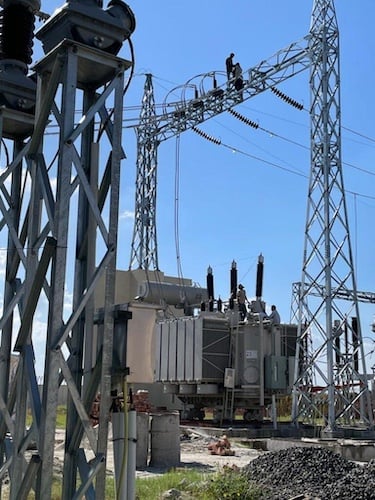
Figure 3. Power transformer commissioning. Image used courtesy of Power Synchro.
Functional and Integration Testing
- Scheme selectivity and interlocking: verify permissives, blockings, and anti‑pump logic across bays and with station interlocks.
- System integration: SCADA mimic accuracy, alarm priorities, sequence‑of‑events time alignment, and remote/local command authority.
- Configuration management: manage relay and gateway settings with version control and change authorization; for digital substations, maintain SCL (SCD/CID) files as the engineering “record” for signal maps and GOOSE/report subscriptions.
Energization and Monitoring
- Execute an approved energization plan with staged voltage application—bus, transformer no‑load, then outgoing feeders—while monitoring inrush restraint, DC supply performance, alarms, and thermal behavior.
- Establish baseline condition data; for transformers, obtain post‑energization DGA samples and trend against IEEE C57.104 guidance. Early deltas and rates inform follow‑up intervals and caution thresholds.
Documentation and Test Sign‑Off
Documentation is a formal commissioning deliverable and an integral part of acceptance. Key elements include:
- Test reports: equipment tested, procedures, measured values, test equipment calibration, as‑found/as‑left settings, and pass/fail criteria. Consistent report structure supports quality reviews and future maintenance.
- Acceptance sign‑off: formal evidence that field tests conform to acceptance specifications (for example, ANSI/NETA ATS forms), with signatures from testing, QA/QC, and client/owner representatives as applicable.
- Configuration artifacts and evidence retention: settings files, SCL packages (SCD/CID) under version control, and change logs aligned with NERC CIP‑010 practices for configuration baselines and change authorization in Bulk Electric System (BES) contexts.
- Maintenance program linkage: commissioning results inform future maintenance intervals and monitoring plans under NERC PRC‑005‑6, which requires a documented Protection System Maintenance Program with activities and maximum intervals set by component type.
Technical Depth and Disciplined Process Control
Effective commissioning balances technical depth with disciplined process control. Early FAT activities compress site risk; SAT confirms installed performance; commissioning ties both to real-world operation with traceable evidence. The approach reduces misoperations driven by incorrect settings, interface mismatches, or “as‑left” errors, issues that continue to appear in event analyses and misoperation statistics.
Embedding safety practices from OSHA 1910.269 and risk assessment expectations from NFPA 70E ensures personnel and assets remain protected as verification steps progress from cold to hot stages. Using standard guides—NETA ATS for acceptance, IEEE C57.152 for diagnostic transformer testing, and IEEE C57.104 for DGA interpretation—provides a shared technical language for teams and reviewers. For digital substations, careful handling of IEC 61850 test/simulation modes and disciplined SCL file management avoids inadvertent operations and preserves interoperability through the asset’s life.
The payoff is immediate at energization and continues through operations: protection systems behave as designed, controls and SCADA reflect the plant state accurately, and documentation supports both reliability programs and regulatory audits. Commissioning, executed as a structured verification and risk‑reduction process, turns a construction project into a safe, reliable, and maintainable substation.