Facebook
 Google
 GitHub
 Linkedin
Handling the Heat With Tesla Backup
Here’s how Tesla’s Powerwall fleet helped California’s grid operators manage peak demand during a heatwave.
This summer, thousands of Powerwall devices across California were activated to meet peak demand in triple-digit temperatures. Tesla’s popular energy storage system delivered over 100 MW in just one night, then another 100 MW the following day in July.
Tesla’s virtual power plant. Video used courtesy of Tesla
Powerwall is an integrated residential solar and battery system that converts energy from Tesla’s Solar Roof or other photovoltaic (PV) installations. The rechargeable battery pack supplies storage for backup power, load shifting, or off-grid applications. In peak demand events like heatwaves, customers discharge excess power stored in their Powerwall via Tesla’s virtual power plant (VPP) program.
Earlier this year, Tesla called on customers to participate in a summer VPP to support the grid during peak hours (4 to 9 p.m.) between May and October. Tesla taps its VPP when wholesale electricity prices reach $200 per MWh.
In last month’s VPP event, more than 34,000 Powerwall devices supplied distributed solar power to California’s grid amid the heatwave. VPPs tap into individual distributed energy resources and compensate customers in return. Tesla automatically shifts the customer’s energy usage to tap the best peak prices.
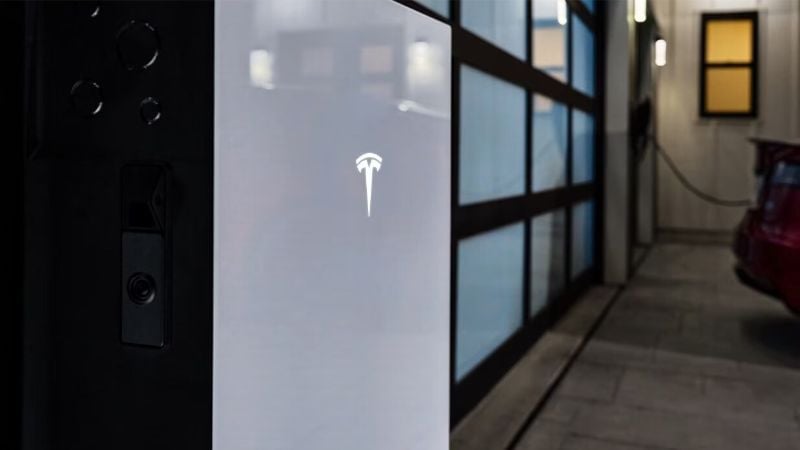
A Tesla Powerwall unit. Image used courtesy of Tesla
When a customer’s rooftop solar system generates more energy than needed, Powerwall stores the extra output and recharges via the grid. It can also be used for backup power. Ahead of storms, Tesla automatically charges Powerwall to its maximum capacity so users can still power their electric vehicles and A/C and heating units after an outage hits. More homeowners are considering battery storage products paired with rooftop solar panels. Tesla currently leads the residential solar-plus-storage market, claiming a 30.2% share last year, according to Wood Mackenzie.
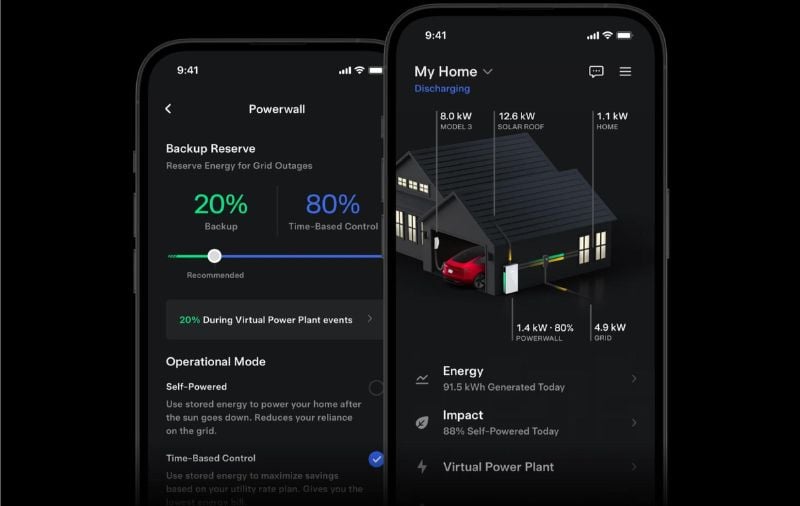
Powerwall data in the Tesla app. Image used courtesy of Tesla
California Case Study: Managing Peak Demand with Energy Storage
As California phases out natural gas in favor of variable renewable energy resources, the grid is less flexible to sudden shifts in supply and demand. Data from the Energy Information Administration shows that renewables, including hydropower and small-scale PV systems, generated 54% of the state’s electricity in 2023, while natural gas-fired plants supplied 39%. Coal only accounts for a tiny portion, all from a 57 MW industrial plant.
Batteries are a tool in this transition because they employ load-balancing functions once managed by fossil fuel-based peaker plants. California’s battery storage capacity has skyrocketed by 1,020% since 2020. The growing battery fleet helps manage regular fluctuations in solar and wind outputs. As renewable generation ramps up and down, energy storage systems handle the shortfall. The state reported its daily battery storage discharge surpassed 6 GW last April, making batteries a valuable resource during heatwaves and other destabilizing events.
As a leading hub for solar and EV adoption, California was a critical testing ground for Tesla’s VPP model. The company previously saw success in its first VPP with Pacific Gas and Electric Company in 2022, when thousands of participants contributed peak power through 10 VPP events during a two-month heatwave. Since then, Tesla has also launched a Demand Side Grid Management program, with customers earning an average of $350 per unit in the summer.
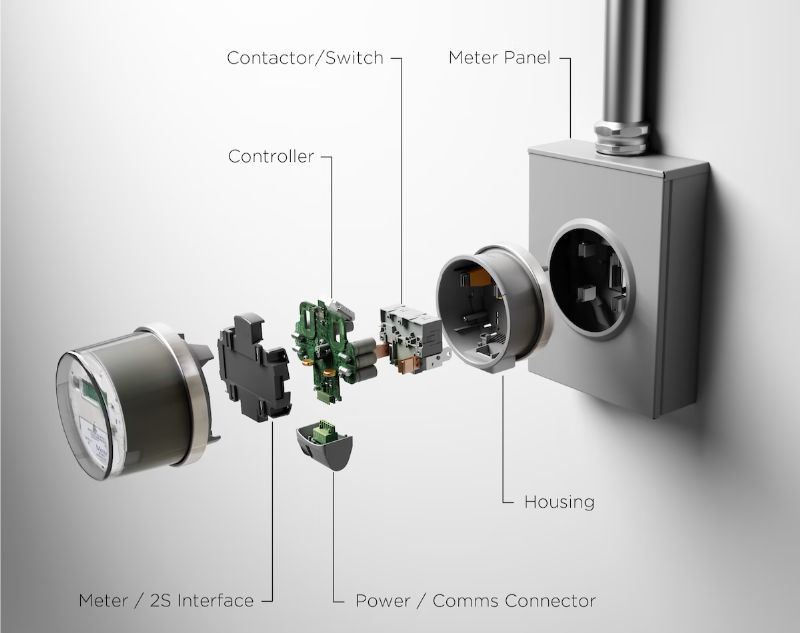
The Powerwall backup switch connects to the grid when needed. Image used courtesy of Tesla
California Independent System Operator (CAISO) data shows a steady uptick in battery discharging levels since last spring, from 5 GW at peak times in April to 7.7 GW on June 19, a new record. This energy storage capacity later came in handy throughout July’s heatwave as Californians faced triple-digit temperatures. Southern California’s Palm Springs hit a record 124 °F, while the infamously scorching Death Valley approached its record high of 129 °F days later. Fortunately, CAISO had enough resources to meet peak demand, which surpassed 43 GW on July 11 at 7 p.m., while avoiding power disruptions and supply shortfalls.
Expanding Energy Storage Deployment Nationwide
Tesla’s Megapack and Powerwall products achieved record storage deployments in the second quarter, topping 9.4 GWh. Last year’s total energy storage deployment grew by 125% to 14.7 GWh.
Home battery storage deployment is growing as homeowners seek to counter outages and rising utility rates. SunPower, a market-leading residential solar company, recently started offering Tesla Powerwall 3 as part of its portfolio.
Tesla recently rolled out its next-generation Powerwall 3 series in the U.S., the U.K., Canada, and Germany. With a capacity of 13.5 kWh, Powerwall 3 offers 11.5 kW of continuous backup or on-grid power. It can start heavy loads rated up to 185 LRA, accommodating most homes’ power needs.
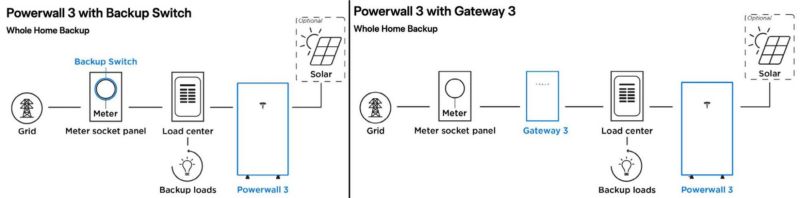
Powerwall 3 example configurations. Units are installed with Tesla Backup Switch or Gateway devices to monitor energy consumption and control the grid connection. Images used courtesy of Tesla (Page 8)
Powerwall 3’s solar inverter converts PV outputs into electricity with a 97.5% solar-to-grid efficiency ratio. The product also includes six inputs with point trackers for maximum power. The integrated inverter and system controller can operate from -4°F to 122°F, widening Tesla’s geographical reach.
Tesla’s VPPs are expanding nationwide, making more distributed devices available for grid support. Texas utility officials approved Tesla’s VPP last year. When Hurricane Beryl rocked Texas in early July, 7,000 Powerwall owners used over 200,000 hours of backup power. The company also recently launched a VPP in Maine.