Facebook
 Google
 GitHub
 Linkedin
Improving Grid Reliability With Smart EV Charging
Electric vehicle charging can cause grid instability. How can smart EV chargers help balance the energy load?
WeaveGrid and Emporia Energy have partnered to make smart electric vehicle charging more accessible to more people. They aim to expand EV charging management programs to EV charger owners to better manage their energy usage.
The agreement will combine WeaveGrid’s EV management software with Emporia’s chargers, allowing users to participate in utility-managed charging programs that support grid reliability.
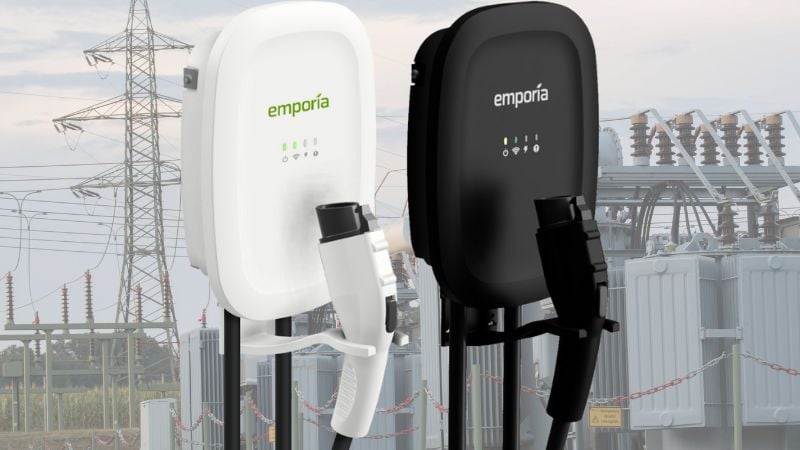
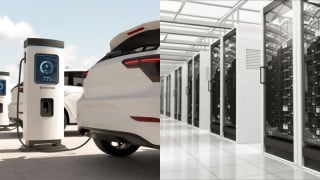
EV chargers. Image used courtesy of Emporia Energy
Increasing EVs Challenge the Grid
Rapid EV growth over the past decade has increased energy demand on local power grids. The challenge is complicated because EVs involve different energy loads than other energy consumption systems.
For EVs, the charging challenges are not related to peak loads but to non-coincident peaks varying from location to location. EVs change locations, so they have non-uniform charging patterns that can unexpectedly cause a large power drain from the grid if many EVs are suddenly charged in one area simultaneously. It also doesn’t take many EVs in a neighborhood to overload residential grids.
EV charging challenges are also ever-evolving as adoption increases. For example, adding a single Level 2 charger to a home can increase household power demands two to threefold and strain local transformers. When this is multiplied by the many houses in each area and added to commercial and manufacturing energy use, the local grids can soon become strained with so much local and intermittent demand for power.
How Smart EV Chargers Could Help
Software management systems can optimize the complex needs of local EV charging infrastructure. WeaveGrid’s EV management system optimizes charging based on the regional grid conditions. It can be used with various EV loads, such as single-family residential, multi-family residential, fleet depots, and public charging systems.
The system uses distribution optimization (DISCO) to manage EV charging loads. Balancing EV charging loads with the DISCO system helps protect existing infrastructure, negates the need to upgrade it, and provides grid planning operations.
The system manages passive and active charging. Passive charging means humans schedule charging at a given time. Active charging systems occur when a utility company controls a customer’s EV load to reduce stress on the grid. Stress can occur during peak loads or when stored energy is abundant.
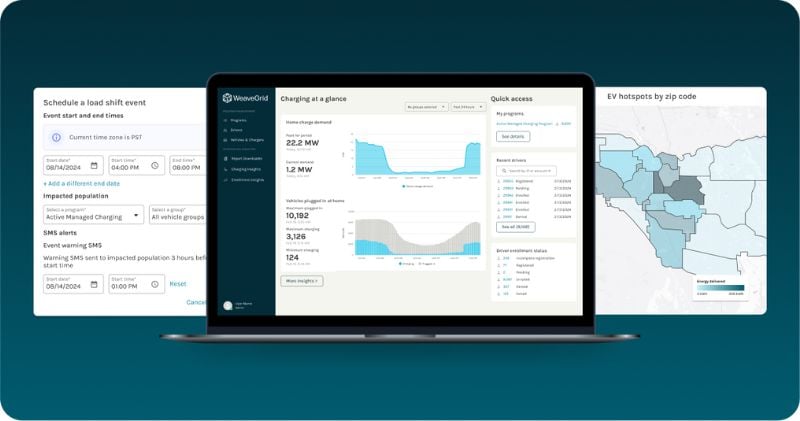
EV charging management. Image used courtesy of Weavegrid
Additionally, the software helps optimize the ideal charging times, which minimizes the stress on the system by determining the best time to charge different EVs and for how long. This can be done at the single EV level or for EV fleets in each area. This prevents overloads on local transformers and other local neighborhood grid infrastructure. Smart EV charger management helps improve the lower peak persistent power, keeping the infrastructure running longer.
Overall, WeaveGrid’s software platform helps to manage EV charging demands in real time, reducing the strain on local grids (and the wider distribution system) and improving grid reliability. Charging management can also help save on electricity bills.
More Connectivity Equals Greater Grid Reliability
Connecting more EV chargers to management systems can protect the grid’s energy flow and prevent system overloads. The WeaveGrid and Emporia Energy partnership could help increase the adoption of smarter EV chargers, improve grid reliability in more places, and save users more money in the long run.