Facebook
 Google
 GitHub
 Linkedin
CERN Studies Quantum Technology to Optimize Grid Ops
Renewable energy and distributed energy sources complicate grid operations. CERN proposes to streamline grid management with quantum computing technology.
The growing demand for energy around the world has led to more grid-integrated renewable energy sources. While renewables can help to provide enhanced grid resilience, they also need to be efficiently managed alongside traditional energy assets to ensure that bottlenecking doesn’t occur and users always have access to an energy supply.
Efficient management solutions to coordinate all energy generators are needed to ensure that the grid has low energy losses and the power supply remains stable. While smart grid technology has made management operations easier, researchers are suggesting using quantum solutions. CERN's Open Quantum Institute (OQI) has launched a project with Wolfram Research and Classiq centered on quantum optimization of power management and overcoming the unit commitment problem.
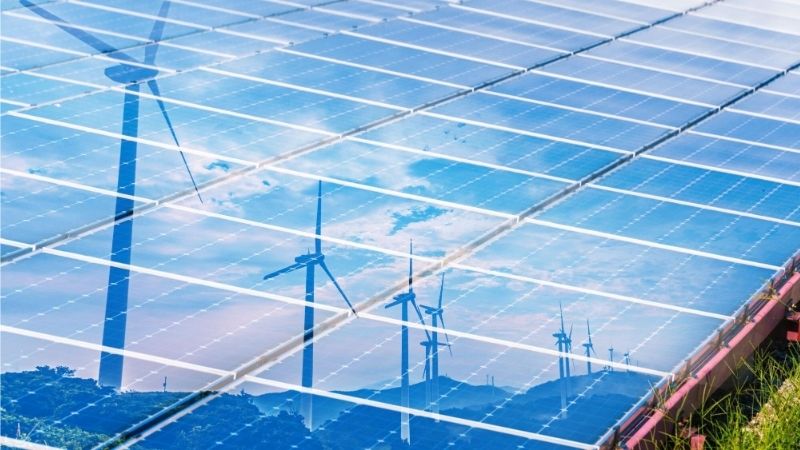
Is quantum optimization the key to integrating renewables? Image used courtesy of Adobe Stock
Why the Grid Needs Efficient Optimization
Distributed energy resources (DERs), such as solar and wind, are supporting decarbonization and grid stability efforts, but their intermittent nature also causes challenges. DERs create variable and fluctuating demand patterns that make it hard to predict the amount of energy generated, which makes it difficult to manage energy grids with many DERs. If not handled properly, sudden and unexpected bursts of renewable energy into the grid can slow it down, causing energy bottlenecks and transmission congestion. As more DERs are added to the grid to meet the ever-growing demand for clean energy, managing these renewables will be more difficult without efficient energy management systems and the appropriate computing architecture.
The Unit Commitment Problem
In energy management, the unit commitment (UC) problem is a mathematical optimization problem that determines the optimal scheduling for power generators within a grid so that they can meet energy demand with minimal cost. The UC problem works over large scales and decides which energy generators should start or be shut down over a period of time to meet demand and cost. This coordination is required because it’s difficult to store electrical energy on a large scale. Instead, it needs to be created, distributed, and consumed efficiently (relative to demand) at all times.
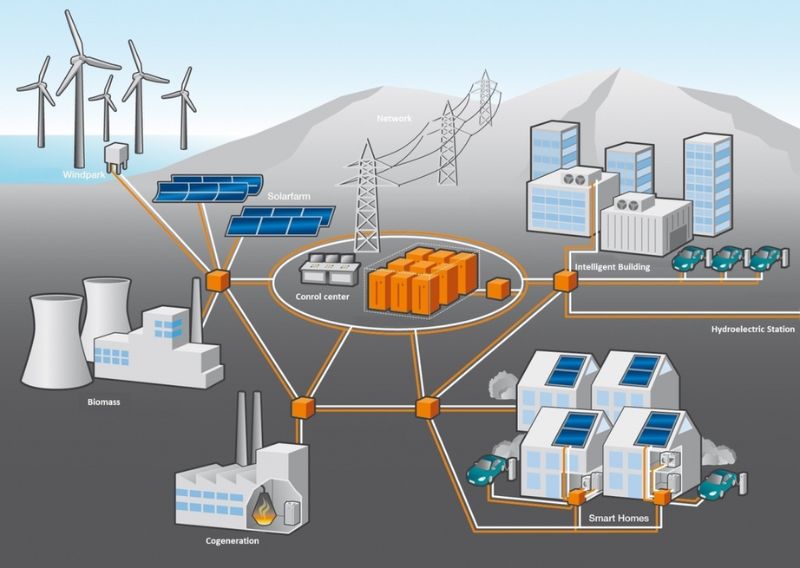
Integrating distributed energy resources. Image used courtesy of Wikimedia Commons
Various energy generation technologies are managed in UC problem algorithms, including power plants that burn fuel (coal, nuclear, natural gas), hydro energy technologies, and renewables (wind and solar). However, coordinating all these assets is a challenge for multiple reasons, including:
- The large number of energy generation units that need to be managed (often thousands of units)
- The variation in the type of energy generation units that need to be coordinated, all of which have different constraints and energy production costs
- The need to coordinate over large geographical areas, which means the load needs to be balanced within the grid over large transmission networks
Why Use Quantum Computing in Smart Grids?
Managing the large number of energy generation units requires significant computation with classical computing systems―one of the main UC challenges that needs resolution before the actual operations take place. Without knowing the grid’s future state, both the demand and generation capacity need to be estimated. More grid-attached intermittent energy generators have only exacerbated the problem by increasing the system’s uncertainty level.
Quantum computing operations can help by providing much quicker predictions with lower computational cost across complex networks and for solving complex problems. It can handle wide swaths of data relating to complex grid scenarios, resource allocation, weather data, grid topology, grid capacity, renewable forecasting data, power consumption data, and energy market pricing data.
As grid networks continue to grow and include more intermittent power generators over large areas, including electric vehicle charging, localized demand spikes will continue. More efficient quantum algorithms could grow to meet the increasingly complex energy management scenarios around the grid.
OQI Project Launched for Optimizing Power Grids
CERN’s OQI, with Wolfram Research and Classiq, will develop quantum software to solve the scaling challenges associated with the UC problem in the wake of many new intermittent generation units entering the grid. Wolfram Research develops cloud technology, while Classiq develops quantum software platforms.
The project’s purpose is to use advanced quantum optimization algorithms to solve the challenges lying ahead. It will start by applying hybrid quantum-classical methods to the current challenges in electrical network optimization. To create the hybrid framework, Wolfram and Classiq will be combining quantum software with classical mathematical frameworks to improve the efficiency and scalability of UC problem solutions for energy providers and grid operators.
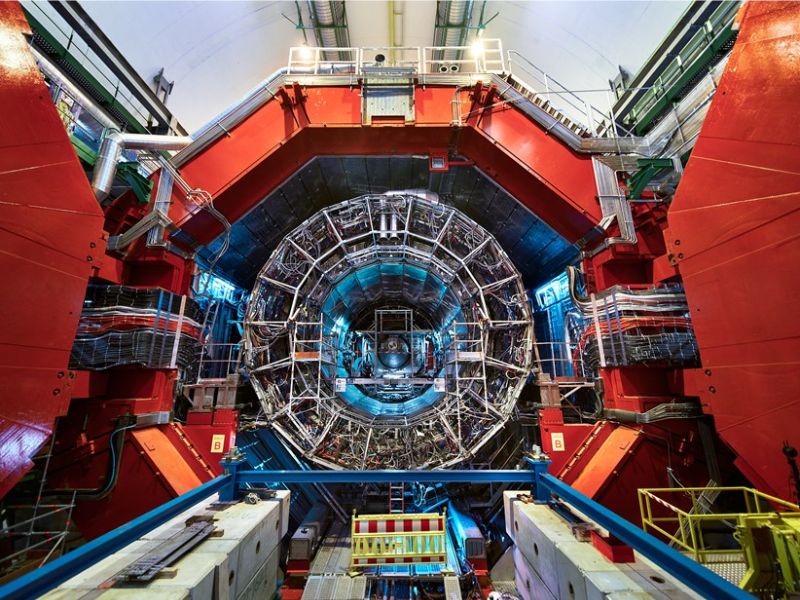
CERN’s large hadron collider, used for studying grid optimization. Image used courtesy of CERN
The pilot phase, launched in March 2024, is part of CERN’s Quantum Technology Initiative―a series of projects that aim to showcase how quantum technologies can benefit society, with each project linked to one or more of the United Nations Sustainable Development Goals. This project has been linked to SDG7 for universal access to energy.
The project’s goals are:
- Develop scalable quantum optimization models for improving grid management operations
- Develop hybrid quantum-classical workflows that can easily integrate into existing infrastructure
- Broaden access to quantum computers through industry partnerships and educational consortia
More OQI Projects in Development
The OQI is also conducting a project to optimize wind turbine layout in wind farms. Additionally, researchers are working to improve the accuracy of the simulation methods used for developing new battery materials. Another project is examining how to optimize the integration of renewable energy technologies into the grid to further enhance grid reliability.