Facebook
 Google
 GitHub
 Linkedin
Nokia To Install Private 5G Network To Modernize Tennessee Grid
The deal between Noka and Memphis, Light, Gas and Water represents a growing trend in 5G utilization in smart grid operations.
Nokia has contracted with Memphis Light, Gas and Water (MLGW) to build a full-scale, standalone 5G private wireless network in Tennessee to improve and modernize the grid. The 5G network will support grid operations across Memphis and Shelby County, Tennessee, to improve power distribution to over 420,000 residents.
The partnership aims to reduce the risk of unplanned outages and to improve MLGW’s ability to restore power in adverse situations. 5G technology is increasingly being implemented worldwide in smart grids to improve efficiency and resiliency.
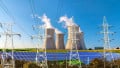
5G technology enhances smart grid operations. Image used courtesy of Adobe Stock
The Nokia and MLGW Deal
Service providers have already implemented long-term evolution (LTE, typically a 4G network) in the grid. However, Nokia and MLGW’s deal is the first in the U.S. using a full-scale standalone 5G private wireless network. The multi-year 5G deployment is valued at around $31 million.
The project will be implemented in two phases, and when complete, will provide real-time communication and automation capabilities across the utility’s three divisions—electric, gas, and water services. The aim is to unify the communications between these three divisions while improving the grid’s resilience, data connectivity, and operational efficiency to support a continued increase in grid automation.
The first phase will focus on establishing foundational coverage for core operations, with an expected coverage of 93% across the county. The second phase will build on the first phase and improve coverage while improving network resiliency and supporting grid automation operations.
To facilitate these grid improvements across the two phases, Nokia will deliver its AirScale radio access equipment and 5G Core Enterprise Solution to MLGW. The contract between the two parties also includes providing a microwave backhaul solution and towers—supported and managed by Nokia—and Nokia’s NetGuard cybersecurity products to strengthen cybersecurity in the newly connected smart grid operations, as ensuring a robust cybersecurity is a challenge for smart grids.
How 5G Networks Help to Improve Grid Operations
Smart grids are highly connected networks bringing together utility companies, customers, and distributed system operators. Data transfer, real-time data management, and efficient communications are vital for an efficiently functioning smart grid.
Smart grids are also becoming vital for managing the many distributed assets joining the grid, including intermittent energy generators such as solar and wind energy, and local energy consumers such as electric vehicles. The many intermittent assets in the modern-day grid make communication among assets, grid operators, and utility providers more important than ever. Grid operators must ensure that the grid is always running optimally and can handle sudden load demands (too much local energy withdrawal) and energy bottlenecks (too much local energy generation).
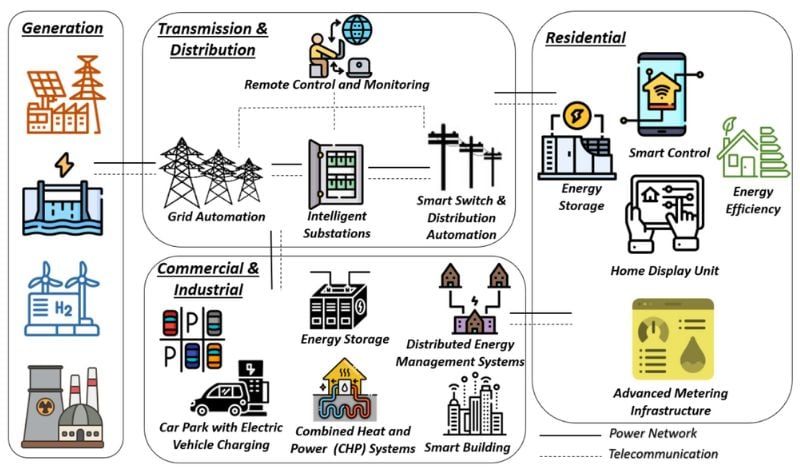
Smart grid communication with distributed assets. Image used courtesy of Bouramdane
The more secure and quicker the data communication between parties in the network, the better the grid operations will be for everyone involved. This is where advanced communication and data transfer networks, such as Nokia’s 5G networks, can help to improve smart grid operations.
5G Advantages in a Smart Grid
Nokia’s contract with MLGW is not the only deal between a communications service provider and a utility company for a fully 5G network. For example, in February 2025, Ericsson signed an agreement with the Lower Colorado River Authority, covering 68 counties in Texas, to install an LTE that is also 5G-ready. Many utilities with smart grids are seeking to upgrade their grid operations with better communication systems.
Implementing fast 5G networks into smart grid operations helps:
- Ensure fast and reliable communications
- Help to scale smart grid operations
- Increase grid reliability and resilience during adverse events, such as storms or cyberattacks
- Enhance power distribution through more efficient energy management, stemming from more efficient communication between assets and components in the grid
- Provide lower latency communications between devices compared to 4G LTE systems
- Help to restore power quicker after outages
- Enable more autonomous operations to take place around the grid—including automatic meter reading for consumers, more advanced grid monitoring, advanced fault detection, and the ability to address issues remotely
- Gives operators much smarter control over the grid, including the integration of new distributed energy resources such as renewables, battery storage, and EVs

Smart grid monitoring equipment. Image used courtesy of National Renewable Energy Laboratory/Dennis Schroeder
Additionally, one of the main challenges for integrating new technologies into the grid is legacy infrastructure, which was installed many decades ago and is not built for the digital world. Retrofitting legacy equipment with IoT devices alongside digital-ready technology in the grid helps to bring the two eras of grid technology together. However, ensuring interoperability between new and old systems is key. Installing fast and more secure communication systems helps to provide a high degree of interoperability in the grid.