Facebook
 Google
 GitHub
 Linkedin
Briefs: Companies Push for Bigger, Faster, More Efficient Tech
Google, Georgia Power, China Huaneng Group, Navitas Semiconductor, Magnachip, VPT, and the University of Bradford are innovating products and techniques to increase power use and efficiency.
From the smallest component to the largest power plant, power electronics must continually innovate to make the most of resources, production, and operations. In recent developments, Google has partnered with Georgia Power to expand nuclear capacity, while China Huaneng Group is establishing a supercritical carbon dioxide and molten salt storage plant.
Navitas and Magnachip are teaming up to accelerate silicon carbide technology adoption, and VPT has introduced robust DC-DC converters designed for harsh mission-critical environments. Finally, in the U.K., researchers have developed a smart concrete that can charge electric vehicles as they move down the highway.
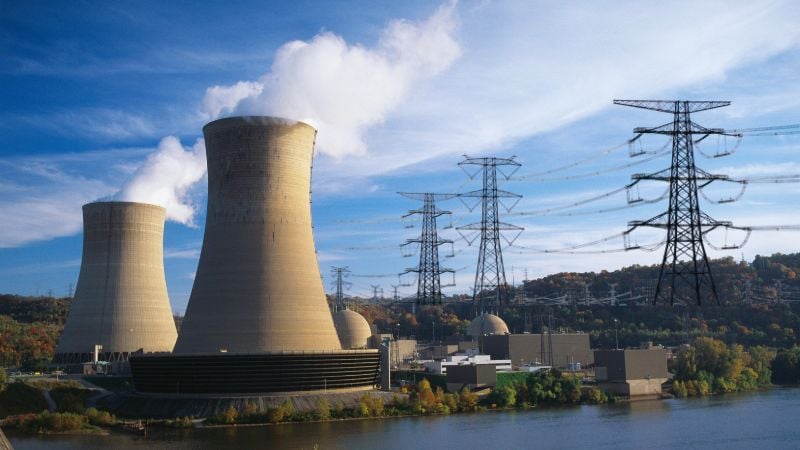
![]() Advances in generation, power capacity, storage, and energy efficiency. Image used courtesy of Canva
Advances in generation, power capacity, storage, and energy efficiency. Image used courtesy of Canva
Google Deal To Upgrade Georgia Power’s Nuclear Plants
Google and Georgia Power will collaborate to boost nuclear capacity in Georgia. This move strengthens regional grid stability and secures carbon-free energy attributes for Google's data center operations.
In the agreement, Google and Georgia Power will perform extended power uprates on the utility's owned capacity at Plant Vogtle and Plant Hatch. The deal targets equipment modifications to turbines, pumps, and cooling systems and will add approximately 96 MW of generation to the existing nuclear reactors.
Under the new Nuclear Uprate tariff framework, Google subscribes to the incremental output and receives corresponding Zero-Emission Credits. This contractual mechanism protects non-participating ratepayers from project construction costs while helping Google meet its clean energy targets.
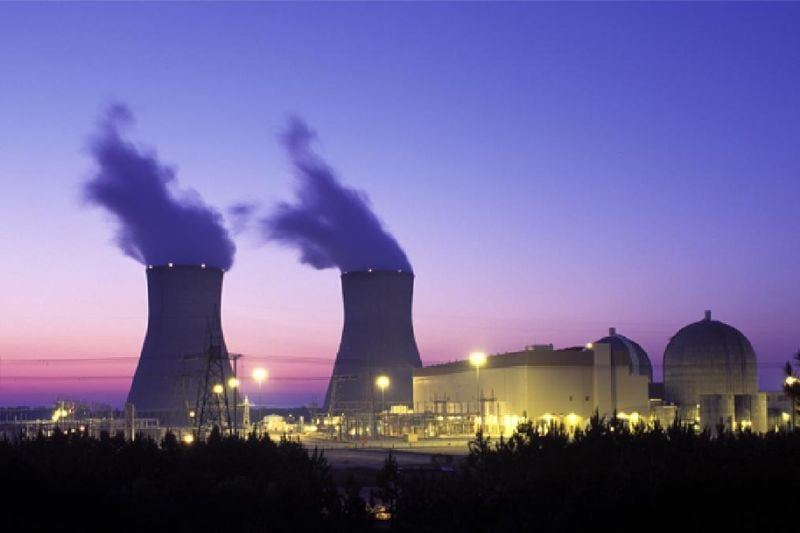
The Vogtle nuclear plant. Image used courtesy of Wikimedia Commons
The proposed rate structure uses existing clean energy purchasing rules set in a 2025 plan. Google and Georgia’s filing with the state Public Service Commission requests formal approval to modify Plant Hatch Units 1 and 2, following earlier regulatory endorsement for Plant Vogtle Units 1 and 2.
Nuclear generation already supplies over 25% of the state's total electricity portfolio. The partnership is expected to save users about $900 million.
China To Build World’s First Plant for Supercritical CO2 and Molten Salt Energy Storage
China Huaneng Group has broken ground on the Ruitan demonstration project, the world's first plant combining supercritical carbon dioxide power generation and molten salt energy storage. Located at the Bajiao power station in Yantai, Shandong province, the facility aims to reduce energy waste and improve power grid stability.
During low-demand periods, extra electricity from the site's coal units heats molten salt in large storage tanks. High electricity demand triggers the release of this stored heat into a supercritical CO2 power unit. Under extreme heat and pressure, CO2 acts like both a gas and a liquid, driving turbine generators directly inside a closed loop.
The plant’s first phase includes a 50 MW supercritical power unit alongside a 100 MW, 400 MWh storage system. Supercritical carbon dioxide units run without water and offer higher power efficiency than steam systems. Their turbines quickly ramp up generation output from zero to maximum capacity to match grid needs.
Learn more about the supercritical CO2 power generation and molten salt energy storage plant. Image used courtesy of CGTN
Project managers plan to start commercial operations next year. Future heat sources for similar systems may include solar installations, geothermal deposits, and industrial waste heat. China National Nuclear Corporation plans to integrate similar energy storage and supercritical technology by 2028.
Navitas Invests $5 Million in Magnachip To Boost SiC Tech Adoption
Navitas Semiconductor has made a $5 million strategic equity investment in Magnachip Semiconductor to accelerate silicon carbide technology adoption in high-voltage markets. The transaction involves issuing 1,461,988 common shares at $3.42 each.
The financial agreement expands an existing partnership. Magnachip licenses Navitas GeneSiC trench-assisted planar technology covering 1,200 V, 2,300 V, and 3,300 V applications. Engineers plan to port and qualify this technology at the Magnachip fabrication plant in South Korea.
Target markets include energy infrastructure, grid systems, energy storage, industrial electrification, and automotive power systems. Both executive teams aim to combine manufacturing capabilities with proprietary materials ecosystems to develop differentiated power semiconductor solutions.
VPT Releases the FLX Series, a DC-DC Converter for Mission-Critical Applications
VPT has launched the FLX Series, a configurable DC-DC converter supply designed for harsh space, military, and avionics gear. The customizable box combines converter modules and noise filters into a single block, speeding up build times and reducing development risk.
Input buses support standard 28 V, 50 V, and 270 V lines while delivering 1 to 5,000 W of output power. Units achieve 90% efficiency and run continuously from -55 to +110°C without power loss.
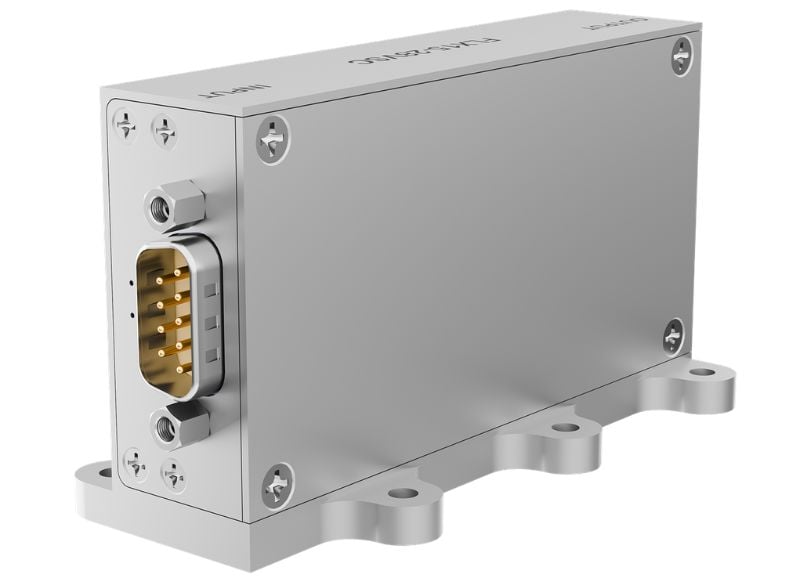
The FLX Series DC-DC converter. Image used courtesy of VPT
Designs come in vertical, horizontal, or stacked layouts and feature built-in short-circuit protection and remote sensing. Space builds handle radiation levels from 30 kilorads to 100 kilorads. Assemblies meet strict military power and noise standards, including MIL-STD-461, MIL-STD-704, and DO-160 tests.
‘Smart Concrete’ Charges EVs on the Move
Electric vehicles could drive longer distances without stopping to recharge if engineers can integrate “smart concrete” into roadways. In the U.K., University of Bradford researchers built specialized concrete slabs to boost wireless power delivery efficiency, charging EVs as they drive and extending their battery range.
The slabs use a custom material called WattCrete, which features high magnetic permeability to guide magnetic fields between road coils and car receivers. Standard road materials block magnetic lines, leading to major power losses during wireless energy transfer.
Project leaders secured £236,000 from the Horizon Europe Marie Skłodowska-Curie Postdoctoral Fellowship to advance the system. The interdisciplinary engineering team aims to refine the material mix and create computer models to help design future road installations.