Facebook
 Google
 GitHub
 Linkedin
Briefs: Companies Partner for Renewables and Power Technology
Enel, Excelsior, Hitachi Energy, Pakal Technologies, Renesas, EPC, Easee, and Subaru have all entered agreements to advance their goals in renewable energy and power electronics.
Major companies are advancing renewable energy and power electronics through strategic acquisitions and partnerships. In renewable news, Easee and Subaru piloted an off-grid solar electric vehicle charger in sub-Arctic temperatures, while Enel acquired wind and solar power plants from Excelsior.
To meet future energy needs, companies are combining their technical expertise. Hitachi Energy signed an agreement with Pakal Technologies for silicon power semiconductors, and Renesas and Efficient Power Conversion (EPC) have reached a licensing and second-sourcing agreement for gallium nitride (GaN) devices.
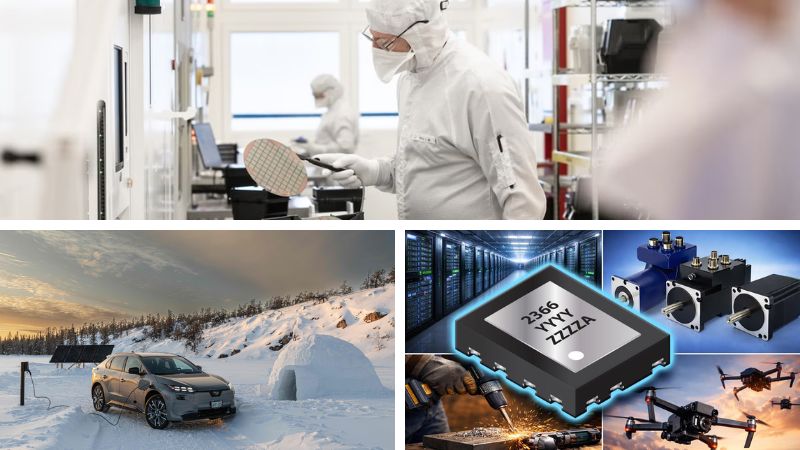
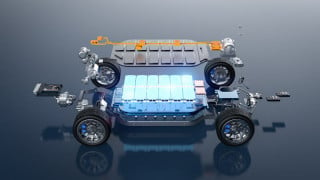
![]() Companies join forces for renewable energy and power components.
Companies join forces for renewable energy and power components.
Easee and Subaru Pilot Solar EV Charging in Sub-Arctic Temperatures
Electric vehicle charging is notoriously slow in winter, as freezing temperatures hamper the chemical reactions in the batteries. Batteries take longer to charge and lose their charge faster than in typical conditions. At the same time, most EV chargers need a grid connection. Easee and Subaru set out to challenge those ideas.
To test its solar-powered charging system, Easee partnered with Subaru for a charging pilot in Canada’s Northwest territories, where sub-Arctic temperatures in February can reach as low as -30°C (-22°F), and sunlight is limited.
The charging setup used four portable solar panels that connected to an EcoFlow battery and inverter system to charge a Subaru Soltera. According to Easee, the vehicle charged at about 25% of the speed of a conventional 7 kW charger.

A Subaru Soltera uses a solar charger in sub-zero temperatures. Image used courtesy of Easee
Easee stated that the pilot’s purpose was to demonstrate that off-grid EV charging and renewable energy use are possible even in extreme conditions. The charging technology could also be used with electric snowmobiles, the company noted.
Enel Signs Deal To Acquire 830 MW Wind and Solar Portfolio
Enel has signed agreements to acquire a 830 MW portfolio of solar and wind plants from Excelsor Energy Capital. The $1.3 billion deal includes operational solar and wind assets in the U.S. with an estimated annual output of 2.1 TWh.
The acquisition will expand Enel’s total capacity of renewable energy assets, including wind, solar, and storage, to 13 GW. Enel generates about 93 GW, with its renewables arm, Enel Green Power, accounting for 68 GW. The renewable mix includes solar, wind, hydroelectric, geothermal, and energy storage systems in Europe, Africa, Asia, Oceania, and the Americas.
The agreement is part of Enel’s strategy to increase its renewable capacity in “Tier 1” countries. Financed with existing cash flows, the deal is expected to close in Q3 2026, subject to regulatory approvals.
Excelsior Energy Capital is a private fund investment manager focused on North American energy infrastructure.
Hitachi Energy Joins With Pakal for Silicon Power Semiconductors
Hitachi Energy and Pakal Technologies will collaborate to integrate an innovative silicon power semiconductor into high-voltage power modules. The deal aims to improve efficiency and reduce energy losses in infrastructure such as AI data center power systems, renewable energy and storage, and rail systems.
The agreement will combine Pakal Technologies’ IGTO(t) insulated gate turn-off thyristor silicon power switch into modules rated at 3.3 kV or higher. The IGTO(t) boasts 30% lower conduction losses at high currents and temperatures than traditional IGBTs. The new technology is compatible with existing module architectures.
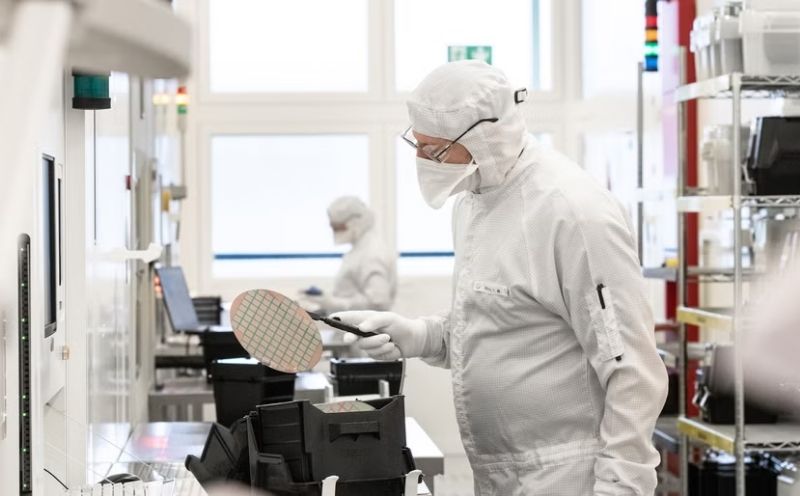
Hitachi Energy's wafer manufacturing. Image used courtesy of Hitachi Energy
Hitachi Energy states that IGTO(t)’s performance will enable higher power density, reduced cooling requirements, and lower operating costs. The company’s 2030 plan includes the goal to decarbonize power systems while meeting increasing demand.
Renesas Gains Access to EPC's Low-Voltage GaN Technology
Renasas and Efficient Power Conversion (EPC) have agreed to a strategic partnership for the licensing and second sourcing of gallium nitride (GaN) power device technology.
Rensas will have access to EPC’s proprietary low-voltage enhancement-mode GaN as the company expands its portfolio to reach the low-voltage market (48 V and under). The two companies will work together to establish internal wafer fabrication for the products.
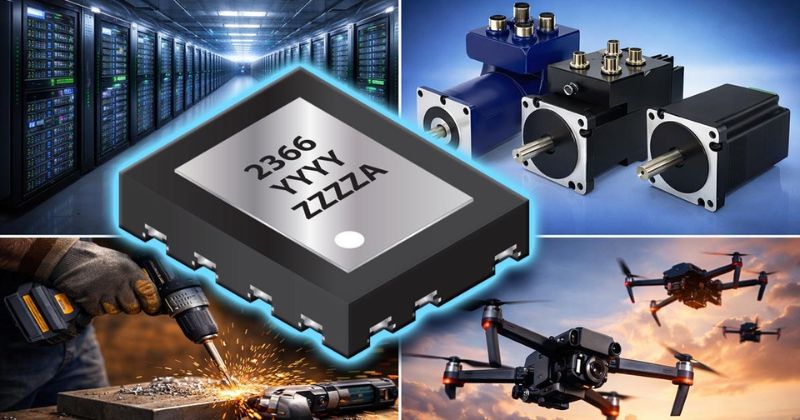
An example of a 40 V EPC GaN device. Image used courtesy of EPC
Additionally, to ensure supply-chain resilience, Renesas will become a second source for several of EPC’s popular GaN devices in mass production.
The partnership will target the increasing demand for power efficiency in AI data centers, which require compact, high-efficiency power architectures.
Renesas recently acquired Transphorm to enhance its high-voltage (650 and above) GaN portfolio.