Facebook
 Google
 GitHub
 Linkedin
Backbone of AI: How Nuclear Could Change the Data Center Industry
Nuclear energy can work alongside renewable energy to offer a stable, clean solution for powering data centers.
Artificial intelligence has seemingly woven its way into every core system that powers our world—from online shopping to healthcare. Adopting AI has unlocked a whole new level of efficiency and potential, enabling us to reduce the time it takes to complete tasks to our abilities to synthesize information and make better decisions. In fact, 76% of business organizations cited using AI across their company, according to a recent IDCA survey. But as exciting as this AI future is, how we will power it raises some uncomfortable questions as our energy systems continue to buckle under the immense strains of the AI boom.
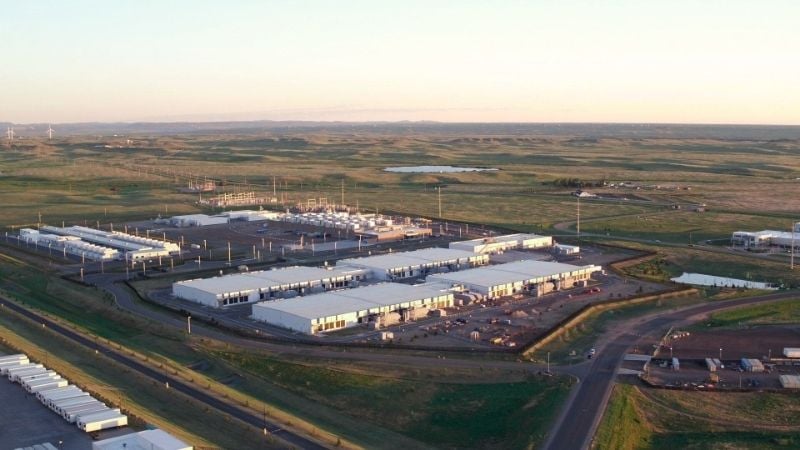
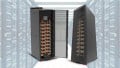
As data centers continue to expand, new pressures are placed on the energy sector. Image used courtesy of Microsoft
Central to these concerns are the growing challenges posed by the powerhouses that fuel AI—data centers. As AI becomes more ubiquitous, and major AI developers continue to launch more advanced, energy-consuming models, such as the latest launch of OpenAI’s GPT-5, the amount of energy pumped into them is astounding.
According to the U.S. Department of Energy, data centers are set to consume 12% of all U.S. energy by 2028, and the energy industry is facing huge pressure to maintain the supply required for data center development and execution as a result.
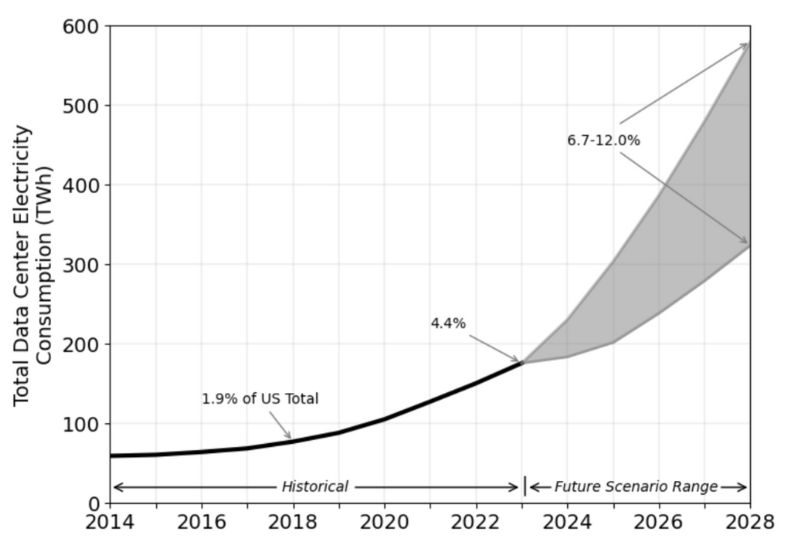
Data center electricity use and projected use through 2028. Image used courtesy of Shehabi et al.
Staring down these compounding energy demands and more ambitious climate expectations from stakeholders, the energy and technology worlds have turned to nuclear energy as a key cog in meeting their needs.
Why Now for the Nuclear Renaissance
The U.S. power grid is already facing huge headwinds from every direction, including the disruptions stemming from extreme weather and the limitations of aging infrastructure. Needless to say, the load growth that datacenters are introducing is only making matters worse. Today’s data centers are often being scoped to produce loads of at least 1 GW of power, the same amount as roughly 800,000 homes in one year, according to JLL’s 2025 Global Data Center Outlook report.
Relying on closing efficiency gaps for existing energy systems is not enough to manage the vast amount of energy required and the rapid pace at which it is being used. While tapping into oil and gas or renewable energy sources has previously been a lifeline, it is no longer sufficient, and a new, fresh supply is required.
Nuclear energy is poised to address the increasing strain on energy systems from data center development. While largely overlooked in the past, the current energy environment provides fertile ground for a nuclear renaissance. Grid constraints and carbon pressure are several reasons nuclear energy can be a game-changer in restoring the energy landscape.
Dynamic duo: Nuclear and Renewables in Harmony
When considering the power behind data centers, and as many nations continue to focus on renewable energy development and deployment, it’s important to evaluate how nuclear and renewable energy sources can work in tandem to create a comprehensive supply source for data centers.
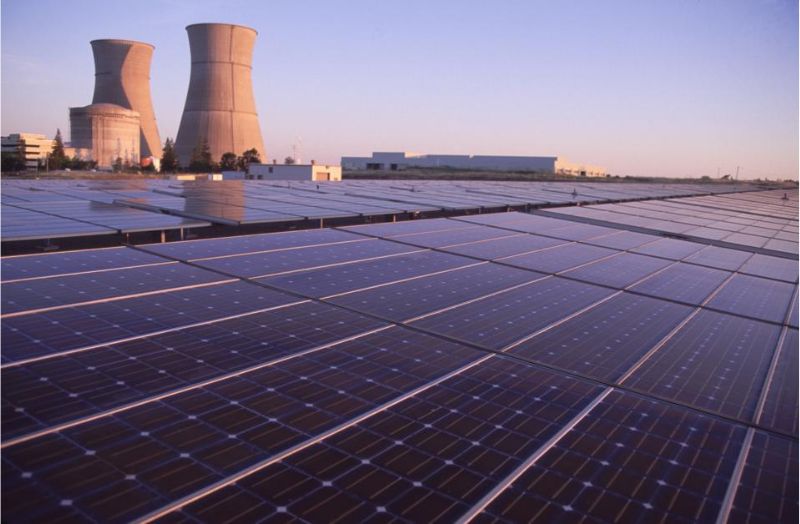
Renewables conversations are continuing to shift around datacenter energy needs. Image used courtesy of Getty Images/Christopher J. Morris/CORBIS
Renewables such as wind and solar are already huge parts of the energy mix. However, even as battery technology has improved, intermittency remains an issue. To supplement, nuclear, particularly light-water reactors (LWRs)—which offer cost controls, simpler design, and safety benefits—are proving to be of particular interest for the data center community.
To this end, instead of viewing renewable energy and nuclear energy as two competing teams, data center stakeholders are increasingly looking at interlocking these two assets to work in tandem, creating a dynamic duo that can provide a clean, sufficient “always-on” energy supply.
Compact Powerhouses: SMRs and MMRs
A key component driving the future of nuclear adoption has been the innovation in small modular reactor (SMR) and micro modular reactor (MMR) technology. Nuclear energy, most prominently large-scale nuclear plants, has faced numerous headwinds when trying to get off the ground. Their large size and obtaining the necessary funds, licensing, and construction permits have made building them a pain. Also, because of their complexity and strict licensing requirements, they often face long development timelines, delays, and heavy capital expenditures.
However, SMRs and MMRs provide an important solution as their smaller size allows for faster build times, reduced costs, and greater energy efficiency. Unlike larger plants, SMRs can be licensed in 5-7 years, and MMRs can be licensed in as little as 18 months, providing shorter time to market and quicker access to power.
Powering the Next Technology Revolution
Nuclear energy has the potential to greatly enhance data center production capabilities, enabling the next generation of AI workloads. With greater energy capacity, nuclear power allows data centers to run larger, more energy-intensive models without compromise—and without increasing greenhouse gas emissions. With a faster, more predictable energy supply, companies can experiment with advanced computing applications from AI research to scientific simulations.
Beyond data centers and AI, nuclear energy’s stable and always-on energy supply encourages growth in edge computing, high-performance research clusters, and other energy-hungry tech ventures, giving the U.S. a competitive edge in the global race for technical advancement. This means it could be a key catalyst for the next wave of digital innovation for decades to come.