Facebook
 Google
 GitHub
 Linkedin
Deep Pockets, Deep Wells: The Push for Geothermal
Funding, lithium extraction, and mine-water heating projects could signal growing, worldwide momentum for geothermal energy.
Geothermal energy is attracting attention from governments and developers looking for reliable, low-carbon baseload power to complement intermittent wind and solar generation. Recent geothermal actions include a government-backed funding program in the U.S., a deep geothermal power plant in the U.K., and research into turning flooded coal mines into district heating systems.
Geothermal power generation draws hot water and heat from underground reservoirs at temperatures of 300-700°F. Conventional methods pump hot water and steam from naturally occurring reservoirs, but emerging enhanced geothermal systems (EGS) borrow techniques from the oil and gas industry, such as fracking and horizontal drilling, to access heat in rock formations that lack natural reservoirs.
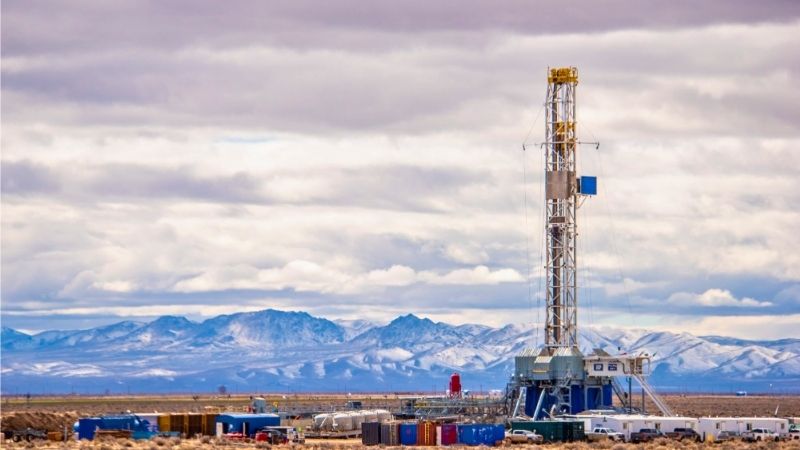
Geothermal drilling rig. Image used courtesy of Fervo Energy
U.S. DOE Unveils $171.5M to Support EGS Field Tests
The U.S. Department of Energy has committed $171.5 million in funding to speed up geothermal deployment and lower the cost of tapping underground heat resources across the United States. The investment is designed to expand both resource exploration and drilling technologies. This includes emerging EGS technologies to create artificial geothermal reservoirs in hot rock formations with low natural permeability.
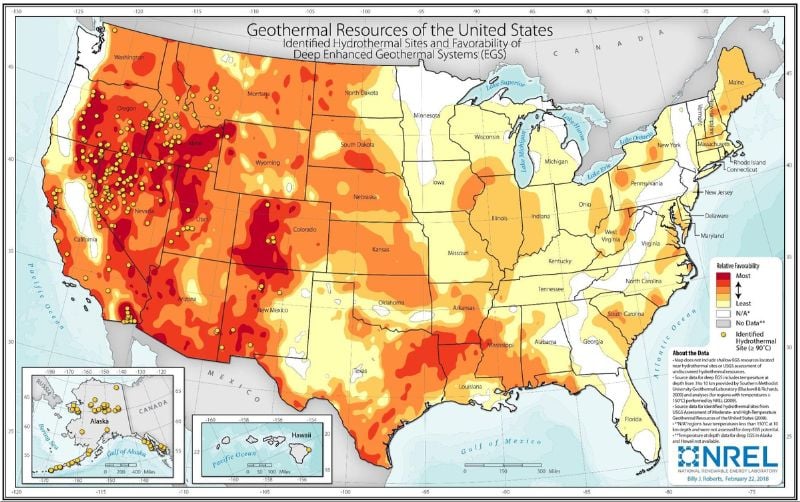
U.S. geothermal resources. Image used courtesy of the National Laboratory of the Rockies
A significant focus is on reducing the high initial costs and technical risks of deep drilling, which has historically been a major barrier to geothermal expansion. The DOE reported that aggressive technology advancements could unlock 300 GW of geothermal resources across far larger portions of the country. For comparison, today's total capacity is just 4 GW.
The DOE outlines multiple funding pathways for universities and developers working on geothermal field-scale demonstrations. Applications are due on April 30. The program will target two technical areas in the first round: EGS field tests and new drilling solutions focused on improved resource characterization and confirmation. In the latter area, the DOE will give preference to previously unexamined sites.
The funding comes as construction for the country’s first commercial-scale EGS plant, Fervo Energy's Project Red, is currently underway in Utah. Fervo plans to bring phase 1 of the project online later this year.
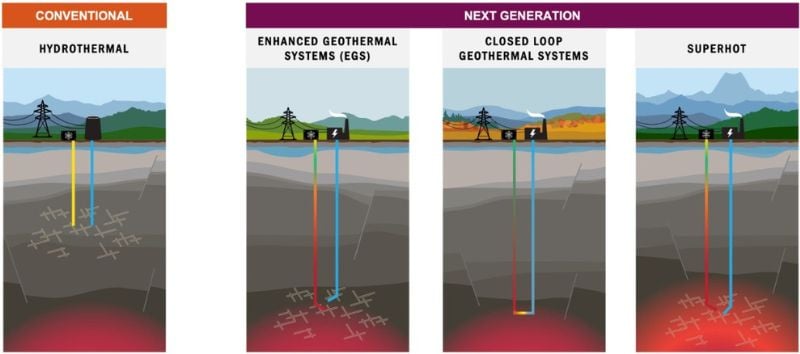
Types of geothermal systems. Image used courtesy of the U.S. Energy Information Administration
U.K. Switches On First Deep Geothermal Power Plant, With Lithium Production
A project in Cornwall has delivered two firsts for the United Kingdom: its first deep geothermal power plant and its first commercial-scale lithium extraction facility powered by geothermal brine.
Geothermal Engineering Ltd. (GEL) has started generating electricity from the United Downs geothermal site, where wells drilled more than three miles into hot granite formations bring up water at about 190°C. The project stands as Britain's deepest well, tapping into the hottest geothermal temperature source accessed in the country.
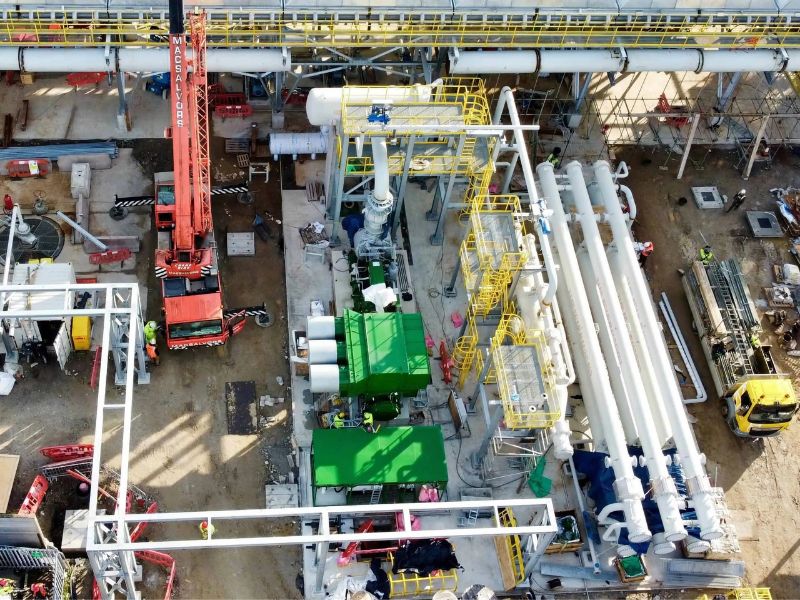
Geothermal systems. Image used courtesy of GEL
The heat drives an Organic Rankine Cycle turbine system with about 3 MW of generation capacity, producing constant, weather-independent electricity that will be sold under a power purchase agreement. That's enough power for about 10,000 homes.
After passing through the power system, the mineral-rich geothermal fluid is processed to extract lithium carbonate—a critical battery material—before the cooled water is reinjected underground in a closed loop. Initial production capacity is around 100 tonnes of lithium carbonate per year, with a goal to scale up to more than 18,000 tonnes annually over the next decade.
By pairing baseload geothermal generation with critical mineral extraction, the project demonstrates a dual-use model for geothermal wells that could improve project economics while strengthening domestic supply chains for battery materials.
Watch the drilling of the geothermal well. Video used courtesy of Geothermal Engineering Ltd.
Old Coal Mines May Become Community Geothermal Systems
In British Columbia's historic Village of Cumberland, engineers and researchers are investigating whether flooded coal mines could become the backbone of a geothermal district energy system.
The Cumberland District Energy project, led by the University of Victoria, is studying the network of abandoned mine shafts and tunnels beneath the town. Over time, these underground spaces have filled with groundwater that maintains relatively stable temperatures year-round.
The concept relies on a "minewater geoexchange system," in which water circulating through the mine network passes through heat exchangers connected to heat pumps, delivering heating in winter and cooling in summer.
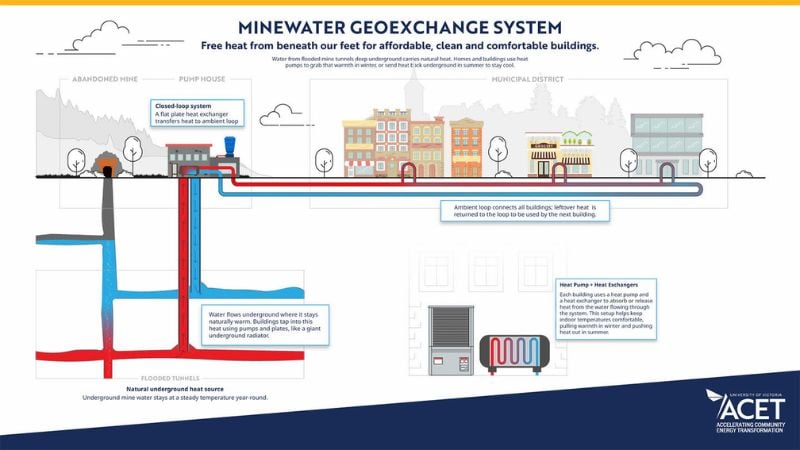
An overview of the project's closed-loop geoexchange process. Image used courtesy of the University of Victoria
Researchers estimate that connecting municipal buildings to such a system could reduce heating-related emissions by as much as 90%, while lowering operating costs.
The project follows a continued trend of power plants repurposing legacy fossil-fuel infrastructure for low-carbon energy. If proven viable, abandoned mine networks across British Columbia's coal regions could become useful thermal reservoirs for district heating systems.