Facebook
 Google
 GitHub
 Linkedin
Briefs: Advanced Nuclear Fission and Fusion Tech Moves Ahead
Bhavini, Antares, BWX Technologies, Realta Fusion, and Commonwealth Fusion Systems are among the companies working on advanced nuclear power solutions.
Worldwide, nations are taking a second look at nuclear energy. Older plants, like Diablo Canyon in California, are making a comeback, while newer technologies in fission and fusion march toward commercialization. India achieved a milestone in developing its breeder reactor, which will one day use thorium as fuel. In California, Antares is moving ahead with meeting safety and regulatory requirements for its microreactor. Finally, Realta Fusion is smoothing the path to its magnetic-mirror-based fusion reactors through a partnership with Commonwealth Fusion Systems for high-powered magnets.

![]() Innovations in nuclear energy are occurring worldwide. Adapted from images used courtesy of Canva
Innovations in nuclear energy are occurring worldwide. Adapted from images used courtesy of Canva
.
California Nuclear Plant Granted Life Extension
The Diablo Canyon Nuclear Plant, planned for complete shutdown, will remain operational after a 20-year license extension from the U.S. Nuclear Regulatory Commission (NRC) and California state law. The NRC approval allows Unit 1 in the power plant to operate until 2044 and Unit 2 until 2045.
The 2.2 GW plant in San Luis Obispo County had been slated for decommissioning in 2024 and 2025, but the California state legislature passed a bill to extend the shutdown to 2030. The state still has to extend its deadline to allow the plant to continue operating until 2045.
Like other states, California is once again turning to nuclear to address increasing energy demand, stabilize grid operations, and meet decarbonization goals. Diablo Canyon provides about 9% of California’s total energy and 17% of its carbon-free power.
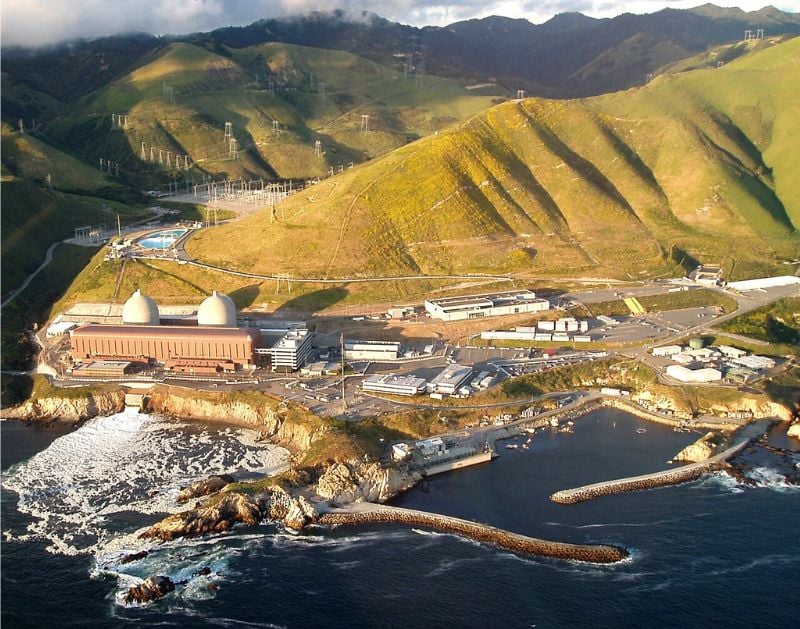
Diablo Canyon nuclear plant. Image used courtesy of Wikimedia Commons
The state received a $1.1 billion grant from the Department of Energy’s Civil Nuclear Credit program to cover the costs. The agreement is subject to its meeting environmental and safety requirements.
India’s Fast Breeder Reactor Achieves Fission Milestone
A 500 MWe Prototype Fast Breeder Reactor (PFBR) in India achieved its first controlled nuclear fission chain reaction, making the nation only the third in the world, along with Russia and China, to advance a commercial breeder reactor.
The first criticality also marks India’s second stage in its three-stage nuclear program, which will culminate in the use of thorium-based fuels. India has the world's largest reserves of thorium.
Stage 1 involved using natural uranium in conventional reactors to generate electricity while producing plutonium as a byproduct, which is then recovered and reprocessed to serve as the fuel for Stage 2 breeder reactors. Stage 3 will use advanced heavy-water reactors to use thorium-plutonium fuels and breed uranium-233. The complete process will create a self-sustaining, thorium-based nuclear cycle.
The PFBR, developed by the Indira Gandhi Centre for Atomic Research and built by Bhavini, uses uranium-plutonium mixed oxide (MOX) fuel.
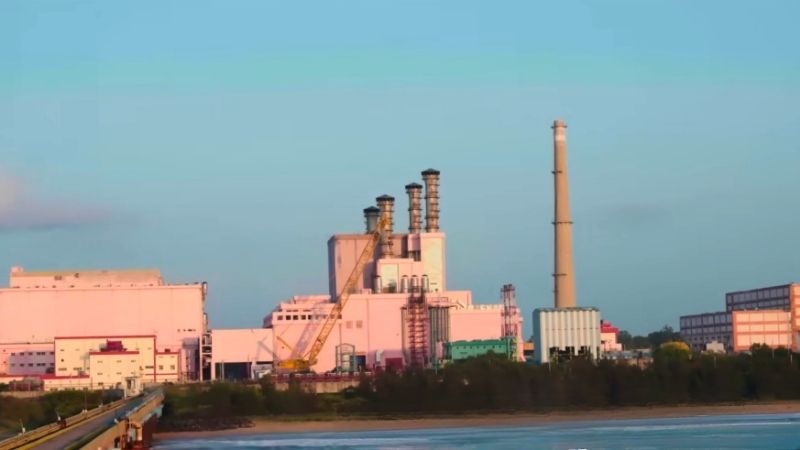
India’s breeder reactor. Image used courtesy of DAE India
The PFBR uses a uranium-plutonium mixed oxide (MOX), which is surrounded by uranium-238. Neutron absorption converts it into fissile plutonium-239, enabling the reactor to generate more fuel than it consumes. It is also designed to use thorium-232, which it converts into fissile uranium-233.
The reactor has already completed safety requirements and passed review by the Atomic Energy Regulatory Board. India operates about 24 nuclear power plants, with another 17 planned or under construction.
Antares Mark-0 Reactor Advances With DOE Safety Approval
California-based Antares has entered the final phase of developing its Mark-0 microreactor after the Department of Energy approved a final documented safety analysis. The DOE approved the final design and preliminary safety analysis in January.
Next is the DOE Readiness Review process to approve plant startup. Antares has set July 4, 2026, as its deadline.
The Mark-0 is designed to test the core physics and control systems required for the Antares Mark-1 power-producing reactor. That reactor, anticipated for completion in 2027, will use HALEU field manufactured by BWX Technologies.
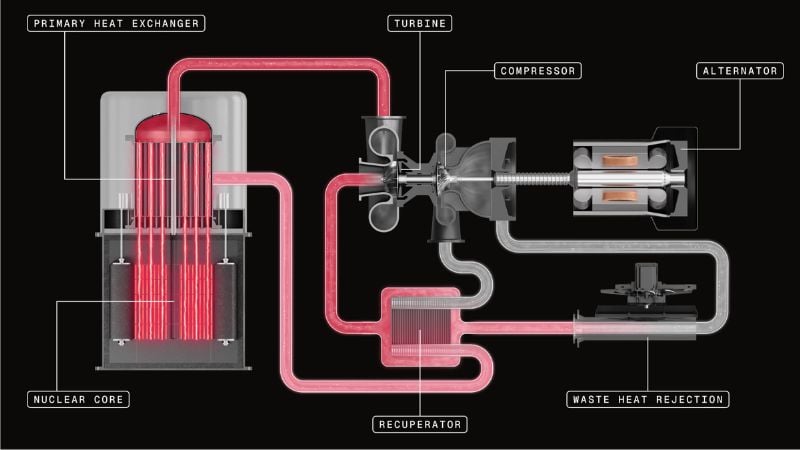
Antares’ design. Image used courtesy of Antares
Antares makes modular, transportable microreactors for specific applications on Earth and in space. Its 140,000 square-foot Antares Prime facility provides in-house manufacturing and testing. Later this year, Antares will conduct its first reactor demonstration at Idaho National Laboratory to validate reactor physics, safety, performance, and other operational qualifications.
Realta Partners With Commonwealth Fusion for Compact Fusion Devices
Realta Fusion and Commonwealth Fusion Systems (CFS) have entered a long-term strategic partnership to design and manufacture high-temperature superconducting (HTS) magnets to use in Realta’s compact, modular CoSMO fusion energy system.
CFS will provide fully integrated magnet systems, including the hardware, cryogenics, power supplies, and structural supports. The partnership applies to Realta’s next-generation device, Anvil, its commercial-scale reactor, Hammir, and a large-scale fusion power plant the company plans for Virginia in the mid-2030s.
Realta’s magnetic-mirror fusion technology. Video used courtesy of Realta
Realta’s magnetic mirror approach uses HTS magnets at both ends of a long cylinder that confines the plasma. This creates a powerful magnetic field that expands the fusion machine’s capabilities. CFS also uses magnets within its tokamak-style fusion reactor.
CFS previously manufactured magnets for Realta’s predecessor, the University of Wisconsin’s WHAM program.