Facebook
 Google
 GitHub
 Linkedin
Small Moves, Big Goals: Advances in Nuclear Reactors and Fusion
TerraPower receives historic Nuclear Regulatory Commission approval for construction, while micro modular reactors and fusion continue to develop.
Three developments in the nuclear energy industry point to a sector accelerating on multiple fronts simultaneously.
TerraPower received the first-ever NRC construction permit for its commercial advanced reactor using Natrium. Terra Innovatum, which is developing a micro-modular reactor, has completed its first procurement order for nuclear-grade graphite. Finally, a Department of Energy-sponsored workshop called for significantly greater investment in plasma diagnostic tools as a prerequisite for commercial fusion power.
Each development sits at a different stage of the nuclear timeline, from the still-experimental to the newly construction-ready.
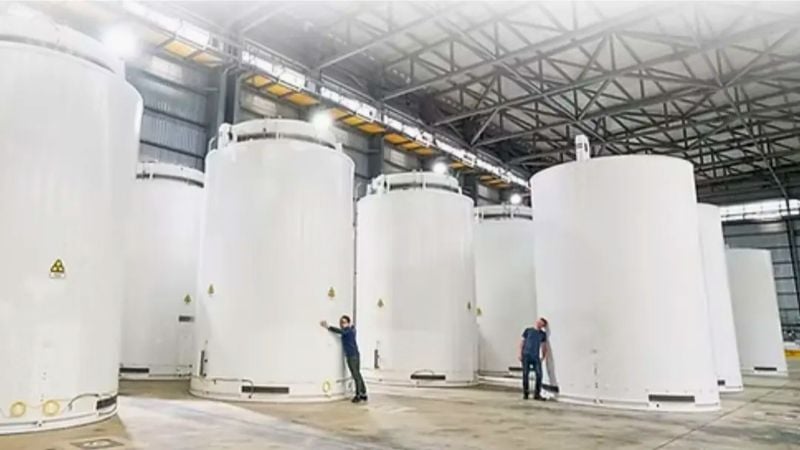
Micro-modular reactors. Image used courtesy of Terra Innovatum
TerraPower Clears a Regulatory First
The U.S. Nuclear Regulatory Commission has issued a construction permit to TerraPower's subsidiary, US SFR Owner, for its Natrium advanced reactor at the Kemmerer Power Station site in Wyoming. The permit is the first the NRC has issued for a commercial non-light-water reactor, and the first for any commercial reactor in nearly a decade.
The Natrium design pairs a 345 MW sodium-cooled fast reactor with a molten-salt thermal energy storage system that can boost output to 500 MW during periods of peak demand. Designed by TerraPower and GE Vernova Hitachi Nuclear Energy, the dual-output architecture is intended to give the plant grid-balancing flexibility that conventional nuclear plants lack.

The Wyoming plant site. Image used courtesy of TerraPower
TerraPower submitted its application in March 2024, and the NRC completed its safety review by December 2025, roughly eight months ahead of the agency's original 27-month schedule. Construction by the primary contractor, Bechtel, on the non-nuclear "energy island" began in June 2024. Nuclear-island work can now proceed under the permit.
The Kemmerer project is expected to be completed in 2030 and will be the first commercial reactor of any kind ever built in Wyoming. TerraPower received funding support through the Department of Energy's Advanced Reactor Demonstration Program.
Micro-Reactor Pioneer Secures Key Material
A smaller but symbolically important step came from Terra Innovatum Global, which announced the execution of its first procurement order for nuclear-grade graphite from Mersen, a global manufacturer of isostatic graphite with more than 50 production sites worldwide. The order is for graphite destined for the company's SOLO micro-modular reactor, a 1 MWe design targeting deployments in data centers, remote communities, and industrial applications such as mining and cement production.
The company submitted its application to the NRC for formal safety review this month. A technical assessment is expected by October 2026.
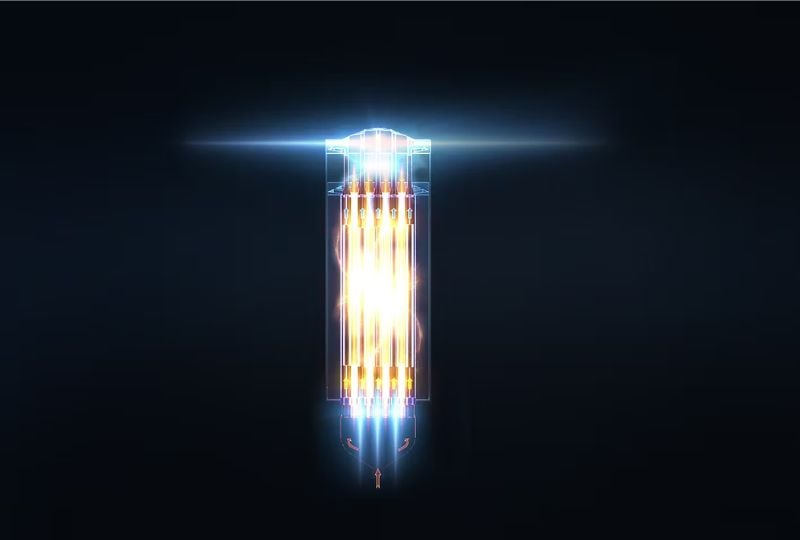
The SOLO’s reactor core. Image used courtesy of Terra Innovatum
Graphite serves both structural and functional roles in the SOLO design, directly affecting thermal performance and regulatory compliance. Terra Innovatum has designed the reactor to use primarily commercial off-the-shelf components, an approach intended to reduce supply chain risk, making early procurement of the few specialized materials it requires a priority.
Fusion Diagnostics Get a Closer Look
The third development concerns fusion, still the furthest from commercial deployment. A report from a DOE-sponsored workshop, led by Princeton Plasma Physics Laboratory and the University of Rochester's Laboratory for Laser Energetics, called for major new investment in the diagnostic tools used to measure plasma temperature, density, and behavior inside fusion devices. The workshop brought together 70 experts from universities, national laboratories, and private fusion companies.
The report identified seven priority research areas, ranging from low-temperature plasma diagnostics to systems designed for full-scale fusion pilot plants. Key themes included:
- Development of radiation-resistant sensors.
- Faster measurement techniques for inertial confinement fusion experiments.
- Integration of AI to help process and interpret measurement data.
The group also stressed workforce development and knowledge transfer as private fusion ventures multiply.
The report argues that without precise diagnostics, operators cannot understand or reliably control the plasma reactions at the heart of a fusion system. Better instruments are a prerequisite for better reactors.