
 Facebook
 Google
 GitHub
 Linkedin
News Briefs: Nuclear Energy Expands and Fusion Breaks Records
Nuclear energy is heating up with advances in nuclear power plants, small modular reactors, and fusion technology.
While traditional nuclear power plants persist, private and public entities are pursuing other nuclear paths to meet the world’s growing energy demands. Meta has purchased a 20-year supply of nuclear energy, while China’s small modular reactor plant is nearing completion. Meanwhile, fusion technology made a record-breaking achievement that could lead to a feasible method for fusion power production.
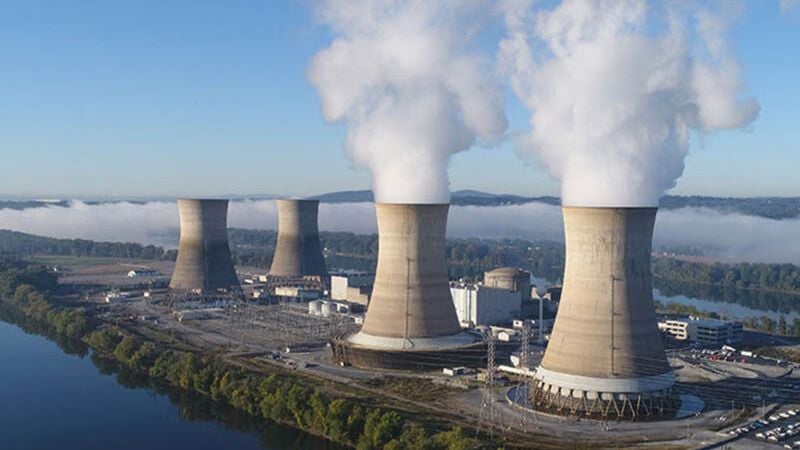
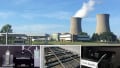
Crane Clean Energy Center, formerly Three Mile Island. Image used courtesy of Constellation
Meta Buys Nuclear for AI Data Centers
Meta, parent company of Facebook and Instagram, has signed a 20-year agreement with Constellation Energy for nuclear energy generated at the Clinton Clean Energy Center in Central Illinois.
The agreement, which begins in 2027, will provide 1,121 MW of nuclear energy and increase grid capacity by 30 MW. Meta states the move will preserve over 1,100 local jobs and contribute $13.5 million in tax revenue while producing emissions-free energy. The plant had been struggling financially and was slated to close in 2017 until the Future Energy Jobs Act stepped in to fund the plant through 2027.
Meta also states that the Clinton plant will support Meta’s operations in the region. Meta owns a data center about 140 miles to the north in DeKalb, Illinois.
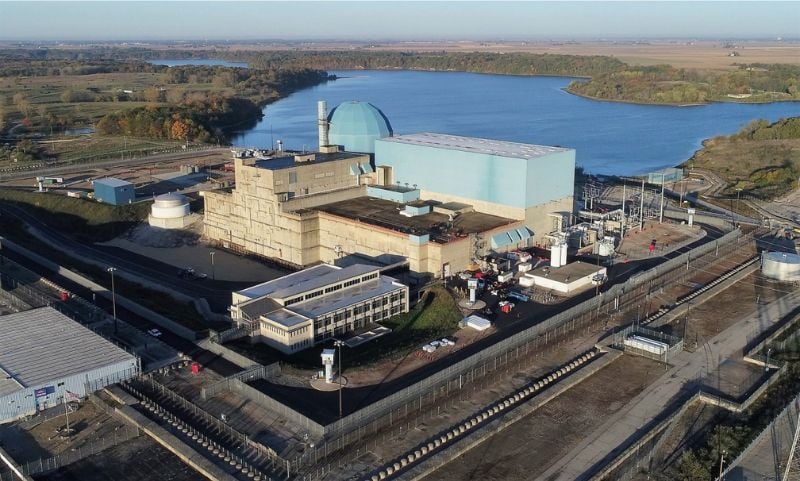
Clinton Clean Energy Center. Image used courtesy of Constellation
In September, Constellation Energy struck a 20-year deal with Microsoft to produce nuclear energy from the former Three Mile Island facility, site of a partial meltdown in one reactor in 1979. The plant continued to function using the remaining reactor until 2019. Constellation will revive the plant, set to open in 2028.
China Makes Big Moves With Small Reactors
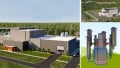
The China National Nuclear Corporation is nearing completion of Linglong 1, its first commercial small modular nuclear reactor. The plant in Hainan province is expected to produce 1 billion kWh of electricity, enough power for 1 million people.
Linglong 1 uses ACP1000 technology, a small modular pressurized-water reactor. The reactors can be prefabricated and shipped for installation on site. The smaller and simpler design reduces costs and construction time.
Linglong 1 began construction in 2021 and is expected to be completed in 2026.
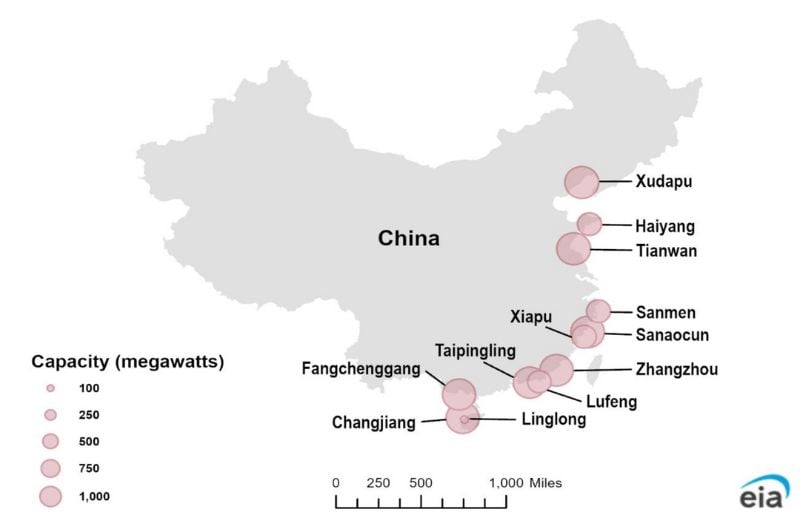
Nuclear power plants under construction in China. Image used courtesy of EIA
China has added more than 34 GW of nuclear power over the past decade, according to the U.S. Energy Information Administration. The EIA estimates that at least 23 reactors are under construction and will add another 23.7 GW in the next 10 years.
Nuclear Fusion Reactor Sets Record Long Plasma Duration
The Wendelstein 7-X stellarator has broken the record for long plasma duration by achieving the triple product, a major step toward a self-sustaining fusion reaction. The stellarator sustained the peak value for 43 seconds, beating previous times for plasma donations by tokamaks.
The triple product, also called the Lawson criterion, is a metric comprising plasma density, temperature, and energy confinement time.
Like tokamaks, stellarators use magnetic fields to confine and heat the plasma within a toroidal (donut-shaped) chamber. However, stellarators use helical, external coils to generate the magnetic field.
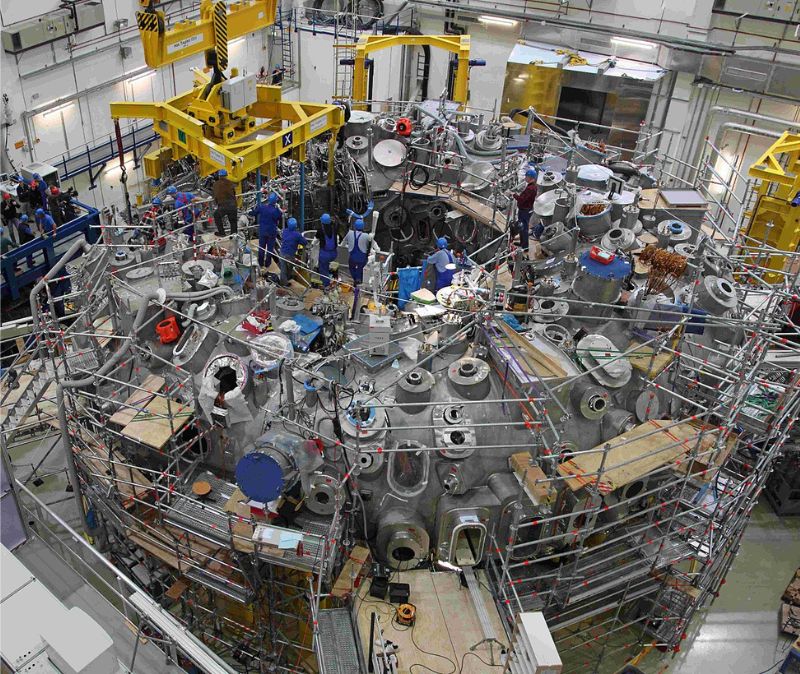
Wendelstein 7-X at the Max Planck Institute for Plasma Physics. Image used courtesy of Wikimedia Commons
The Wendelstein 7-X team in Germany worked with the Oak Ridge National Laboratory in Tennessee to develop frozen hydrogen pellets, which are injected into the plasma. The injections enable long plasma duration by continuously refueling. The experiment used 90 1-millimeter frozen hydrogen pellets while microwaves heated the plasma. The pellet injector was pre-programmed with precise pulse rates.
The plasma temperature increased to 20 million degrees Celsius and peaked at 30 million degrees. The Princeton Plasma Physics Laboratory’s X-ray spectrometer for ion temperature diagnostics confirmed the triple product.



Thanks for sharing. This is a powerful reminder of how nuclear energy is quietly becoming an option for clean, reliable power, especially for energy-intensive applications like AI data centers. Meta’s long-term investment in the Clinton Clean Energy Center is not just a win for emissions-free electricity, but also for grid stability, job preservation, and regional economic growth.
While solar and wind are essential parts of the clean energy mix, they are intermittent by nature and require vast land areas and storage solutions to match the reliability of nuclear. In contrast, nuclear plants provide consistent baseload power 24/7, with zero carbon emissions during operation and a much smaller physical footprint.
The developments in small modular reactors (SMRs) and fusion research (like the Wendelstein 7-X breakthrough) show that nuclear is evolving and becoming safer, more scalable, and more adaptable to future energy needs. As we push for decarbonization, nuclear energy offers a unique blend of reliability, scalability, and sustainability that complements renewables rather than competes with them.