Facebook
 Google
 GitHub
 Linkedin
EV Battery Low? CATL Says, Just Swap It Out for a Fresh One
The Chinese battery maker is rapidly expanding its battery-swapping stations for heavy-duty electric trucks across China and adding passenger EV capabilities
Chinese battery giant CATL is quickly expanding its battery-swapping footprint across both passenger and commercial vehicles. The company recently surpassed 2,000 Choco-Swap stations in mainland China, while supplier Kandi Technologies has started producing equipment at a new factory that can build up to 200 heavy-truck swap stations annually.
CATL plans to grow its Choco-Swap network to more than 3,000 stations in China by the end of 2026.
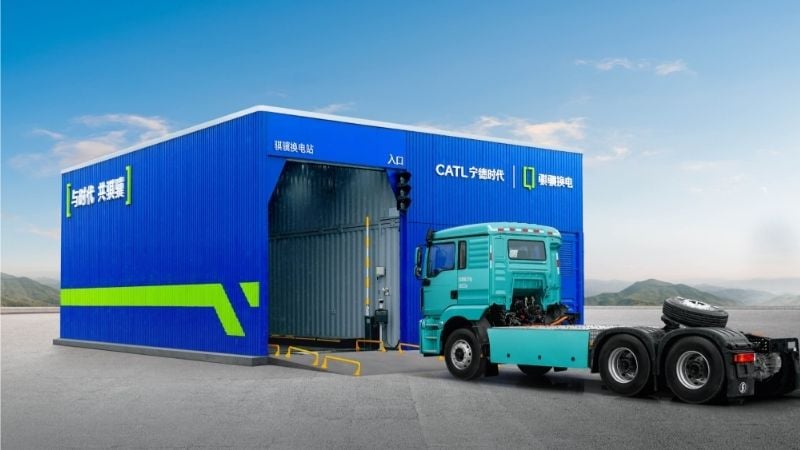
A CATL truck-battery swapping station. Image used courtesy of CATL
Inside CATL's Battery-Swapping Network
CATL's battery-swapping network is built around two platforms: Choco-Swap uses standardized, removable battery packs for passenger cars and light commercial vehicles, while QIJI Energy targets heavy trucks operating on freight routes. In both platforms, discharged battery packs are automatically exchanged for charged replacements.
Unlike conventional fast charging, battery-swapping moves charging outside the vehicle, enabling battery packs to be reused across compatible models. This approach can reduce downtime for high-mileage fleets while shifting charging away from peak electricity demand.
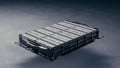
Choco-SEB is compatible with most battery-electric platforms, and each standard station can store up to 48 battery packs, according to CATL.
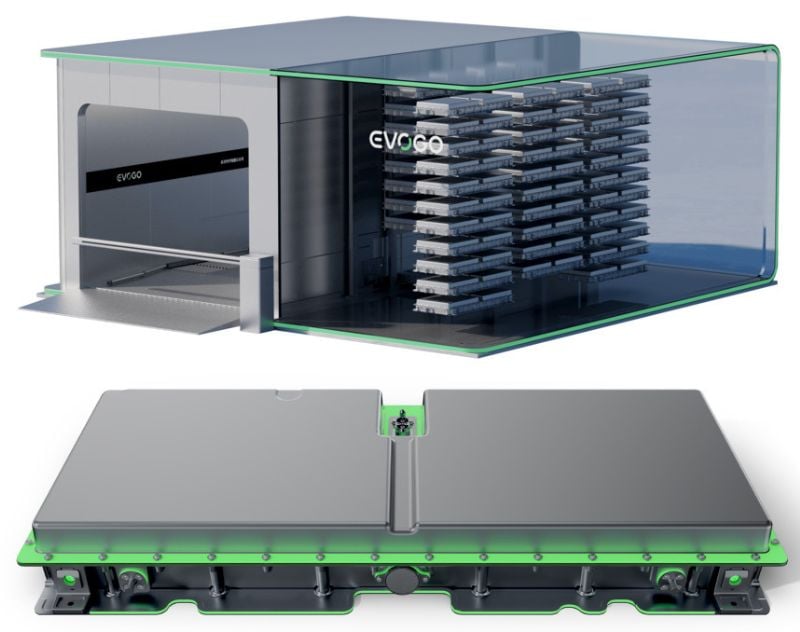
Choco-SEB battery-swapping station design. Images used courtesy of CATL
CATL ended 2025 with 1,325 swap stations, including over 1,000 Choco-Swap sites and more than 300 QIJI stations. Throughout the year, its passenger-vehicle and truck networks completed over 1.15 million battery swaps, transferring a combined 80 million kWh.
Deployment continued through the spring, growing from 1,470 stations across 99 cities in April to 2,000 stations in 180 cities by late June. CATL said it averaged more than 200 new stations per month during the second quarter and expects to top 3,000 Choco-Swap sites by the end of the year.
CATL is targeting 4,000 integrated charge-and-swap locations by the end of this year, extending coverage along major highway corridors. The company is co-developing the network with automakers including Changan, Chery, GAC, Seres, SAIC-GM-Wuling, and BAIC, while separately aiming to build more than 100,000 shared charging-and-swapping facilities by the end of 2028. CATL also introduced the 800-V, 75-kWh Choco-Swap #26 battery for B- and C-segment EVs.
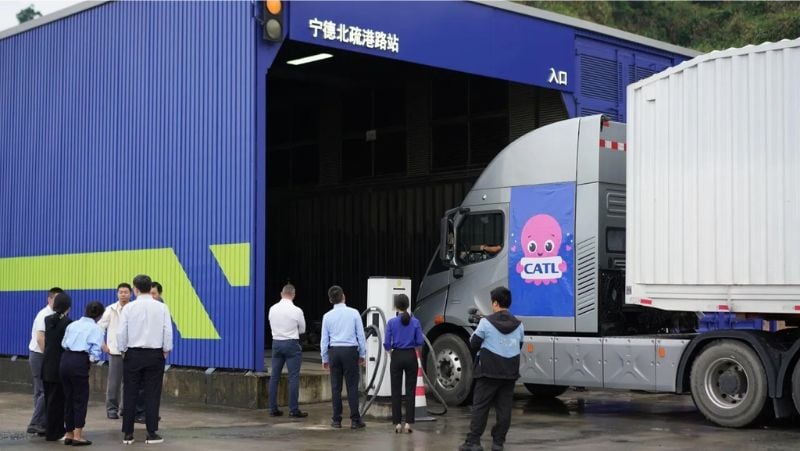
A CATL battery-swapping station. Image used courtesy of Octopus Energy
CATL has started testing Choco-Swap outside mainland China through a commercial-vehicle rollout in Hong Kong. The company has opened two sites and deployed an initial fleet of compatible Hongqi E-QM5 taxis. CATL plans to expand to 36 stations by 2030, initially targeting taxis, logistics vehicles, and other high-mileage fleets that can be particularly sensitive to charging downtime.
The company's European expansion is focused on heavy trucks. CATL partnered with Octopus Energy to launch Swaptopus, a joint venture developing truck-swapping hubs beginning in the U.K. in 2027. The venture ultimately aims to build more than 30 European "mega hubs" capable of serving over 300,000 trucks.
Check out battery swapping expansion in Europe. Video used courtesy of Octopus Energy
Manufacturing Boost for Truck Battery Swap Stations
CATL's heavy-truck battery-swapping rollout gained additional manufacturing capacity after supplier Kandi Technologies started producing equipment at a new factory in Lin'an, China. The plant can produce up to 200 swap stations annually for CATL's QIJI Energy network and other customers. According to Kandi, its system can complete a swap in about 90 seconds.
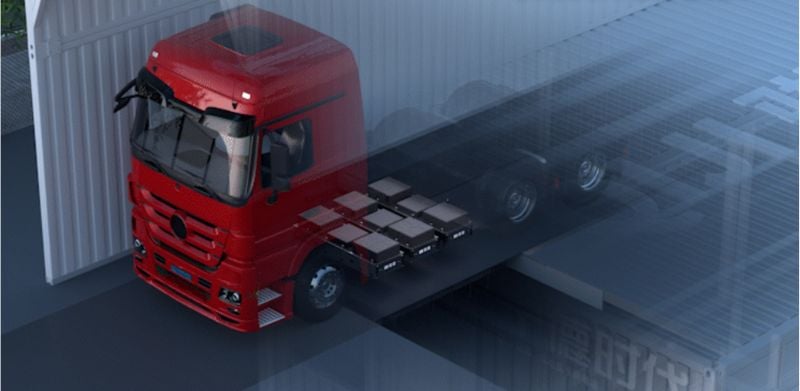
A CATL truck battery-swapping station. Image used courtesy of CATL
The factory opens as CATL is scaling QIJI, with plans to reach 900 heavy-truck swap stations by the end of this year—up from more than 300 at the end of 2025. The network already supports more than 30 swap-compatible truck models developed with multiple manufacturers, with stations planned along key freight corridors.
The buildout also benefits from the Chinese government's wider freight-electrification push. Kandi cited national goals to build 3,000 charging and battery-swap stations serving over 1.6 million heavy-duty trucks by 2030.
Related Content