Facebook
 Google
 GitHub
 Linkedin
Briefs: Nuclear, Renewables, and Energy Storage Tech Advances
TerraPower, Valar Atomics, Ore Energy, and ABB have made significant strides in nuclear energy and storage technology.
Nuclear, renewable energy, and energy storage systems are trending to meet energy demand and decarbonization goals. In the latest nuclear developments, TerraPower has reached an important step in expanding its Natrium reactor systems in the U.K., and Valar Atomics’ reactor has achieved criticality at its Utah site.
Storage technology is also expanding to provide grid-scale stability. Ore Energy is set to deploy its iron-air battery storage system in the Netherlands, while ABB has storage and power conversion offerings.
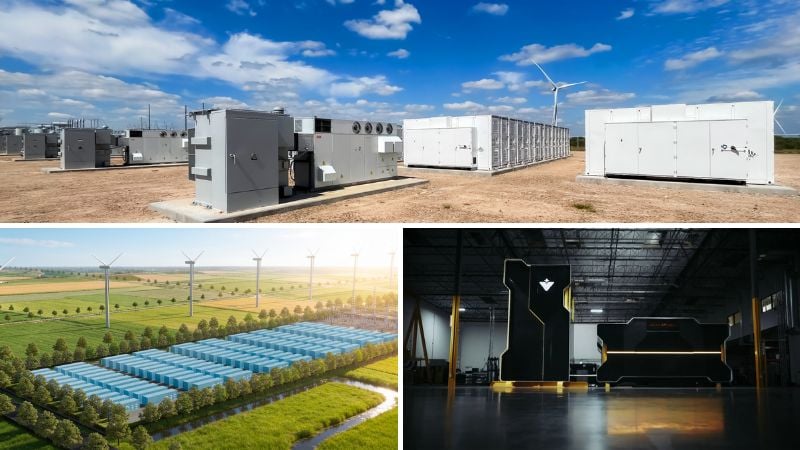
Nuclear energy, renewable energy, and storage technologies.
Bill Gates-Backed Natrium Reactor Reaches Commercialization Milestone
A nuclear energy developer co-founded by Bill Gates has entered into a formal regulatory review for its Natrium reactor in the U.K. The step is a significant advancement in TerraPower UK’s plan to deploy advanced nuclear reactor plants there.
The company submitted its application for the Generic Design Assessment (GDA) in October 2025, and the U.K. Department for Energy Security and Net Zero accepted it in February 2026. TerraPower has already received regulatory approval in the U.S. and is constructing a Natrium plant in Wyoming, adjacent to a retiring coal-fired power plant.
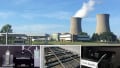
Learn more about the Natrium reactor plant. Video used courtesy of TerraPower
Natrium technology features a 345-MW sodium-cooled fast reactor with a molten-salt-based energy storage system. The storage technology, which can ramp up quickly when needed, can add 500 MW of power for grid reliability.
Ward 250 Advanced Nuclear Microreactor Reaches Criticality
The Ward 250 advanced nuclear reactor from Valar Atomics has achieved criticality at the Utah San Rafael Energy Lab. It is the first Department of Energy-backed reactor built outside of a national laboratory.
The reactor fired up a sustained, controlled nuclear chain reaction just nine months after construction began. Earlier this month, Antares Nuclear’s Mark-0 reactor achieved criticality at the Idaho National Laboratory.
The reactor is part of the DOE’s Reactor Pilot Program, which committed $3.2 billion over the next seven years for nuclear development. Ten companies received funding in three areas: demonstration, risk reduction, and advanced concepts.
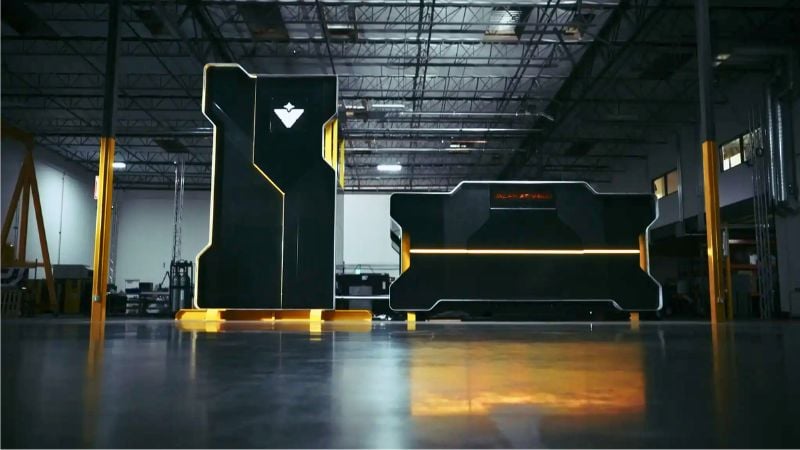
The Ward 250 reactor. Image used courtesy of Valar Atomics
Ore Energy To Add 1 GW Iron-Air Battery Storage To Support Netherlands Grid
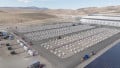
Ore Energy has agreed with energy supplier Budget Thuis to deploy a 1 GWh iron-air long-duration energy storage in the Netherlands. The first phase of the agreement calls for 400 MWh to be delivered in 2028. The facility will be Europe's largest iron-air storage facility.
Budget Thuis will use the energy storage to strengthen grid reliability as wind energy increases. The system will function as a grid-integrated, multi-day storage asset.
Ore Energy’s 40-foot iron-air architecture can be configured to last 24 to 100 hours. The system uses only iron, water, and air and is nonflammable. The design also reduces dependence on lithium, cobalt, and imported critical materials.
In February, Ore Energy completed a grid-connected pilot of the iron-air system at EDF in France. The pilot demonstrated that the system can store and discharge energy for up to four days in real-world conditions. The company had also deployed a storage facility in Delft, Netherlands.
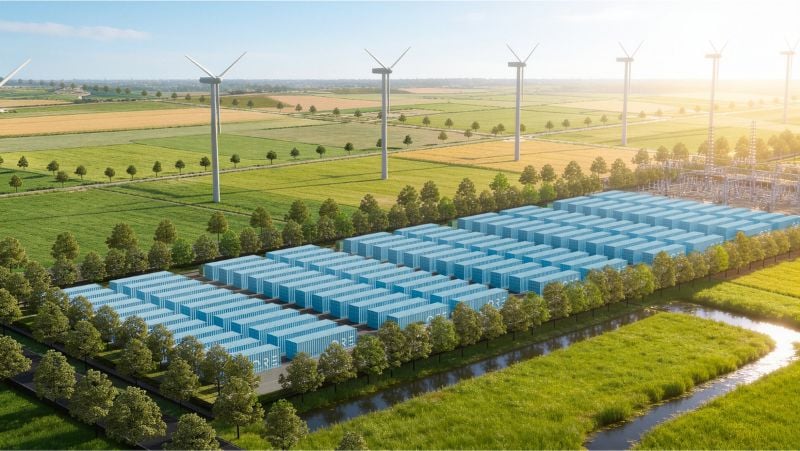
Rendering of the iron-air storage facility. Image used courtesy of Ore Energy
ABB Unveils Proteus PV and BESS Portfolio for Grid-Scale Renewables
ABB has introduced its Proteus PV inverter and battery energy storage systems (BESS) portfolio to meet the growing demand for renewable energy. The enhanced, utility-scale power conversion portfolio achieves 99.45 efficiency, according to the company.
The BESS includes bidirectional converter stations and control systems that enable black-start and grid-forming capabilities. Its design is battery-agnostic. The system is built for a 30-year service life.
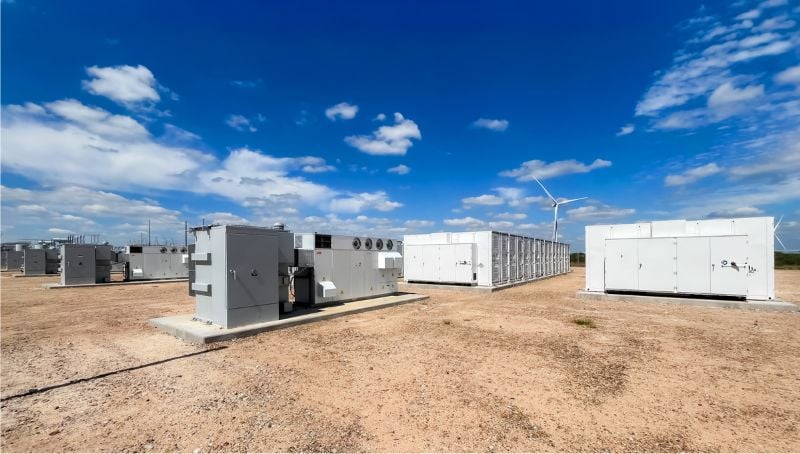
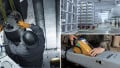
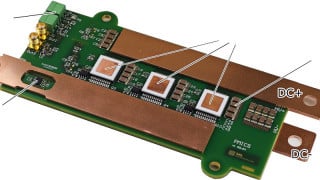
The Proteus PCS-E power conversion technology. Image used courtesy of ABB
ABB has more than 120 GW of power conversion capacity installed across 70 countries.