Facebook
 Google
 GitHub
 Linkedin
OmniOn Power Launches 5G Small Cell Rectifier
The SC4500 transforms AC power to 48 VDC power, allowing easy installation.
As the telecommunications industry prepares to meet the demands of 5G, network infrastructure must evolve to handle increasing data traffic and user density. Small-cell radios have emerged as a solution for enhancing network capacity and coverage in densely populated urban areas and other high-demand locations. However, deploying these systems presents significant challenges, particularly in delivering stable and efficient power in diverse and constrained environments. Variations in site conditions, from direct grid access to remote setups, require power solutions that are both versatile and robust.
OmniOn Power has introduced the SC4500 Small Cell Rectifier System to address these needs. The product introduces improved adaptability to the field.
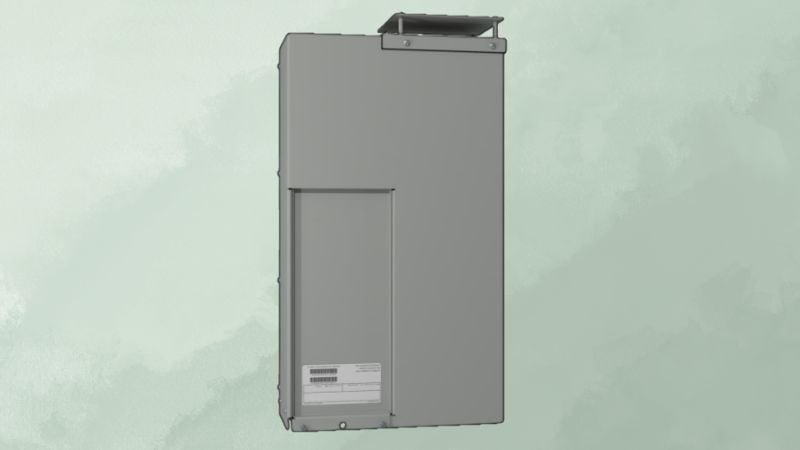
The SC4500 Small Cell Rectifier System. Image used courtesy of OmniOn Power
Small-Cell Radios
A small cell refers to a compact wireless network base station or radio access point with low radio frequency (RF) power output, limited range, and a small physical footprint. Small cells enhance macro communication networks by providing targeted coverage and capacity in specific areas. Operating across low-, mid-, and high-band spectrums, small cells utilize multiple frequencies to increase network bandwidth, boost data transmission, and enhance speed. However, their range is limited, spanning between 10 meters and 2 kilometers.
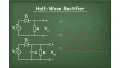
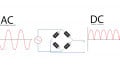
To power small-cell radios, AC power is converted to DC using rectifiers. These transform AC into DC, converting bidirectional electrical flow into unidirectional flow. The main challenge is to deliver stable 48 VDC power for small-cell radios in diverse and constrained outdoor environments. This requires compact, robust rectifiers that can handle wide AC input voltage ranges, extreme temperatures, and flexible installation scenarios.
Installing small cell radios and their rectifiers in wide dynamic landscapes requires initial effort and extensive maintenance later to ensure smooth operation. Moreover, 5G small cell placement depends on power availability. Some sites have direct grid access, while others require custom power delivery solutions, demanding flexible system designs.
OmniOn Power’s Small Cell Rectifier System
OmniOn Power launched the SC4500 Small Cell Rectifier System, a specialized outdoor power solution designed to supply efficient, stable 48 V DC power to small cell radios.
Architecturally, it features an IP65-rated convection-cooled design and operating temperature range of -40°C to +65°C, with output derating starting at +46°C. The rectifier transforms AC input voltages between 170 and 300 VAC into a DC output range of 40-58 V, defaulting to 55 VDC with regulation of ±0.5%. It delivers a maximum power output of 4500 watts at a peak efficiency of 96%, supporting 82 A at 55 VDC. Meanwhile, a convection-cooled design eliminates the need for mechanical fans, reduces moving parts, lowers maintenance requirements, and enables silent operation.
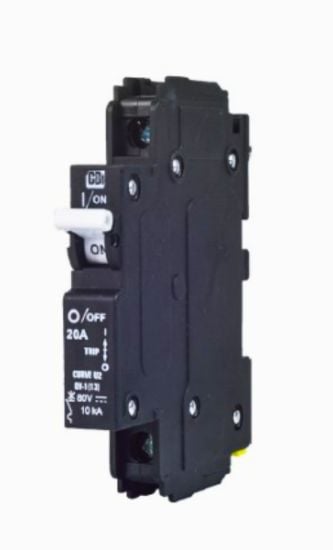
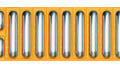
Output breaker. Image used courtesy of OmniOn Power
For safety, the system incorporates eight DC output breakers, configurable between 5 A and 50 A, providing tailored power distribution for various load requirements. It employs advanced protection mechanisms, including soft-start and inrush current protection, to prevent nuisance tripping of upstream breakers and electronic-controlled short-circuit protection for reliable performance.
Furthermore, the SC4500 complies with safety and electromagnetic standards, including ANSI/UL 62368-1, GR-1089, and EN/IEC 61000-4-5 Level 4.
The Implications
Systems like the SC4500 reflect the ongoing evolution of network infrastructure to meet modern connectivity demands. As 5G reshapes global communications, the capacity to deploy efficient, adaptable power solutions is becoming increasingly essential. Such advancements address immediate deployment challenges and pave the way for scalable networks capable of accommodating future technological shifts and more resilient and efficient connectivity in diverse environments.