Facebook
 Google
 GitHub
 Linkedin
Renewables Drive Power Modules With Cutting-Edge Chip Design
The 2.5 kV IGBT module with enhanced SLC+ technology sets a benchmark in reliability, tackling power and thermal cycling stress to ensure long-term stability and reduced maintenance costs.
This article is published by EEPower as part of an exclusive digital content partnership with Bodo’s Power Systems
The global shift toward renewable energy sources like wind power, energy storage, hydrogen production, and photovoltaic (PV) systems is driving the need for power electronics that can deliver high performance and exceptional reliability. Mitsubishi Electric is addressing these demands with a new generation of power modules that combine advanced packaging technology with cutting-edge chip design.
At the heart of this innovation is the Solid Cover+ (SLC+) structure, a significant update from the previous Solid Cover (SLC) technology. The newly developed SLC+ structure is engineered to enhance power cycling capabilities, a critical factor in ensuring the long-term reliability of power modules under demanding operating conditions. This updated SLC+ structure is integrated with Mitsubishi Electric’s latest low-loss 7th-generation 2.5 kV chipset, offering an ideal combination of performance and durability.
The 2.5 kV voltage rating has been specifically selected as the optimal solution for 1000 Vac and 1500 Vdc systems. This choice represents a carefully considered compromise between long-term DC stability (LTDS) and power losses, ensuring that the module provides both high efficiency and reliable performance in renewable energy applications. These new modules are tailored to meet the stringent requirements of high-performance applications in wind power, energy storage, hydrogen production, and PV systems.
With these innovations, Mitsubishi Electric is focusing on maximizing both efficiency and reliability, even in the most challenging renewable energy environments.
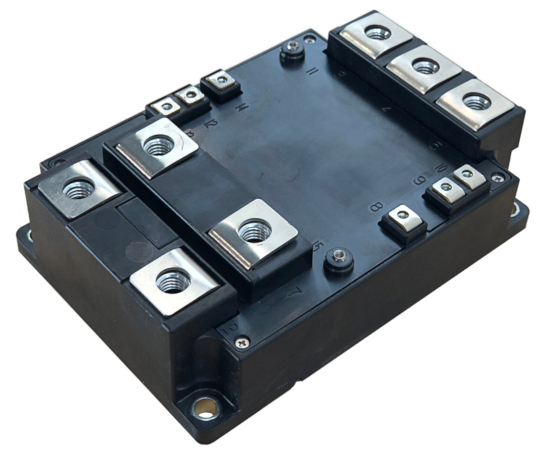
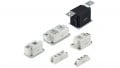
Figure 1. LV100 module with 2.5 kV IGBT and SLC+ technology. Image used courtesy of Bodo’s Power Systems [PDF]
SLC+ Structure
Central to the enhanced performance and reliability of the module is the SLC+ structure, which has been updated with power cycling capability improvements.
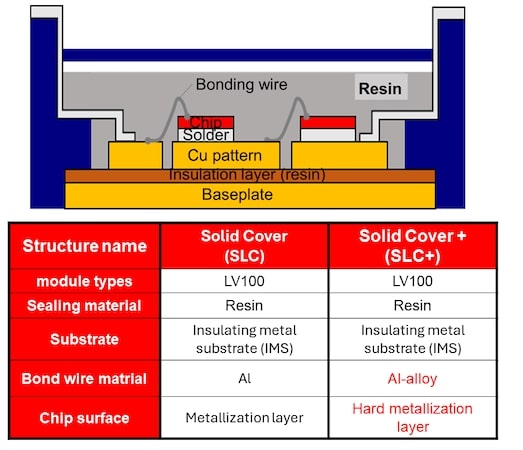
Figure 2. SLC and SLC+ technology. Image used courtesy of Bodo’s Power Systems [PDF]
Al-Alloy Bond Wire
The SLC+ structure introduces an advanced aluminum alloy bond wire that offers significantly higher yield strength compared to conventional bond wires. This enhancement is crucial as it directly addresses one of the primary causes of SLC module power cycle failure, “bond wire cracking.” Under power cycling, the repeated expansion and contraction of materials can lead to mechanical stress that eventually causes bond wires to crack. The Al-alloy wire in the SLC+ structure is designed to withstand these stresses more effectively, increasing power cycling capability. This improvement not only extends the operational lifespan of the module but also enhances its reliability under fluctuating temperature conditions in typical applications like wind converters. Especially the enhanced characteristics of the aluminum alloy wire in combination with the hard resin encapsulation of the SLC technology resulting in a significant improvement of power cycling capability.
Hard Metallization Layer
Another critical feature of the SLC+ structure is the hard metallization layer applied to the chip surface. In traditional power modules, the chip electrode is susceptible to cracking due to mechanical stress and thermal expansion. Such cracks can lead to catastrophic module failures, rendering the entire system inoperative. The hard metallization layer in the SLC+ structure acts as a protective shield, preventing the formation of cracks and maintaining the integrity of the chip electrode. This complements the improved bond wire, creating a synergistic effect that significantly enhances the overall robustness of the module.
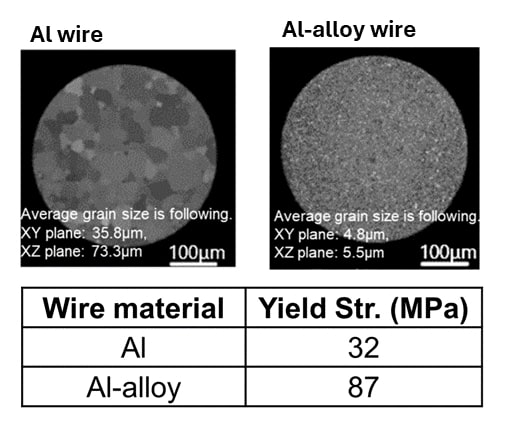
Figure 3. Comparison of Al and Al-alloy wire. Image used courtesy of Bodo’s Power Systems [PDF]
Power Cycle Performance
The benefits of the SLC+ structure are demonstrated through power cycling tests conducted by Mitsubishi Electric. These tests aim to reproduce the harsh operating conditions power modules face in renewable energy systems, particularly the thermal cycling that occurs in wind turbine converters on the generator side. The 2.5 kV LV100 module with SLC+ structure exhibited a power cycling capability exceeding 40 million cycles under conditions of ton=0.1 s, Tjmax=150 °C, and ΔTj=50 K. Notably, this performance was achieved without any failures and demonstrated the effectiveness of the improved SLC+ structure design.
This represents a significant advancement over conventional power modules, typically showing signs of degradation or failure under similar conditions. The enhanced power cycling capability of the SLC+ module ensures that it can operate reliably over extended periods, even in the most demanding applications. This reliability is particularly critical in renewable energy systems, where unplanned maintenance or downtime can lead to substantial financial losses and disrupt energy production.
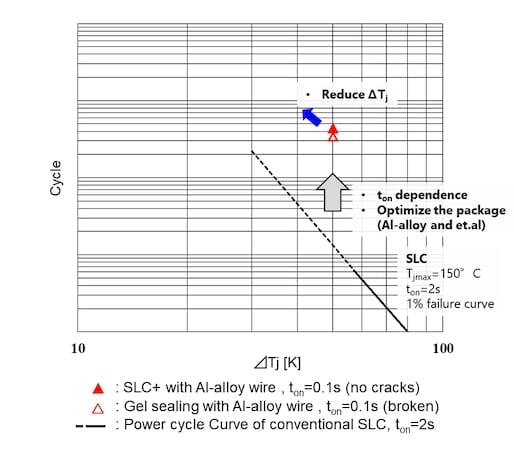
Figure 4. SLC+ power cycle test. Image used courtesy of Bodo’s Power Systems [PDF]
2500V for Low LTDS FIT Rate
The 2.5 kV IGBT and diode chipset used in this module have been optimized to meet the requirements of 1500 Vdc / 1000 Vac systems. This optimization involves achieving a delicate balance between minimizing power loss, controlling junction temperature, and enhancing long-term DC stability (LTDS) robustness. These factors are crucial in determining the module’s efficiency and reliability. The chip sizes, conduction, and switching loss characteristics have been tuned to fit converters in renewable applications like wind power and energy storage systems. One of the key challenges in designing high-voltage modules is ensuring their robustness against cosmic rays, which can induce failures, especially in environments with long-term exposure to high DC voltages and or high altitudes. Cosmic ray-induced failures, though rare, can have catastrophic consequences, leading to sudden and unpredictable module failures. The 2.5 kV module’s enhanced LTDS capability results from the 2.5 kV chip design and outstanding lower FIT rate, making it an ideal choice for applications that demand long-term reliability and stability in combination with high efficiency.
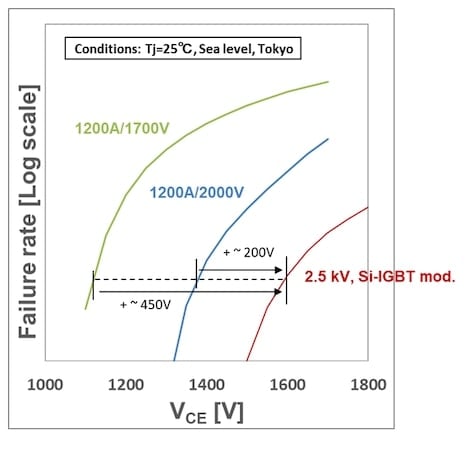
Figure 5. Estimation of LTDS failure rate. Image used courtesy of Bodo’s Power Systems [PDF]
Module loss and thermal performanceThe actual advantages of the 2.5 kV module with SLC+ structure are evaluated under typical application conditions from renewable applications. Simulations comparing the new 2.5 kV module with a standard 1.7 kV (CM1200DW-34T) module show several key benefits, particularly in wind power applications.
An excellent low loss switching performance has been achieved, as demonstrated in waveforms at 150 °C. Thanks to the LV100 package’s reduced built-in stray inductance, the 2.5 kV module experiences low turn-off and recovery surges, resulting in smooth and rapid switching. This reduced inductance allows a chip optimization toward loss reductions.
By keeping the same system output power while operating at higher voltage enabled by the 2.5 kV module, the actual current can be reduced. The reduction of output current enables a slight increase in on-state voltage without encroachment on overall performance. The 2.5 kV IGBT shows just about 15% higher on-state voltage than the 1.7 kV version, while the 2.5 kV diode only has a 5% higher forward voltage. The strong diode performance has been designed because diode losses are critical in rectifier converters for wind and hydrogen applications.
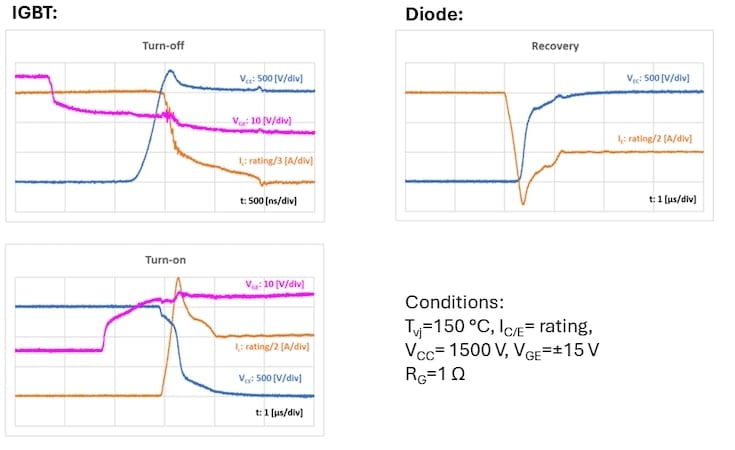
Figure 6. Switching waveforms. Image used courtesy of Bodo’s Power Systems [PDF]
When comparing power losses and junction temperatures between the 2.5 kV and 1.7 kV modules, the 2.5 kV module delivers about 15% higher output power at the same junction temperature (150 °C). This is particularly beneficial in wind power systems, where the new module can achieve higher power output without exceeding thermal limits.
Moreover, thermally the 2.5 kV module has the improvement that the temperatures of IGBTs and diodes under typical operating conditions are very similar, leading to efficient device usage and extended power cycling lifetime since no device is causing a thermal or lifetime bottleneck while the other device is not fully. The reduced temperature swing (ΔTj) in the 2.5 kV module minimizes the diode as a bottleneck in negative power factor operating conditions and contributes to an extended power cycling lifetime.
Table 1. Thermal simulation results at wind converter operating conditions
|
|
1.7 kV module |
2.5 kV module |
|
Conditions |
||
|
Vcc |
1000 V |
1500 V |
|
Vout |
690 Vrms |
1000 Vrms |
|
Tvj(top) |
150 °C |
|
|
cosφ |
-0.8 |
|
|
fc |
1.5 kHz |
|
|
fout |
6 Hz |
|
|
Modulation method |
3rd harmonic injection |
|
|
Modulation index |
0.25 |
|
|
Results |
||
|
Pout |
1.1 MW |
1.26 MW |
|
ΔTj (IGBT) |
32.3 K |
45.8 K |
| ΔTj (diode) | 53.7 K | 44.2 K |
Takeaways
The 2.5 kV IGBT module with LV100 housing and SLC+ structure represents a leap forward in the design of power electronics for renewable energy applications. By addressing the key challenges of thermal and power cycling, power density, high efficiency, and cosmic ray-induced failures, this module offers a reliable and efficient solution for renewable applications with 1500 Vdc or 1000 Vac inverter systems.
The module’s enhanced power cycling capability, coupled with high LTDS robustness and high-efficiency features, makes it particularly well-suited for demanding renewable energy systems. As the industry continues to push toward higher efficiency and greater reliability, innovations like the SLC+ structure will play an important role in ensuring power electronics can meet these demands.
This article originally appeared in Bodo’s Power Systems [PDF] magazine.