Facebook
 Google
 GitHub
 Linkedin
Changan and Volvo Test Hydrogen Fuel Vehicles on the Road
Both automakers seek to commercialize hydrogen fuel but have chosen different vehicle sizes and hydrogen technologies.
Hydrogen vehicle developments from Changan Automobile and Volvo Trucks reveal new engineering strategies for passenger and heavy-duty vehicles. While one advances fuel cells' system integration and efficiency, the other retools internal combustion architecture to operate on hydrogen.
Both efforts reflect how automakers are exploring hydrogen across different segments, where vehicle size, duty cycle, and infrastructure constraints influence how these systems are designed and integrated.
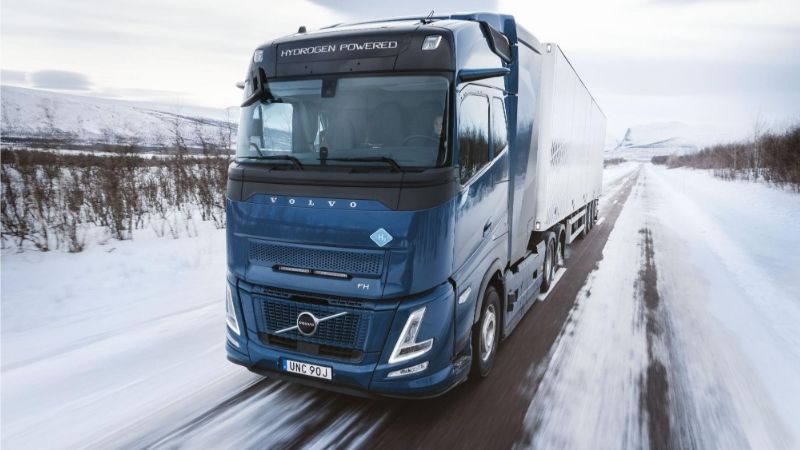
Volvo has started on-road testing its hydrogen trucks. Image used courtesy of Volvo
Changan's Fuel Cell Integration and System Efficiency
Changan's latest hydrogen fuel cell vehicle leans toward an integrated and practical powertrain design. Its first-generation system, already used in the company's Deepal SL03 passenger sedan, focuses on improving stack efficiency and system-level performance, reportedly exceeding industry benchmarks by more than 10%. Improving system efficiency is a key focus for fuel cell vehicles, as it directly affects both range and hydrogen consumption.
Unlike some other fuel cell developers that focus on heavy-duty vehicles, Changan is placing the system within a passenger car platform, which introduces tighter space constraints, cooling, and supporting components, putting more emphasis on compact packaging and system integration. Managing heat rejection in a smaller vehicle footprint can be particularly difficult, as gas fuel cell systems require consistent temperature control to maintain performance and durability.
The company’s second-generation system targets cost reduction at the stack and hydrogen storage levels, two of the most expensive subsystems. Reducing costs at the system level remains a hurdle for fuel cell vehicles, especially in applications where battery electric alternatives are already commercially available.
Changan has previously stated that its hydrogen fuel cell system is designed to combine compact size with high conversion efficiency supported by its in-house high-precision control technology. The company also reports hydrogen consumption of about 0.65 kilograms per 100 kilometers and a refueling time of around three minutes.
Fast refueling and relatively low hydrogen consumption are critical to improving the practicality of fuel cell vehicles, particularly in markets with limited charging infrastructure.
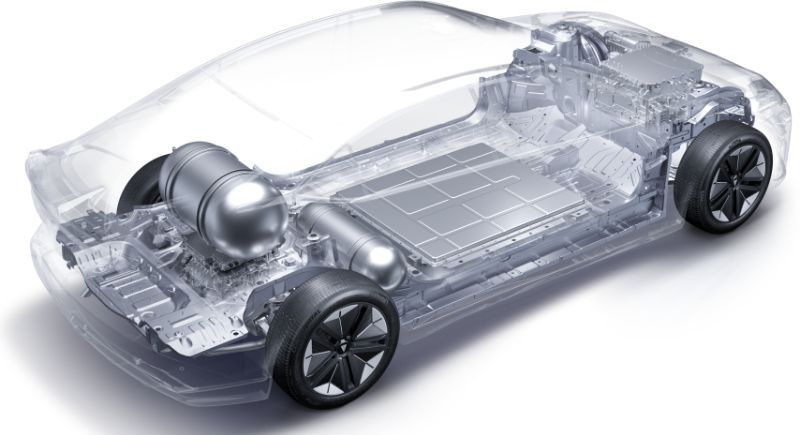
Changan is developing a high-efficiency fuel cell system for passenger cars. Image used courtesy of Changan
Changan is pushing the system toward commercialization in a planned 2027 launch. However, its reach may depend on the availability of hydrogen refueling infrastructure, which remains uneven across most regions.
Volvo's Hydrogen Combustion via High-Pressure Direct Injection
Volvo’s latest hydrogen truck concept adapts a conventional internal combustion architecture to run on hydrogen rather than converting it into electricity first.
This approach relies on Cespira's high-pressure direct injection (HPDI) system, which introduces hydrogen into the cylinder at high pressure for controlled combustion. HPDI provides precise control over fuel delivery, which is important for managing combustion in hydrogen engines.
Watch the Volvo hydrogen truck in action. Video used courtesy of Volvo Trucks
HPDI also allows Volvo to retain familiar engine characteristics while adapting the fuel source. This type of injection system has previously been used in alternative-fuel engines, making it adaptable for hydrogen applications.
Volvo's hydrogen-powered truck. Image used courtesy of Volvo Trucks
Since the base engine architecture is derived from existing diesel platforms, Volvo can build on established engine designs. The system also incorporates a small ignition source—typically a secondary fuel—to initiate combustion and help maintain stable operation across varying loads. Leveraging existing engine platforms can also simplify maintenance and servicing compared to entirely new propulsion systems.
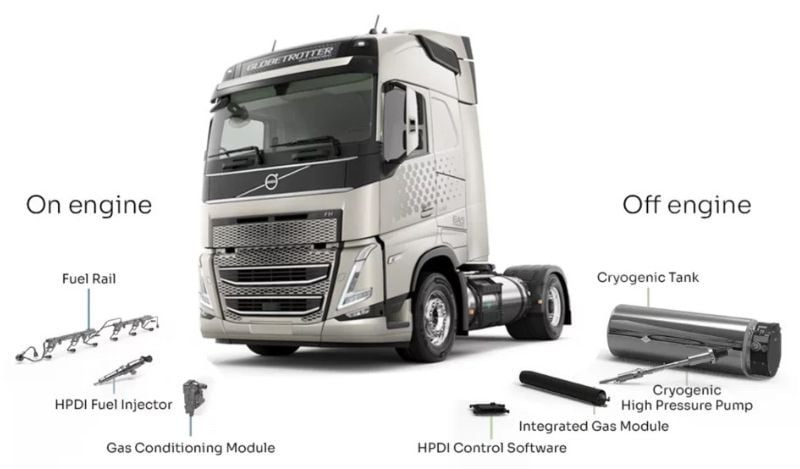
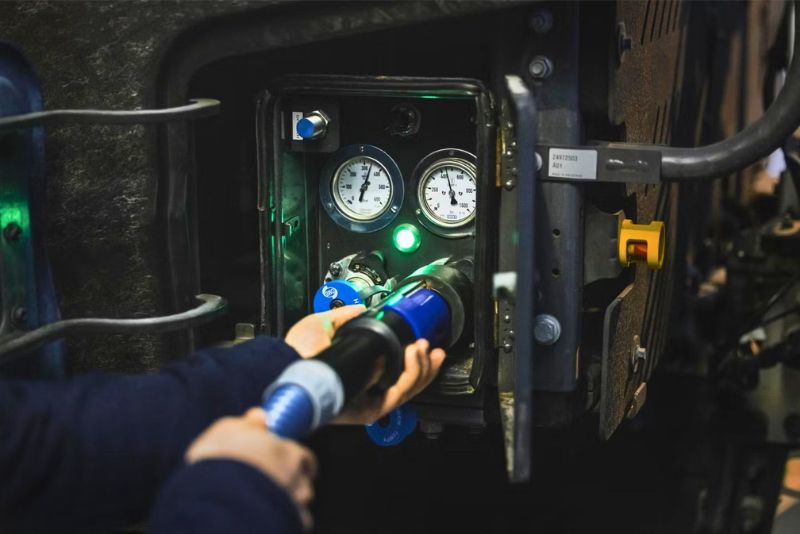
Volvo's hydrogen trucks feature high-pressure direct injection technology from Cespira, a joint venture between Volvo and Westport Fuel Systems. Image used courtesy of Volvo
Volvo is targeting higher overall efficiency and lower fuel consumption compared to earlier hydrogen combustion designs. The design prioritizes long-haul viability, where hydrogen’s higher energy-to-weight ratio compared to batteries enables extended range without the mass issues that can limit electric trucks. Efficiency improvements are particularly important in long-haul applications, where fuel consumption directly impacts operating costs.
Volvo plans to continue testing the technology under real-world driving conditions to validate performance and reliability.