Facebook
 Google
 GitHub
 Linkedin
Nanoscientists Use Microwaves to Recycle EV Battery Cathodes
Sandia National Laboratories researchers recovered more valuable minerals from used electric vehicle materials in less time.
Sandia National Laboratory researchers have discovered a way to recover valuable minerals, such as cobalt, from electric vehicle battery cathodes by zapping them with microwaves. The microwave method is quicker and more affordable than conventional processes.
While some refinement is needed, Sandia scientists indicate the microwave method could boost battery recycling, reduce waste, and reduce dependence on scarce mineral resources.
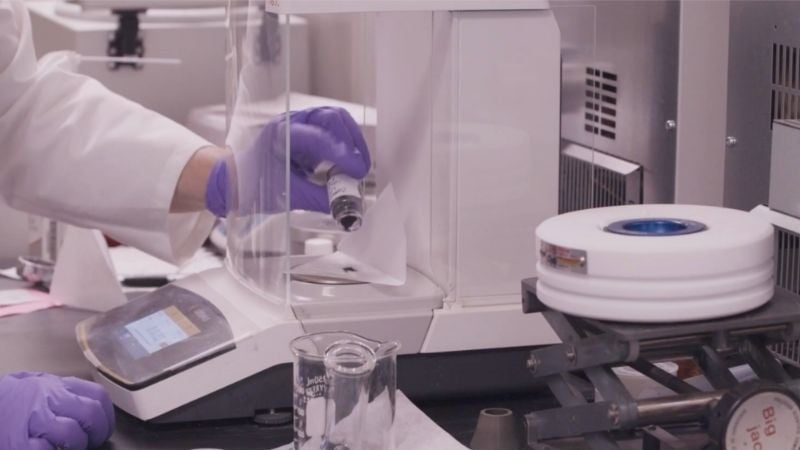
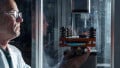
Sandia scientist preparing the process. Image used courtesy of Sandia National Laboratories
The Recycling Problem and Rare Minerals
Electric vehicle batteries can be recycled, and although the rate is increasing, only about half of the batteries are recycled in the best-case scenario, according to estimates from the Rockefeller Institute of Government. Yet, recycling methods can potentially recover 95-98% of usable materials.
However, typical recycling methods, which focus primarily on lithium-ion batteries, can be costly both economically and environmentally. Pyrometallurgy, the burning of batteries at very high temperatures, is energy-intensive and produces harmful emissions. Hydrometallurgy, which uses strong acids to dissolve materials, can generate toxic wastewater.
What’s more, demand is increasing for lithium and cathode materials, such as cobalt, manganese, and nickel, as EVs become more widespread and battery energy storage systems expand. New materials are costly to mine and process, and many are sourced in countries where supply chain infrastructure and geopolitical tensions can cause bottlenecks in obtaining them. For example, the Democratic Republic of the Congo mines about 70% of the world’s cobalt.
Easier, more efficient, and more environmentally friendly recycling methods could be a boon to battery makers.
Sandia’s Solution
The microwave method devised by Sandia nanoscientists offers a quicker and more affordable solution for recovering cathode materials such as cobalt from used batteries.
The researchers placed used cathode materials from old lithium-ion batteries in a microwave reactor about the same size and power as a typical kitchen appliance. They used a positively charged ion to separate the layers of the cathode powder into nanosheets. The microwave provided consistent, localized superheating.
Sandia scientists explain their microwave recycling process. Video used courtesy of Sandia National Laboratories
The method recovered 95% of the material as nanosheets, and the entire process took only two hours. Previous methods converted only 60% of the material into nanosheets and took about seven days.
Nanosheets increase surface area, enabling better ion exchange and leading to greater recovery of critical materials. Nanosheets also offer flexibility in which materials can be recovered, an important factor as battery chemistries change. The process can be applied to other architectures such as sodium-ion and zinc-ion battery cathodes.
The nanosheet method can also detect and remove impurities and defects.
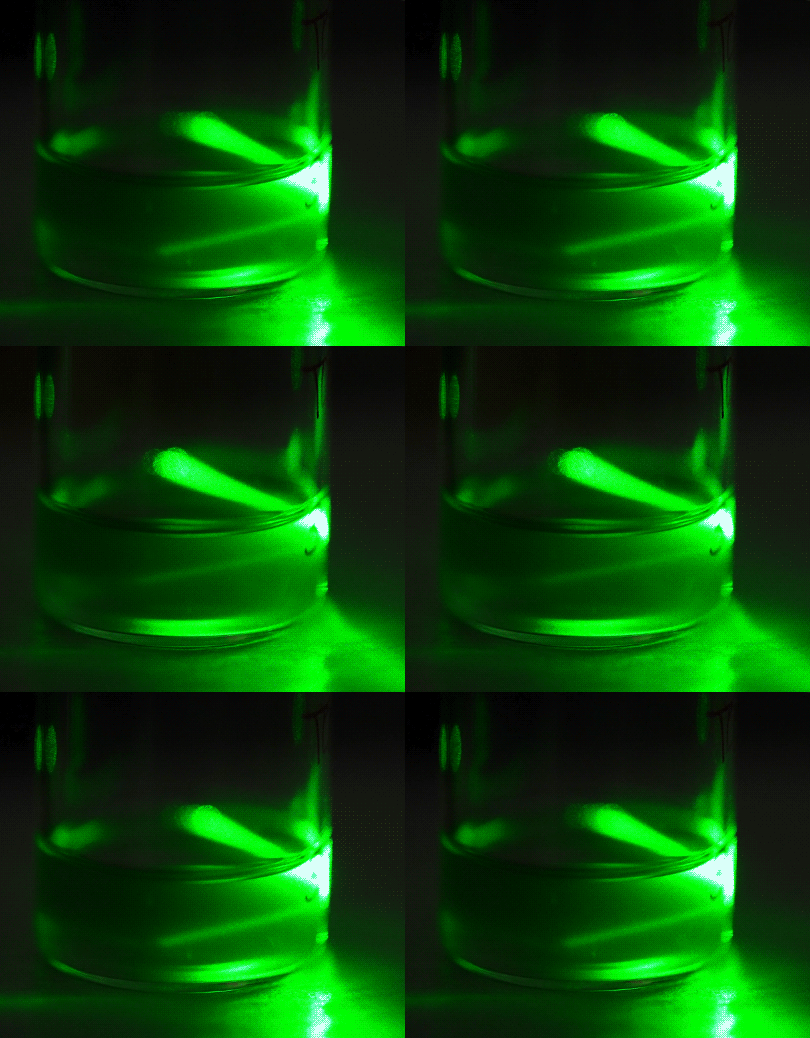
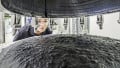
A green laser highlights nanosheets from lithium battery cathodes in water. Image used courtesy of Sandia National Laboratories/Craig Fritz
The most challenging part was disassembling the batteries. They used Sandia’s Battery Abuse Testing Laboratory, which has the equipment and expertise to safely take the lithium-ion batteries apart. Researchers said other laboratories, such as Argonne National Laboratories, are working to refine battery cathode recycling.
What’s Next for the Microwave Method
The researchers have filed two patent applications for the recycling method and are seeking industry partners to commercialize the technology.
Other laboratories will continue to explore and refine microwave methods of recycling batteries. Argonne National Laboratory’s ReCell Center is working on ways to recycle and upcycle lithium-ion battery cathodes.