Facebook
 Google
 GitHub
 Linkedin
Meet the Robot That Builds Solar Farms Around the Clock
In the race to meet America’s surging energy demand, autonomous robots and AI are emerging as powerful tools for building solar farms faster than ever.
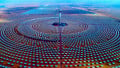
The United States is entering a period of sustained electricity demand growth not seen in decades, driven primarily by the rapid expansion of data center infrastructure by hyperscale cloud providers and AI companies. Those tech giants need enormous amounts of power, and they need it quickly.
Utility-scale solar paired with battery storage remains one of the fastest and most cost-effective ways to bring new electricity online. But building those projects is far from easy. Solar farms can span thousands of acres and require millions of panels and components, many of which are still installed manually. The result is a construction bottleneck at exactly the wrong moment: when labor shortages, schedule delays, and rising costs are slowing deployment, even as the grid urgently needs more capacity.
Terabase’s robotic solar builder, Terafab V2, may help break that bottleneck.
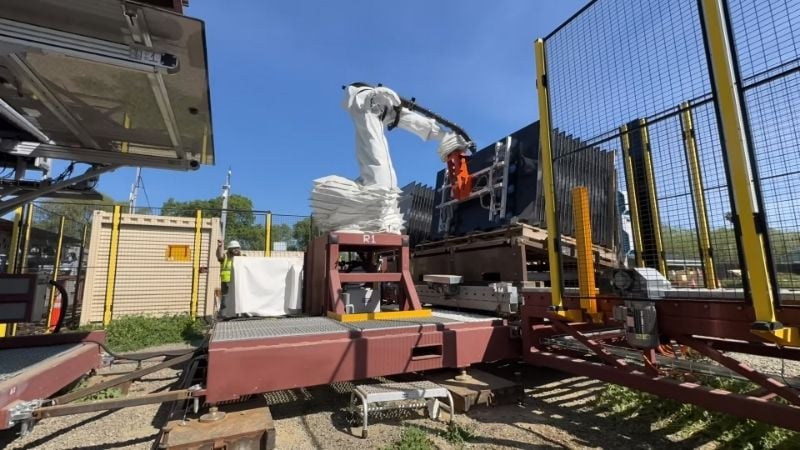
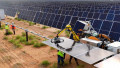
AI and robotic solar power construction. Image used courtesy of Terabase
Meet the Robot Builders
Terafab V2 is a physical AI system that uses advanced robotics, real-time decision-making, and autonomous operation to build at a pace manual crews cannot match. But what makes it different is where it operates: not in a controlled factory, but in the chaos of the outdoors.
Factory automation has been widely demonstrated indoors, where conditions are controlled and predictable. Terabase has invested years of research and development in engineering a system with similar precision and efficiency. Yet it operates in uncontrolled conditions on active construction sites, from fine desert dust and extreme heat to wind, rain, and mud.
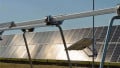
The system also departs from the traditional solar construction sequence. Normally, crews install steel torque tubes first, then manually attach heavy solar panels, one by one. Terafab inverts that process: panels are pre-assembled onto the torque tubes, with built-in quality checks at every step, so defects are caught immediately rather than later in the field.
Watch Terafab in action. Video used courtesy of Terabase
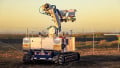
Once units are assembled, a fleet of purpose-built rovers delivers the pre-assembled components to their final installation points, completing the last mile of construction. Behind it all, Terafab's Manufacturing Execution System (MES) software continuously manages and optimizes the entire build using AI.
Seeing the Impact
A single line can achieve two-minute cycle times while running 24/7, translating to more than 20 MW installed per week, or roughly 1 GW per factory each year, or about enough to power 750,000 American homes.
Beyond the speed, Terafab offers a range of practical advantages. By eliminating much of the manual heavy lifting, workers no longer need to hoist large glass panels and steel components, improving jobsite safety while allowing construction to continue even during extreme heat events that might otherwise force crews to stop.
Developers and EPC contractors may be able to produce more project volume. Skilled labor shortages are a prevalent challenge in the solar industry. A shortened construction schedule may translate to lower costs.
Scaling Up
Over the next 12 months, Terabase is building factory capacity at its Northern California facility capable of installing up to 10 GW per year. The Terafab V1 system has already been deployed across five commercial solar projects, giving the company a real-world track record to build on.
Terabase aims to integrate industrial manufacturing processes into the unpredictable outdoor environment, helping the clean energy industry meet energy demands more quickly.