Facebook
 Google
 GitHub
 Linkedin
The Rocky Road to Better Battery Cathodes
Can rock salt cathodes pave the way for affordable, high-energy storage?
As global energy demand surges, the limitations of traditional lithium-ion batteries—such as reliance on scarce materials, safety concerns, and environmental impact—are becoming apparent. These shortcomings have pushed researchers to explore more sustainable and efficient alternatives.
A key focus area is the development of new cathode materials, which are integral to a battery's performance, capacity, and cost. MIT researchers have introduced a promising cathode material using a common substance—rock salt—that could unlock low-cost, high-capacity batteries for electric vehicles, energy storage systems, and other needs.

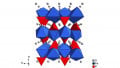
Can rock salt make better battery cathodes? Image used courtesy of Wikimedia Commons
The Battery Bottleneck
The key parameters researchers and engineers strive to improve for high-performance energy storage include energy density, power density, cycling stability, safety, and cost. In the battery structure, the cathode’s design significantly impacts each parameter.
Cathodes are challenging in battery engineering because, in most cases, they are the limiting factor in battery performance and the most expensive component in a battery. Traditional cathodes often rely on costly and scarce materials like cobalt and nickel, which raise concerns about long-term sustainability and geopolitical dependencies.
Moreover, these materials can suffer structural instability at high voltages, curtailing the battery's energy density and lifespan. The ideal cathode material would combine high energy density, excellent cycling stability, improved safety features, and utilize earth-abundant elements to reduce costs and ensure scalability.
To respond to these challenges, researchers are exploring materials that use more abundant elements, offer higher energy densities, and provide better structural stability. Options like disordered rock salt cathodes have shown promise due to their potential for high capacity. These cathodes are composed of disordered atomic arrangements, which allow for faster ion diffusion and enhanced overall performance.
Disordered Rock Salt Batteries
In their study, MIT researchers developed a class of cathode material called disordered rock salt-polyanionic spinel (DRXPS), which integrates two major types of cathode materials: rock salt and polyanionic olivine. This hybrid structure combines high energy density with improved cycling stability.

Examples of cation-disordered rock salt crystal structures. Image courtesy of Chen et al.
The DRXPS material primarily comprises manganese, an earth-abundant and cost-effective element compared to nickel and cobalt typically used in cathodes. The research innovation was adding phosphorus, which forms polyanions with neighboring oxygen atoms within a cation-deficient rock salt structure. This configuration effectively pins down oxygen atoms, mitigating the oxygen mobility issue that has plagued previous disordered rock salt cathodes.
The material can utilize oxygen-contributed capacity by stabilizing oxygen while maintaining good stability during cycling. The cathode offers a high capacity of up to 350 mAh per gram, significantly higher than traditional cathode materials, which typically range from 190 to 200 mAh per gram. Moreover, the material demonstrates gravimetric energy densities exceeding 1,100 Wh/kg, with more than 70% retention after 100 cycles. The ability to charge to higher voltages simplifies battery management systems by reducing the number of cells needed in series.
Future Prospects
The current synthesis method uses high-energy ball milling for mechanochemical synthesis, resulting in non-uniform morphology and small average particle sizes of about 150 nanometers. The cathode paste currently requires up to 20-weight percent carbon content to enhance conductivity.
According to the team, future research aims to optimize the composition, explore more scalable synthesis methods, improve morphology for uniform coatings, reduce carbon content (potentially to 1-2 weight percent using carbon nanotubes), and develop thicker electrodes to increase practical energy density.