Facebook
 Google
 GitHub
 Linkedin
GM Adapts EV Battery for Military Use
The project seeks to assess the performance of automotive batteries under various discharge and charge conditions.
The commercial automotive industry is driving modern-day investment in battery technology, but other sectors are also poised to benefit. Military applications could realize significant sustainability and performance gains from advanced battery technology.
GM Defense and the University of Texas have launched a project to evaluate GM's advanced Ultium battery platform under dynamic conditions. The partnership could improve battery technology and advance military electrification.

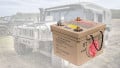
Military electric vehicle. Image used courtesy of GM
Is the Military Sector on the Verge of Change?
Energy and power systems are fundamental for success in diverse military environments and missions. In these applications, diesel generators and specialized military batteries are the norm thanks to their known durability under extreme conditions, including temperature variations, high altitudes, and mechanical stress.
However, diesel generators are cumbersome, need frequent refueling, and generate noise, making them unsuitable for stealth operations. Similarly, while effective, specialized military batteries often have limited energy density and struggle to meet modern military equipment’s growing power demands. As the automotive sector shifts toward electric vehicles, the defense industry seeks to adapt these advancements to enhance operational capabilities without compromising reliability.
However, before the military sector can repurpose the battery advancements emerging from the EV transition, they must assess their suitability in dynamic military conditions. Particularly, it is essential to test automotive batteries under charge and discharge scenarios to analyze their response to varying loads and rapid energy fluctuations. To this end, engineers must examine factors such as energy density, thermal management, voltage profiles, internal resistance dynamics, and cycle life by subjecting batteries to rigorous charge and discharge cycles.
Energizing Defense With Batteries
GM Defense recently partnered with the University of Texas at Arlington Pulsed Power and Energy Laboratory and Naval Surface Warfare Center Philadelphia Division to test the viability of commercial battery electric technology in military applications.
The groups will test GM's Ultium Platform, which has a reputation for high power output, extended range, and scalability. By leveraging this commercial battery technology, the Department of Defense could benefit from the rapid advancements and cost efficiencies the EV market has already achieved, leading to more affordable and quickly deployable power solutions for military applications.
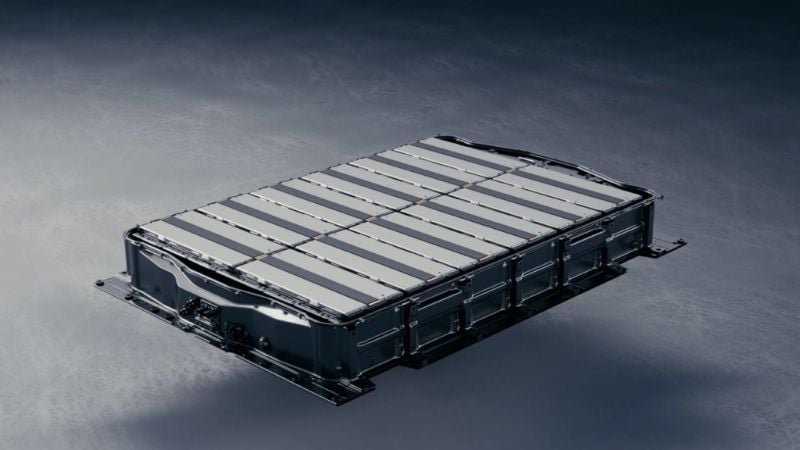
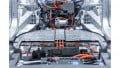
Ultium battery for military applications. Image used courtesy of GM
The project’s success could have far-reaching implications for military logistics and operations. For example, it could enable more energy-efficient military vehicles, reduce dependence on fossil fuels in the field, and enhance the capabilities of directed energy weapons systems. Furthermore, it might pave the way for new tactical advantages by allowing for quieter, more electrically powered operations with reduced thermal signatures.
The U.S. Department of Defense's Operational Energy Innovation Office, through the Operational Energy Capability Improvement Fund, is funding the Evaluation of Electric Vehicle Batteries to Enable Directed Energy project.
Road Ahead
The collaboration between GM Defense and academic institutions to evaluate commercial battery technology for military use signifies a broader trend of cross-sector innovation in energy solutions. As the lines between commercial and military technology continue to blur, we may see increased symbiosis between these sectors, driving innovation and cost-effectiveness. This initiative could also spur new regulatory frameworks and battery performance and safety standards across industries. Ultimately, the success of this project could help initiate an era of energy independence and operational flexibility in defense while simultaneously pushing the boundaries of what's possible in civilian electric vehicle technology.
Related Content