Facebook
 Google
 GitHub
 Linkedin
Microwaves Zap Lithium From Used Li-Ion Batteries
The recycling method uses microwaves and a biodegradable solvent to recover lithium from used batteries.
The surge in demand for lithium-ion batteries (Li-ion) has put significant pressure on the global lithium supply chain, raising concerns about the long-term sustainability of battery production. Traditional lithium extraction methods are often environmentally damaging and energy-intensive, while current recycling processes for spent batteries are inefficient and costly. As the industry continues to expand, with the global lithium-ion battery market expected to grow by over 23% in the next eight years, sustainable and efficient lithium recovery methods have become urgent.
Scientists from Rice University have developed a fast, effective, and eco-friendly technique for selectively recovering lithium using microwave radiation and a biodegradable solvent. The method aims to overcome the shortcomings of current recycling methods.
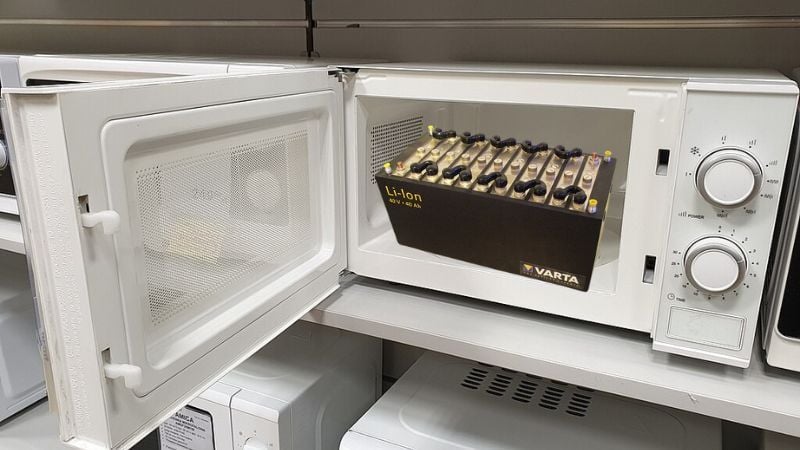
Can microwave radiation recover lithium from used batteries? Image adapted from Wikimedia Commons/MichaelPL and Wikimedia Commons/Claus Ableiter
The Lithium Recycling Challenge
Hybrid and electric vehicles are driving an exponential increase in Li-ion battery demand. Meanwhile, such batteries rely on non-renewable materials like cobalt, nickel, lithium, and manganese, all of which have purity requirements exceeding 99.9 wt.% to be considered “battery-grade.”
The numerous end-of-life Li-ions projected in the coming years could be a valuable source for these materials. However, in practice, large-scale recycling faces significant challenges.
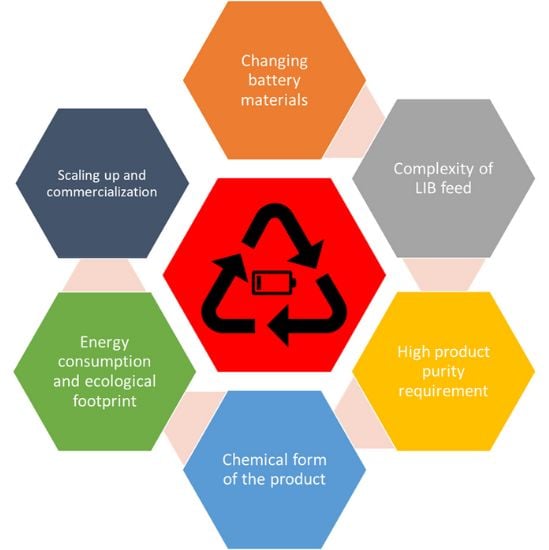
Lithium recycling challenges. Image courtesy of Wagh et al.
For example, traditional recycling methods often struggle to selectively extract lithium from this complex matrix, resulting in low recovery rates and contamination issues. Conventional methods, such as pyrometallurgical processes, involve high-temperature smelting, which consumes substantial energy and produces greenhouse gas emissions.
Meanwhile, hydrometallurgical approaches, while less energy-intensive, often rely on harsh chemicals that pose environmental risks. Moreover, the recovery percentage of lithium from spent batteries is a critical issue.
Current recycling methods typically recover less than 5% of lithium, a staggeringly low figure considering the metal's value and scarcity. This low recovery rate is attributed to several factors, including lithium's tendency to be lost during the recycling process, its propensity to form stable compounds with other battery components, and the difficulties in separating it from other metals.
Recycling with Microwave Radiation
Researchers at Rice University have developed a novel method for recycling lithium-ion batteries using microwave radiation and a biodegradable deep eutectic solvent (DES). This technique achieves a remarkable 50% lithium recovery rate from spent battery cathodes in just 30 seconds, significantly outperforming conventional recycling methods.
The process utilizes a DES composed of choline chloride (ChCl) and ethylene glycol, exploiting the selective microwave absorption properties of ChCl to target lithium specifically. Microwave irradiation triggers selective, non-thermal activation of polar ChCl in DES, enabling ultrafast Li leaching. This rapid method efficiently recovers Li, conserving energy and preserving DES integrity, unlike conventional high-temperature processes, and successfully extracts Li from high solid/liquid concentrations of Li-ion battery cathodes in DES.
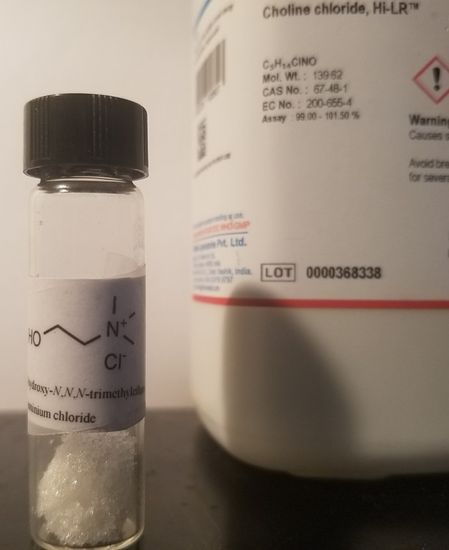
Choline chloride. Image used courtesy of Wikimedia Commons
The researchers achieved rapid and selective lithium leaching by submerging battery waste in this solvent and applying microwave radiation. The method extracted 87% of lithium in 15 minutes, compared to the 12 hours required for the same recovery rate using traditional oil bath heating.
Green Horizon
Overall, Rice’s microwave-assisted approach enhances recovery rates and addresses environmental concerns associated with conventional recycling methods involving harsh acids. By offering rapid, energy-efficient recovery with minimal environmental impact, this method could lead to large-scale Li-on battery recycling and address the future supply needs for lithium.