Facebook
 Google
 GitHub
 Linkedin
Schneider Expands Grid Operations Stack with Digital Twin
Schneider showcased the physics-based digital twin and updates to ArcFM Web and Energy Transmission Software at DTECH 2026.
Schneider Electric has rolled out a coordinated set of software updates and integrations aimed at how utilities prepare for, respond to, and recover from large-scale grid disruptions. The company unveiled the systems at DTECH 2026 in San Diego.
The updates combine updates to Schneider’s operational grid software with a new physics-based digital twin developed with ETAP, tying together planning models, real-time operations, and geospatial data.
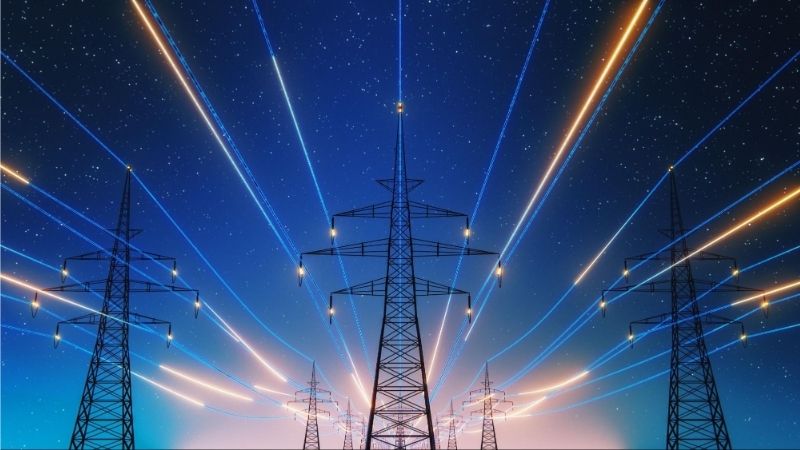
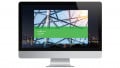
Concept of digital grid management. Image used courtesy of Adobe Stock
Operational Software Tuned for Major Events
The first set of updates focuses on Schneider’s grid operations portfolio, with enhancements to EcoStruxure ArcFM Web and EcoStruxure Energy Transmission Operation software. Both sit within Schneider’s One Digital Grid Platform, which acts as the integration layer across transmission, distribution, and third-party systems.
ArcFM Web is a shared, browser-based geographic information system that provides a single, current view of network assets. Schneider said recent enhancements focus on workflows used by planning, operations, and emergency response teams during major events, where network topology and asset status can change quickly. The company’s goal is to reduce the lag between field updates and control room decisions, keeping all teams anchored to the same geospatial model.
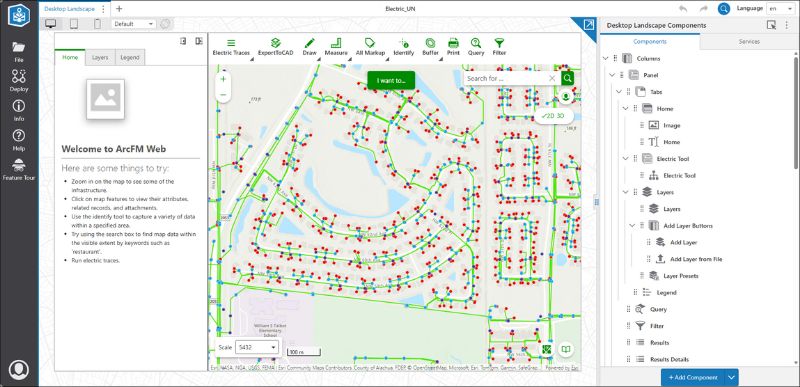
ArcFM Web. Image used courtesy of Schneider Electric
Energy Transmission Operation software addresses a different, but related, problem. Separate systems often manage transmission and distribution networks, even though disruptions increasingly propagate across both layers. The updated ETO software is intended to improve enterprise-wide visibility and coordination, particularly during storm restoration and wildfire mitigation scenarios.
Schneider is also leaning more heavily on partner data sources to augment its own platforms. The platform aggregates insights from partners including Microsoft, AiDASH, Technosylva, and Neara, combining weather data, vegetation intelligence, and asset modeling to support planning and response during major grid-disrupting events.
Visualization to Modeling
Schneider also introduced a physics-based digital twin, developed in partnership with ETAP, to link network design models with live grid conditions.
Integrated with One Digital Grid and ArcFM Web, the digital twin combines geospatial context with simulation-grade power system modeling. ETAP’s software brings detailed electrical behavior into the picture, enabling contingency analysis, protection coordination studies, and switching simulations based on the same model used for day-to-day operations.
Schneider and ETAP stated that this is not limited to visualization or historical replay. The digital twin is intended to support predictive analysis, allowing operators to evaluate the outcomes of switching actions or fault scenarios before they are executed. That capability is particularly relevant during restoration work, when incorrect sequencing can lead to additional outages or equipment damage.
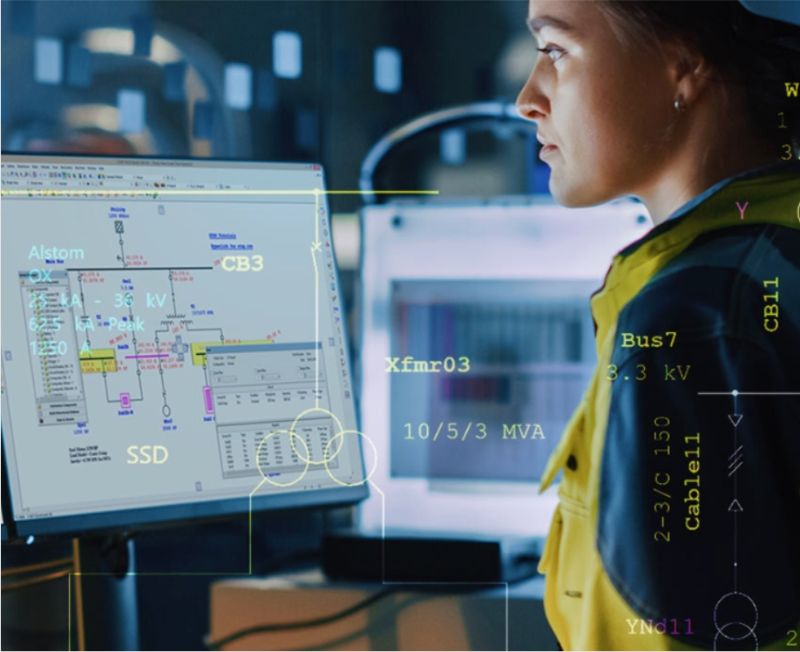
Data visualization. Image used courtesy of Schneider Electric
The digital twin also supports arc-flash analysis aligned with NFPA 70E requirements, tying electrical hazard assessments directly to the current network configuration. For utilities and critical infrastructure operators, this creates a single model spanning design, operations, and worker safety, rather than parallel datasets maintained by different teams.
ETAP, which Schneider acquired in 2021, reports that its modeling tools have been validated across more than 50,000 installations. Schneider cites vendor-reported figures suggesting up to 40% faster distributed energy resource interconnection studies and a 30% reduction in nuisance trips through automated protection coordination. However, these results vary by deployment and operating environment.
Collapsing Silos in Grid Operations
Schenider’s two DTECH announcements outline a clear direction for its grid software strategy: GIS data, operational telemetry, and engineering models are being pulled into a tighter feedback loop, with the digital twin acting as the validation layer between planning assumptions and live execution.
Ultimately, this reflects the broader pressures facing utilities. Extreme weather events are becoming more frequent and more disruptive, while distributed generation, storage, and electrification are adding complexity to networks originally designed for one-way power flow. Under those conditions, static models and disconnected tools will struggle to keep pace. Schneider is treating the boundary between planning and operations as a liability, and is investing accordingly to erase it.