Facebook
 Google
 GitHub
 Linkedin
Smarter Renewables: AI, Digital Twins, and Energy Efficiency
With digital twins, real-time monitoring, predictive analysis, and more, artificial intelligence is transforming renewable energy grid operations.
Hydropower generates 6.2% of U.S. electricity and nearly one-third of renewable energy. Yet, most infrastructure is more than 50 years old. Artificial intelligence could boost hydropower efficiency and address challenges in design and operations.
Pacific Northwest National Laboratory (PNNL) and Oak Ridge National Laboratory (ORNL) researchers hope to modernize hydro systems using artificial intelligence. They have created an AI digital twin of a hydroelectric plant in Washington state. The digital twin assists with operations and enables scientists to explore other possibilities for using AI to optimize energy production.
The hydropower digital twin is one of many AI strategies engineers leverage to maximize renewable systems’ production and maintenance. From research to distribution, AI is steadily becoming an integral part of renewable energy.
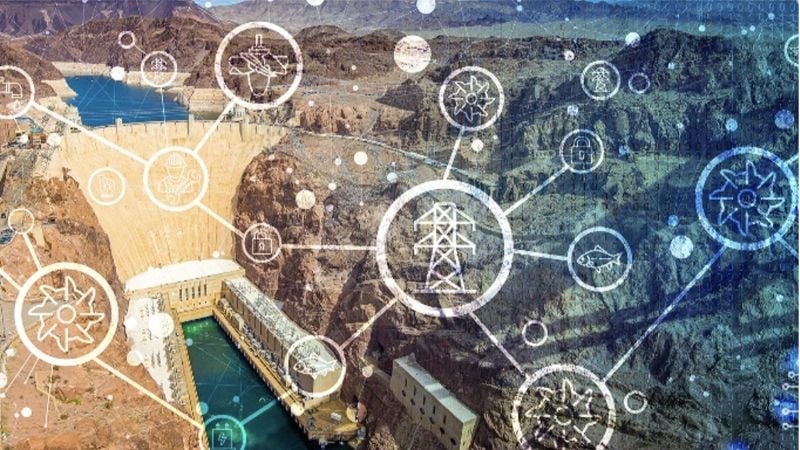
Scientists are testing an AI digital twin at the Alder Dam in Washington. Image used courtesy of PNNL
Hydropower Digital Twins
The digital twin constructs a virtual replica of the hydroelectric power plant using historical data, maintenance records, and real-time information from existing sensors and devices. The AI analyzes the data to make predictions and test any changes.
Applied to hydropower, the digital twin can enhance operations, performance, and maintenance.
- Operations: The digital twin allows operators to monitor the system for problems or anomalies.
- Energy production: Operators can simulate how the system would react to changes, such as turbine settings or water levels. Through virtual experiments, the operators can identify the optimal operation conditions and manage fluctuations in demand.
- Maintenance: AI-enhanced digital twins can analyze real-time data to anticipate equipment failures and predict when and where maintenance will be needed. This can reduce downtime and outages.
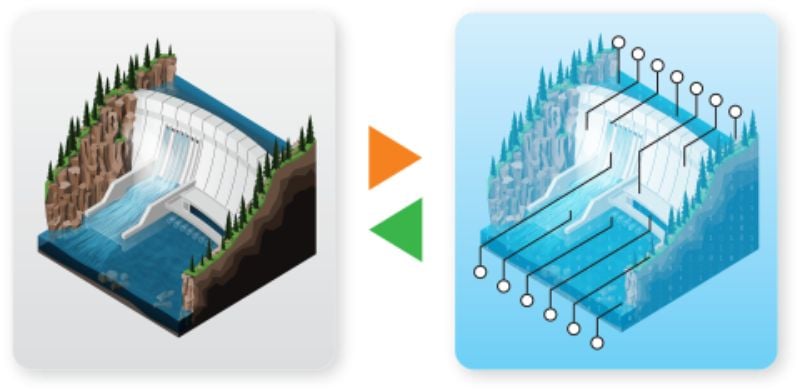
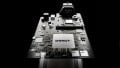
Digital twin. Image used courtesy of PNNL/Chris DeGraaf
The PNNL and ORNL are testing and training the digital twin on the Alder Hydroelectric Development in Tacoma, Washington. Constructed in 1945, the dam uses two 25,000-kW turbine generators.
The digital twin collects information about flow rates, water conditions, and other variables. The digital twin platform enables control, optimization, predictive analytics, and grid operations. The open-access platform will allow other scientists to continue research and development.
Using AI in Renewable Energy
AI is used in numerous ways to counter renewable sources’ notoriously variable and sometimes unpredictable energy production.
Planning and Design
Engineers designing renewable energy systems must consider multiple factors. Each site has unique geographical features influencing equipment decisions, construction and installation, transmission methods, and environmental concerns.
To assist with wind farm design, National Renewable Energy Laboratory (NREL) researchers designed the Wind Plant Neural Network. Scientists trained the AI on over 250,000 wind farm simulations using various turbine designs and geographical conditions. Engineers can use the data to design the optimal wind farm layout, reducing land requirements and saving money.
The model used wake steering, a method for calculating wake from an upstream turbine away from turbines downstream. Researchers estimated that wake steering could reduce land use by at least 18% and as much as 60%.
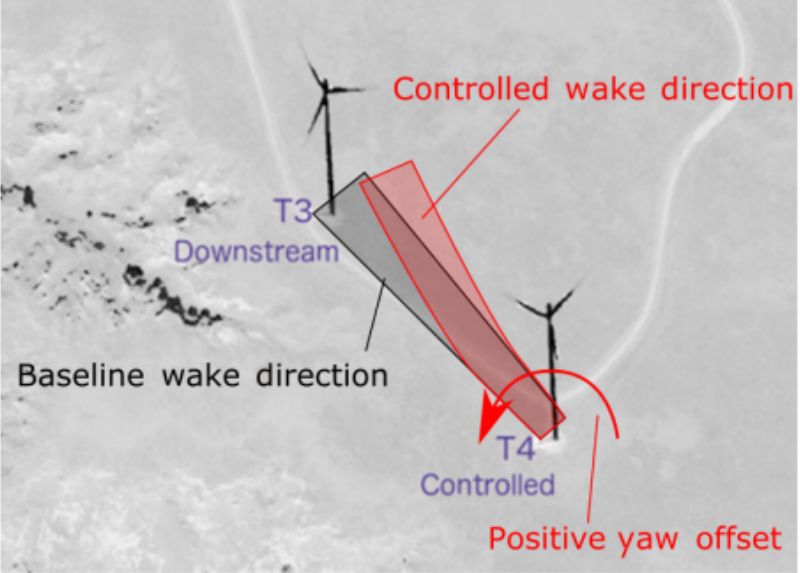
Positioning turbines using wake steering. Image used courtesy of NREL
Addressing Intermittency
Artificial intelligence can address fluctuations in production due to atmospheric conditions.
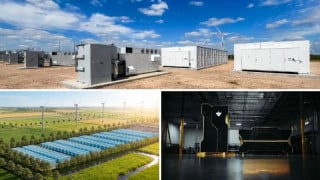
For example, most grid-scale solar farms utilize battery energy storage systems (BESS) to provide steady power at night or on cloudy days. The BESS stores excess energy during sunny times and sends it back to the grid when needed. AI can quickly assess conditions and energy needs to optimize the timing of BESS charging and discharging. AI can also make solar panel inverters more efficient and predict battery health.
Amazon’s AI-enhanced solar plus storage systems are a prime example. Its Amazon Web Services AI is used in ten solar farms across Arizona and California, with more planned worldwide.
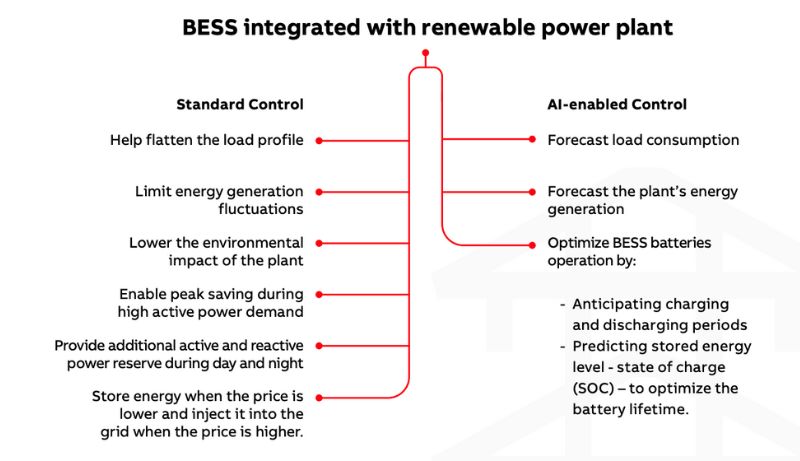
AI-enhanced BESS functions. Image used courtesy of ABB
Predictive Maintenance
Artificial intelligence can lengthen the life of renewable infrastructure by sensing weak or damaged infrastructure for repair or replacement. While sensors can collect real-time information about equipment, machine learning can analyze past data and predict locations and times when maintenance is needed. Scheduling downtime for maintenance can save money and prevent outages.
Distributed Energy Resources Management
AI has become commonly used in managing distributed energy resources (DER), from large-scale generation systems to microgrids. AI can predict peak demand, balance loads, and reroute power when and where needed. AI can sense the addition of behind-the-meter resources, such as vehicle-to-grid charging and local solar, and quickly predict their impact on the larger grid.
AI Drawbacks
While AI offers multiple advantages, data processing uses enormous amounts of energy, which raises concerns about renewable energy’s net benefits. Researchers are working in numerous areas to mitigate the impacts.
Cybersecurity is also a concern, as any digital or cloud-based system comes with vulnerabilities to hacking.
The Department of Energy cautions that AI should not replace human observation or decision-making. Grid experts should interpret and validate AI findings, confirm information with physical data, and implement changes. The DOE advises that human supervision is necessary for safety, ethics, and compliance with government regulations.