Facebook
 Google
 GitHub
 Linkedin
Schneider Electric Introduces Smart Grid Solutions
The smart solutions aim to enhance grid flexibility, resilience, and net zero management.
Traditional power grids, initially designed for unidirectional power flows, face challenges from the dynamic nature of distributed energy resources (DER), including solar panels and wind turbines. These challenges manifest as voltage instability, power quality issues, and system vulnerabilities. Simultaneously, global commitments to achieving net-zero emissions by mid-century amplify the urgency to modernize energy infrastructure. Modern utilities require new solutions to manage complex, decentralized networks while maintaining reliability and operational efficiency.
Learn about the EcoStruxure DER management platform. Video used courtesy of Schneider Electric
Schneider Electric has introduced a comprehensive suite of smart grid solutions to help improve resilience, flexibility, and net-zero readiness. The tools can help grid managers navigate the renewable energy landscape effectively.
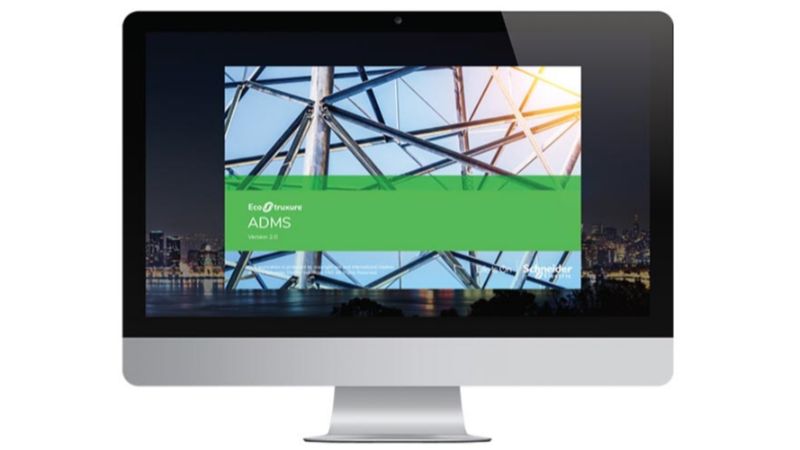
EcoStruxure ADMS. Image used courtesy of Schneider Electric
The Modern Energy Landscape
An important term in the modern energy landscape is net-zero management. Over 120 nations, including the world's top three greenhouse gas emitters— the European Union, the United States, and China—have committed to achieving net-zero emissions by mid-century. Net-zero management directly responds to decarbonization targets and necessitates tools to track and optimize carbon emissions.
However, the power grid faces is experiencing a confluence of distributed renewable energy sources, extreme weather events, and decarbonization requirements. For example, DERs have introduced technical requirements such as bidirectional power flows. Legacy systems, which were not designed for such dynamic interactions, struggle to integrate these technologies. Additionally, scalability remains an issue for utilities attempting to implement proof-of-concept projects into fully operational systems.
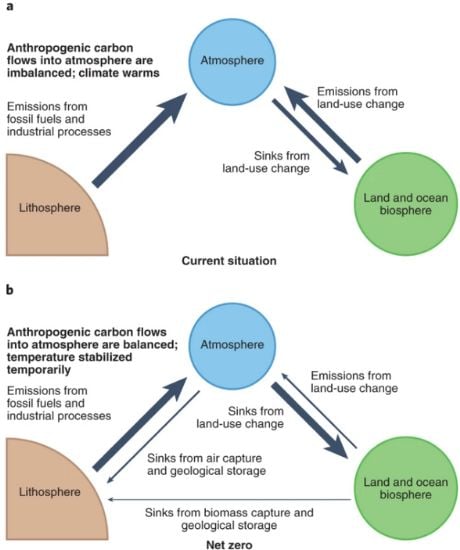
Comparing current situations and net-zero. Image used courtesy of Fankhauser et al.
Relying on digital technologies such as artificial intelligence and the Internet of Things presents its own hurdles. The challenges include the need for robust cybersecurity and substantial investment in infrastructure upgrades.
Schneider Electric’s Digital Grid Solutions
To address these challenges, Schneider Electric has rolled out smart grid solutions that heavily integrate digital and AI-driven technologies. Central to these solutions are Schneider’s EcoStruxure ADMS (Advanced Distribution Management System) and DERMS (Distributed Energy Resource Management System) solutions.
The EcoStruxure DERMS system addresses flexibility complexities posed by distributed renewable energy sources through Active Network Management. Along with the AiDash platform, which employs satellite imagery and AI algorithms to analyze grid resilience, DERMS can track and address issues such as undervoltage, overvoltage, thermal overload, and unwanted reverse power flows while optimizing renewable energy generation output.
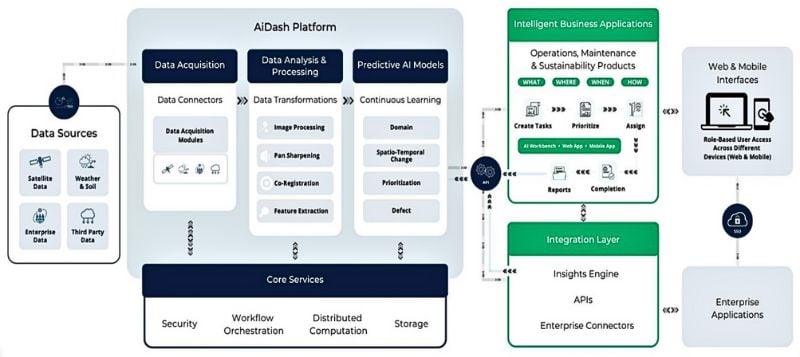
Features and integration of AiDash platform. Image used courtesy of AiDASH
The ADMS solution integrates the PowerLogic T300 to enhance intelligence at the secondary substation level. Moreover, the Active Plus Medium Voltage Switchgear with EcoCare combines native connectivity with remote monitoring and predictive analytics for 24/7 operational oversight.
Building the Future of Energy Systems
As global energy demands evolve, power grids must adapt to a rapidly changing environment. On the macro level, integrating AI, real-time analytics, and advanced network systems suggests a general industry-wide trajectory toward smarter, more adaptive grids. As for Schneider, with its digital grid systems, they hope their technology can redefine how utilities operate in the near term.
Related Content