Facebook
 Google
 GitHub
 Linkedin
It’s More Than Tech: Five Steps to Building a Self-Healing Grid
A self-healing grid requires more than advanced technology. Consider five strategy shifts underlying a more resilient grid.
What do travel budgets, collaboration, or human resources have to do with building a self-healing grid? Forward-thinking utility leaders know that grid modernization requires an entirely new mindset, one that is ready to break down silos, think differently about data, and invest in people as well as technology.
From AI-driven data centers demanding gigawatt-scale power, to distributed energy growth and record-breaking climate events, today’s grid demands more than maintenance. It requires transformation.
In fact, while technology is the foundation of a self-healing grid, five key organizational shifts are needed to move from a traditional, reactive mindset to a proactive, self-healing operation.

What are the five steps to a self-healing grid? Image used courtesy of Adobe Stock
The High Costs of “Run-to-Failure”
Utilities typically take a reactive approach to power disruption: wait to hear about a fault, then clear it in whatever time it takes. For the past century, they have been grounded in this “run to failure” mindset because of traditional one-way power flow, technological integration challenges, and an array of organizational factors. So, what’s different now?
In the last 5 to 10 years, the cost of failure has skyrocketed, with significant social and economic impact. Several utility companies have faced well-publicized million- and billion-dollar judgments for their role in wildfires and other environmental harm, property damage, and safety negligence. The grid is changing, and growing power demand, renewables integration, and increasing storms require a more proactive, protective approach.
How Self-Healing Grids Are Transforming Fault Detection
A self-healing grid is an automated distribution network that uses AI algorithms, intelligent sensors, communication, and control systems to detect, isolate, and restore faults automatically, often in a matter of milliseconds. Based on prior deployments, self-healing grids are known to reduce the System Average Interruption Index (SAIDI), up to 60% through faster fault isolation, and improve the System Average Interruption Frequency Index (SAIFI) 20-30% by preventing widespread isolation outages. In 2023, a major utility avoided 1.5 million outages across its six-state footprint thanks to self-healing technology. A year later, a Florida utility avoided 900,000 outages during hurricanes Helene, Milton, and Debby.
Accurate, high-frequency detection (>2KHz) is key to self-healing. In contrast, traditional protection systems sample at low frequencies (e.g., 1-2 kHz), which are insufficient to detect early indicators of faults such as harmonic distortion, transients and voltage spikes, partial discharges, and high-impedance faults. Without this granular visibility, utilities can miss the small, sudden, and quick events that disrupt operations.
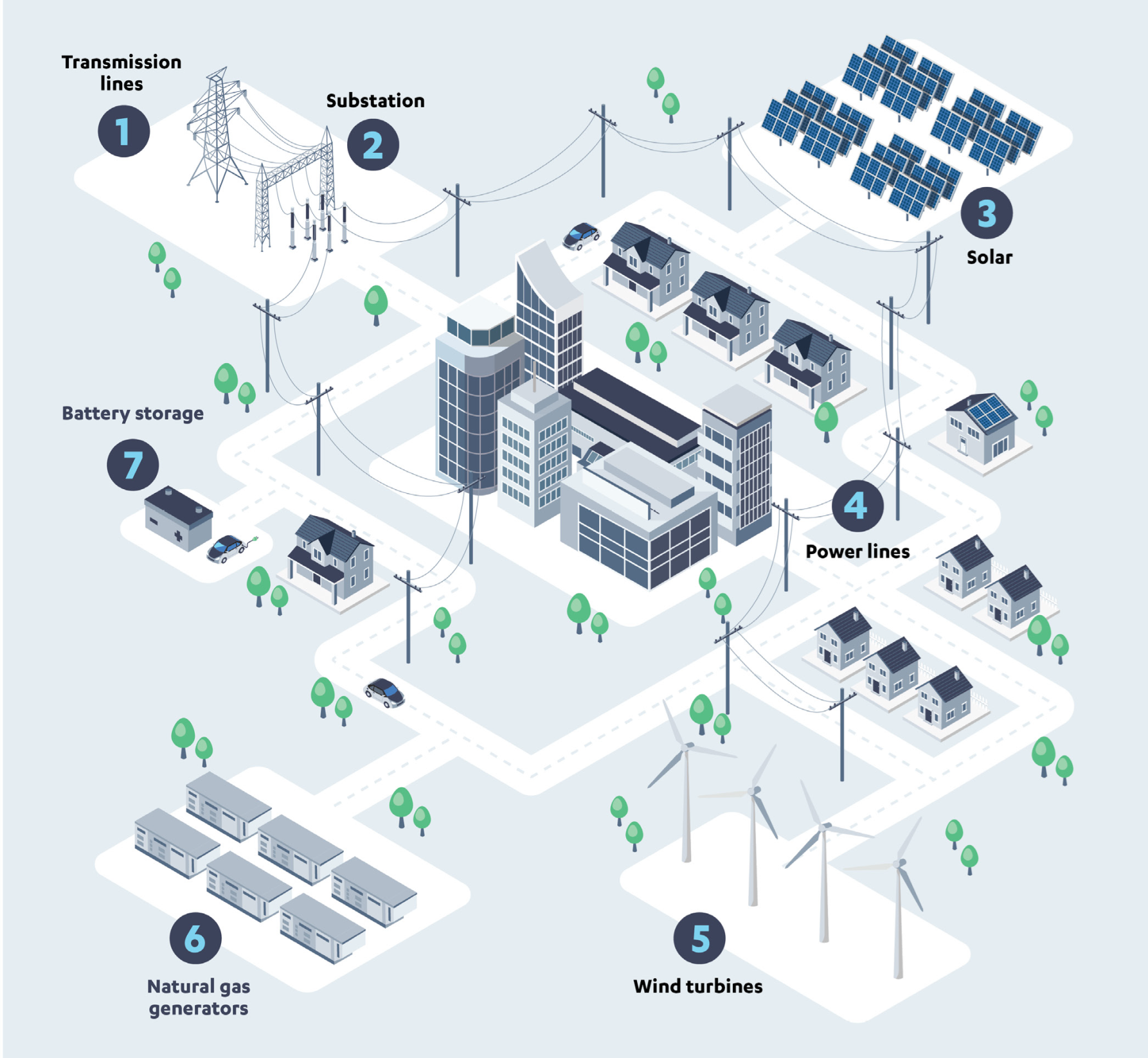
Modern grids are complex networks of various energy sources and assets. Image used courtesy of G&W
Five Organizational Shifts for Self-Healing Grid Success
1. Map the Full Data Journey
With high-frequency data at the heart of a self-healing grid, key components are needed to build upon legacy SCADA control systems, enhancing them with smart technologies that can automatically detect and correct faults and reroute power.
- Real-time sensors (e.g., voltage, current, high-frequency transient sensors)
- Automated switching devices (e.g., reclosers, fast-acting sectionalizers)
- Cloud and edge analytics for diagnostics and event correlation
- Communication networks
But utilities should consider the volume and type of data a self-healing grid produces. While modern SCADA control systems can monitor field data from collection points, newer sensor technology enables more detailed, higher frequency data measurement and real-time voltage intelligence. Older relays have more limited data transfer capabilities, and excessively high data rates can strain storage systems, processing power, and network bandwidth.
Mapping the data journey means asking questions such as: How will more robust data feed into the system? Where will it be safely stored? How will we gain maximum analytic insights?
Grid edge processing can analyze data locally and minimize transmission and storage needs, while reducing the security risk of longer distances. Smart switchgear with internally molded current transformers directly provides relays with a precise current input, essential for accurate fault detection and protection (within ±1% accuracy). Selecting the right communication network technologies, protocols, and cloud approach ensures better high-frequency data communication, along with security, scalability, flexibility, and AI-powered predictive and analytic capabilities.
2. Establish Reliability KPIs and Customer Value
While an outage can impact everyone, the traditional “run to failure” approach is especially costly in certain sectors. For example, in its 2024 Annual Outage Analysis, the advisory organization Uptime Institute found that half of data center outages cost more than $100,000, with 16% costing $1 million or more. At the same time, more and larger data centers and other energy-hungry sectors, such as industrial manufacturing, are coming onto the grid and increasing risks for everyone else. Both commercial and individual customers must feel that a self-healing “smart” grid is truly “smart” and that potential rate increases deliver a solid ROI.
AI and cloud operators, in particular, expect ultra-high reliability and full digital integration with utility systems. These customers are not only willing to invest in grid intelligence but also bring advanced data and asset management capabilities that align well with proactive utility strategies.
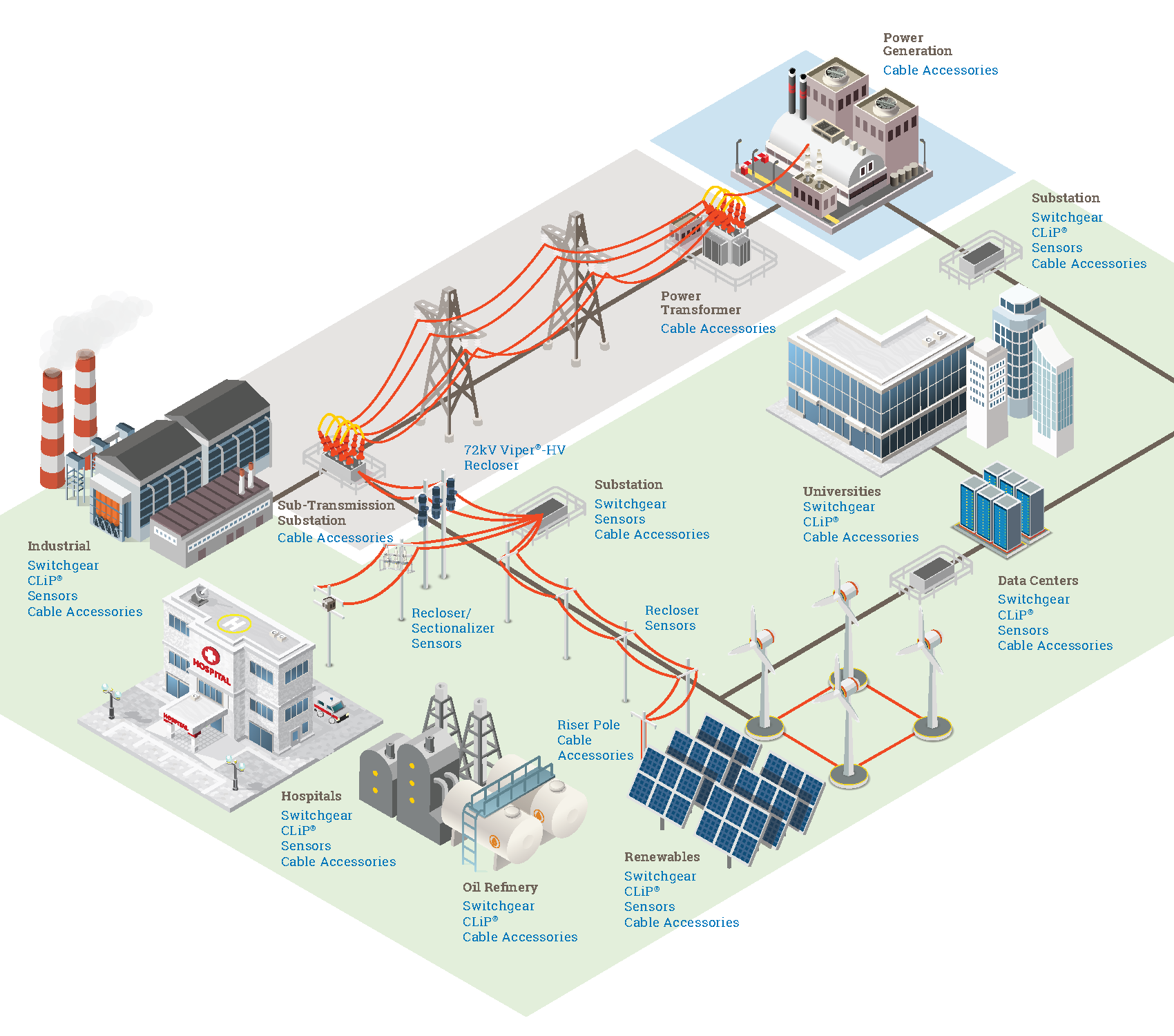
Modernized grid technologies [click to enlarge]. Image used courtesy of G&W
But customers don’t just want a quick response; they want long-term reliability. Any enterprise-wide innovation strategy and investment should be anchored in standards-driven metrics and key performance indicators. Common IEEE standards use the following reliability indices, providing the guideposts and proof to manage customer perceptions and build support:
- SAIDI (duration): 60-120 min/year (∼112 hr)
- SAIFI (frequency): 1.0-1.5 interruptions/customer/year
- CAIDI (time to restore service): 60-80 min/interruption
- MAIFI (short duration interruptions): 1-3 per customer/year, typically > 5 minutes
3. Create a Cross-Functional Team
Silos born from strongly independent departments, lack of trust in shared data, and the inherently conservative mindset of utilities are persistent and especially detrimental to the self-healing vision. A self-healing grid requires a diverse range of experts—IT, distribution planning, operations, engineering—to work together to integrate technologies and share data coming from more sources. Some companies have tried to establish “innovation teams,” only to see a new vacuum develop, with few insights making their way to operational and field staff. Tensions arise between those focused on the future and those working hard to keep the lights on in the present.
Beyond internal collaboration, utilities are finding value in broader partnerships working with manufacturers, national labs like Argonne, and standards bodies such as IEEE and CIGRE to shape interoperable, forward-compatible solutions.
However, leaders willing to try new things and key roles accountable for change can help organizations turn the corner. At G&W Electric, we have seen effective cross-functional collaboration develop from leadership-driven initiatives such as:
- Creating a dedicated, “stand up” cross-functional team or single managerial role with accountability and authority to implement self-healing grid innovation
- Establishing related joint projects with shared deliverables that bring together diverse departments
- Offering opportunities for standards development participation and enterprise-wide training aimed at grid modernization milestones
- Streamlining data sharing and establishing clear governance within a secure, accessible cloud-centric approach
4. Run Contained Pilots
In many industries, a testing phase or customer collaboration in product development is expected. In risk-averse utilities, running a contained test for deploying new technologies is rarer. But the approach is gaining traction, and “Alpha Projects” or pilots, which establish early collaboration between end users and tech providers, have proven effective for several regional power companies.
For example, in its early pilots for a self-healing grid, a utility took baby steps with testing two-way data communication over a secure network at a community college. It also built a virtual power plant for distributed solar and storage coordination at one of its substations.
Unlike beta testing, which occurs when products are nearly market-ready, Alpha Projects engage users early in the development phase in a test lab or strategically selected site. By accepting a small amount of risk, utilities can use this ambidextrous approach for concurrent testing, learning, and refinement, and shorten the overall development cycle. Just as important, pilots give the team space to breathe, away from the daily demands of a reactive grid, and focus on shaping the outcomes to specific needs.
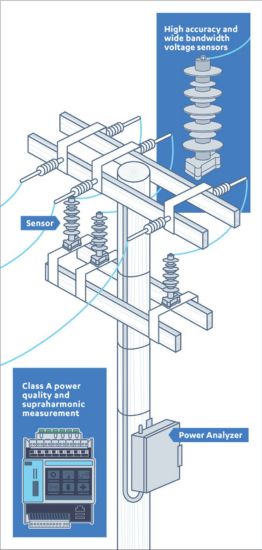
A pole equipped with smart technology. Image used courtesy of G&W
At the same time, utilities face new constraints, including regulatory pressure to eliminate SF₆-based equipment, and growing concern about supply chain delays and reliance on geopolitically sensitive materials. These realities must also shape pilot strategies and procurement planning.
5. Invest in People and Learning
Utilities are facing steep challenges in maintaining a labor force with the engineering and analysis skills essential for self-healing grids. The reasons range from competing industries and an aging workforce to advanced technological shifts in utilities and the environment. Local regulations can prohibit remote hiring, and fewer academic programs are offered.
Utilities and their HR experts and partners must conduct aggressive outreach, finding the engineers leaving other technical industries. Consider investing in an “early career” strategy. Early career applicants and internships enable on-the-job training, increase long-term retention, and help build the brand among younger workers. In fact, a survey by the National Association of Colleges and Employers found that 85% of employers believe internships deliver the highest recruitment ROI.
At G&W Electric, we’ve also seen that conferences provide an excellent networking opportunity. Unfortunately, many utilities tend to trim travel from their budgets, often reacting to rate cases or other short-term issues. But travel to outside events, attending standards development workshops, or even visiting other utilities can help fill gaps in training and upskilling, get employees outside of their four walls, and expose potential new talent.
A self-healing grid is not simply a technological upgrade; it’s a shift in mindset. While intelligent sensors, advanced switchgear, and high-frequency data form the backbone of automated fault detection and restoration, real transformation requires taking the long view and rethinking how to approach innovation.
As demand grows and systems become more complex, the future grid must be not only resilient, but also interoperable, serving as a platform where diverse assets can connect and adapt like peripherals on a universal “Power USB” layer. This vision demands coordination across the entire energy ecosystem.
With these five key organizational shifts, utilities can get on the path to a future-ready grid that offers multiple business and community benefits.