Facebook
 Google
 GitHub
 Linkedin
Understanding Microgrid Digital Twins
Learn how digital twins can be integrated into DER microgrids for optimal power generation, management, and control.
In power electronics, digital twins represent the physical microgrid and distributed energy resources (DER) systems in a virtual environment. Through real-time data, mathematical models, and analysis and response of the physical systems, digital twin technology in microgrids can be implemented to optimize energy, generation, storage, distribution, and control. In a DER microgrid digital twin model, key components form the structure of a functional digital twin for power optimization.
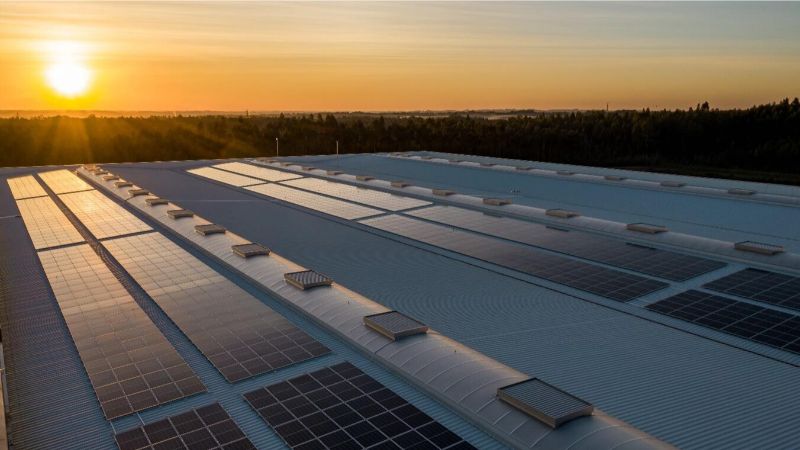
Figure 1. Solar panels form part of DER systems. Image used courtesy of Unsplash
Digital Twin Modelling
One of the main components of a microgrid’s functional digital twin model is the physical assets comprising the power management and distribution systems. The model must be created from an existing physical entity like a solar panel or wind turbine. Storage systems and inverters also make up part of the physical assets in a digital twin model. Once the physical systems are identified, sensors and data acquisition systems must be installed in the microgrid digital twin model. These systems include meters and sensors to provide real-time voltage, frequency, current, and temperature data.
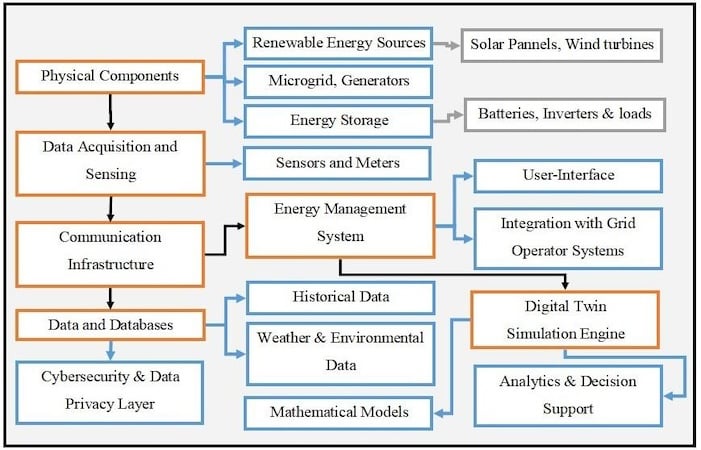
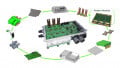
Figure 2. Digital twin model of a microgrid with integrated DER systems. Image used courtesy of Bob Odhiambo
Communication infrastructure, which involves how information and data flow within the control system of the DER systems and the microgrid, is essential to ensuring the real-time flow of control data and signals for replicating and simulating the whole microgrid system. This infrastructure links databases and energy management systems (EMS) to a digital twin simulation engine. The EMS consists of integrated grid operator systems for grid stability and a user interface that allows engineers to interact with the digital twin model through monitoring, control, and analysis.
The digital twin simulation engine represents the heart of the digital twin model. It uses mathematical models, real-time data from the grid, and physically-based simulations to accurately represent the physical systems making up the grid and DER systems. The simulation engine also provides analytics data with the integration of tools like machine learning (ML) algorithms for predictive maintenance and helps engineers make decisions based on the simulation outputs of the microgrid model.
Mathematical DER Models
Mathematical models are essential in establishing simulations of the physical DER systems and microgrids and accurately representing the system parameters. When modeling a solar panel, the power output must be accurately represented. To calculate the panel’s power output (P), use:
$$\text{P}=\text{A}\times\eta\times\text{G}\times\eta_\text{pv}$$
Where (G) is the irradiance of the sun on the surface of the solar panel, (A) represents the surface area of the solar panel, (η) is the solar cell’s efficiency in the conversion of sunlight to electricity, and (η_pv) represents the whole efficiency of the panel, taking into account things like dirt, shading, and power losses.
When power is determined, inverters convert the direct current (DC) to alternating current (AC), which is later fed into the microgrid for consumption after a step-up of the voltage. Through digital twin modeling, solar panel output can be optimized for integration into the microgrid.
A differential equation for energy flow is another essential mathematical model for implementing digital twins. These equations can evaluate the relationship between power output to the microgrid and power input from renewable energy sources, including the rate of change of energy stored in the battery (∂E/∂t).
Consider energy losses, use, and generation when modeling solar panel energy using a differential equation. This equation evaluates the solar energy’s rate of change (P) to time (t):
$$\partial\text{P}/\partial\text{t}=\text{G}-\alpha\text{P}-\beta\text{P}_\text{out}$$
This equation allows for modeling and predicting the dynamics of energy storage systems connected to renewable energy sources in a microgrid. The variability of the power generated can be simulated, monitored, and optimized using the mathematical model.
Real-Time Data Integration in a Microgrid Digital Twin
Real-time data integration must be implemented to make timely, informed decisions. This involves data collection, processing, and analysis from different sources within the grid, including sensor signals that measure temperature, motion, GPS, voltage, current, and frequency. Weather forecast data is also essential to providing predictions based on real-time environmental conditions and monitoring the microgrid component behavior.
Data collection for a microgrid digital twin can be implemented using strategies and systems like Internet of Things (IoT) devices, APIs, data ingestion processes, and data streams. Once collected, the data must be processed through cleaning or noise filtering and data aggregation for analysis through predictive algorithms, ML models, and statistical methods.
Real-Time Simulation and Monitoring of DER Behavior
The frequency of updating the state of a DER system is essential when creating a microgrid simulation model. This is done using the simulation time step (∆t), which represents the time intervals during which a simulation model calculates the DER system behavior. A state update equation describes the system dynamics when determining the change of a DER’s state over time. The equation considers the current state of the DER system (State(t)), current time’s control inputs (Control(t)), disturbances within the DER, grid components or external inputs at the current time (Input(t)), and the future state of the DER for the projection (Statet+∆t ). The state update equation in DER systems is:
$$\text{State}\left( \text{t}+\Delta\text{t} \right) =f\left( \text{State} \left( \text{t}\right),~\text{Control}\left( \text{t} \right),~\text{Input} \left( \text{t} \right)~\right)$$
Where f is the function representing the evolution of the dynamics in the microgrid DER system.
When monitoring abnormalities and deviations in DER systems, a comparison is made between the statistical norm and the level of deviation in an individual point (X) using the Z-score statistical metric, which is an anomaly detection algorithm. This Z-score metric can be computed using:
$$\text{Z-score}=\left( \text{X}-\mu\right) /\sigma$$
Where (μ) is the mean of the dataset in which the comparison is made, the standard deviation (σ) represents the normalizing factor. These monitoring systems can be implemented in microgrid digital twins with integrated DER systems to provide reports if grid voltage, current, and frequency exceed or are less than the predetermined threshold. The data acquired from the implementation of the algorithm can also trigger alert systems to ensure the physical microgrid model with integrated DER systems works as expected.
DER System Optimization for Microgrid and Digital Twin Integration
The digital twin model must be optimized for maximum reliability and stability of the grid-integrated DER systems. Optimizing the DER systems using the economic dispatch algorithm reduces operational costs from constant maintenance and power waste. Power flow optimization can maintain power balance while considering the DER system's power factor, control setpoints, and energy storage system state of charge.
DER/Microgrid Integration Using Digital Twin Modelling
DER system integration in microgrids is essential for providing clean, reliable energy. Optimizing these systems using digital twins offers stable voltage management using the voltage stability index and frequency deviation metrics to assess the grid’s power frequency stability. Using advanced real-time monitoring and control, engineers can obtain the technical knowledge to implement microgrid digital twin models for optimized power management.
Related Content