Facebook
 Google
 GitHub
 Linkedin
Grid Cyber Threats a Rising Concern in 2025
AI and digital twins are on the horizon to strengthen smart grid cybersecurity.
The traditional power grid is rapidly becoming obsolete. It struggles to integrate renewable sources, manage complex energy storage, and meet evolving demands. The proliferation of Internet of Things (IoT) devices, advanced communication networks, sensors, and distributed generation technologies has expanded potential vulnerabilities. Cyber threats now pose existential risks to power infrastructure, national security, and daily life.
In 2024, major developments occurred in combatting grid cyber threats. This momentum will continue in 2025.

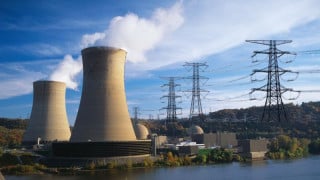
How can power grids become more resilient to cyber threats? Image used courtesy of Adobe Stock
Smart Grid Cyber Threats
Smart Grid technology upgrades electrical systems by leveraging IoT, advanced communication, and monitoring tools to optimize power delivery within the grid. This technology is valuable in integrating renewable energy and distributed generation into the grid, as it helps match supply more efficiently.
Yet, the growing reliance on connectivity introduces new cybersecurity risks. For example, during a December 2015 power outage in Ukraine, hackers infiltrated the human-machine interfaces of three Ukraine power plants. They triggered a 10-hour blackout that impacted more than 100,000 people.
Smart grid communication networks are particularly vulnerable to cyberattacks, including denial-of-service attacks, replay attacks, time synchronization and delay attacks, false data injection attacks, load redistribution, malicious command injections, and malware. Additionally, they pose risks of sensitive data breaches that could compromise user and organizational information.
Georgia Tech’s AI Security Solution
In 2024, the U.S. Department of Energy allocated $45 million to 16 projects to strengthen power grid cybersecurity. Among these, Georgia Tech’s AI framework, DerGuard, targets vulnerabilities in distributed energy resources (DERs) like rooftop solar panels and battery systems. As DERs expand rapidly, doubling in market share over the coming years, they pose unique risks due to limited oversight.
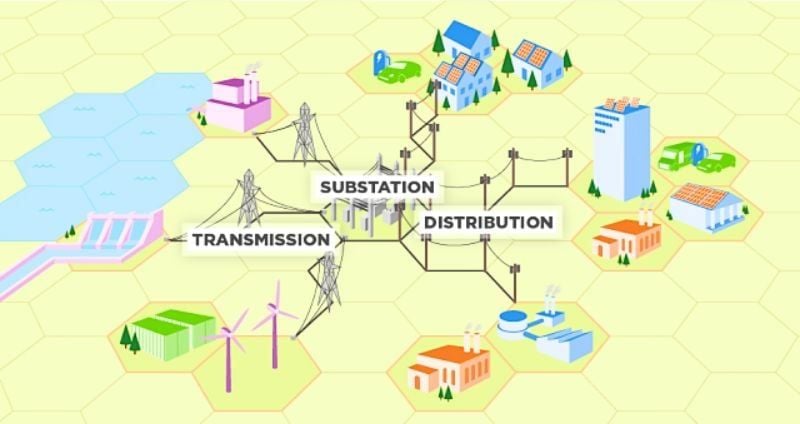
Concept of distributed energy resources. Image used courtesy of Environmental Protection Agency
DerGuard addresses these challenges by leveraging artificial intelligence to monitor DER usage patterns across the grid. The framework categorizes resources by risk level, identifying those that could cause the greatest damage if compromised. By pinpointing specific vulnerabilities within high-risk DERs, DerGuard informs the development of precise security patches and upgrades, enhancing the grid's resilience.
The team envisions furthering this tool’s capabilities through industry partnerships and establishing a behavioral baseline for connected grid infrastructure. This benchmark would enable faster AI-driven incident detection and response.
Protecting Smart Grids With Artificial Intelligence
In early 2024, researchers from Heilongjiang University deployed AI to detect false data injection attacks (FDIAs) in smart grids. FDIAs are sophisticated cyber threats where adversaries inject manipulated data into grid systems, compromising operational integrity and potentially causing disruptions such as blackouts or infrastructure damage. The researchers introduced a cyber-physical digital twin that precisely mirrors smart grid dynamics, combining physical and cyber components to simulate, monitor, and predict grid behavior.
The research team then integrated Recurrent Neural Networks with the digital twin. The RNN-based FDIA detection system integrates memory capabilities to analyze historical and real-time data, effectively translating the detection challenge into a binary ordering task. This shift allows the system to identify anomalies in dynamic grid measurements with high accuracy.
Is AI the Future of Cybersecurity?
As cyber risks evolve along with digital infrastructure, AI is becoming an important defense mechanism. We expect that in 2025, AI-driven cybersecurity will transition from a potential strategy to a standard operational requirement across global energy networks.