Facebook
 Google
 GitHub
 Linkedin
AI Advancements Modernize Grid and Industrial Systems
Innovations in artificial intelligence are making complex power grid systems easier to manage.
Managing complexity has become a significant challenge as global energy demand increases and industries become more interconnected. Energy sources such as wind and solar are inherently variable while critical to sustainability, putting pressure on aging power grids to adapt. At the same time, industrial operations require increasingly sophisticated solutions to boost efficiency and maintain reliability in the face of rising costs and demand. These challenges necessitate a smarter, data-driven approach to managing resources, ensuring reliability, and optimizing performance across sectors.
Artificial intelligence offers a transformative path forward. By integrating machine learning and real-time analytics, companies are deploying AI to enhance energy forecasting, grid management, and industrial automation. These innovations provide operational efficiencies and help utilities, manufacturers, and grid operators make informed decisions in complex environments.
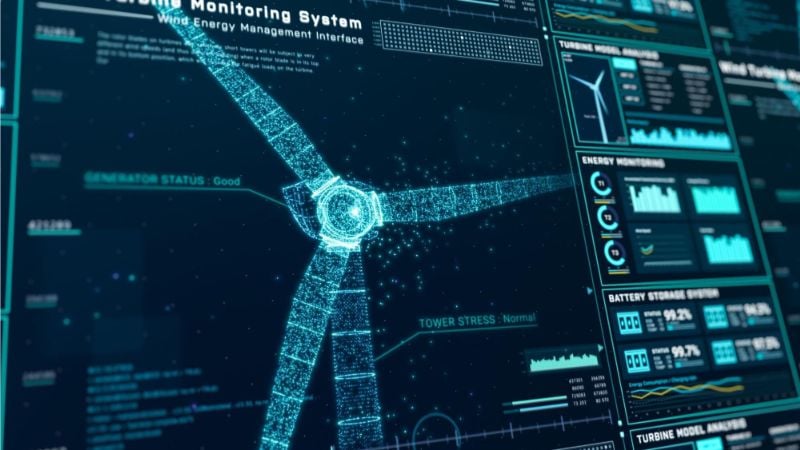
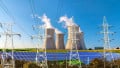
AI integrated with renewable energy sources. Image used courtesy of Adobe Stock
Hitachi Energy: Nostradamus AI
Forecasting energy demand and renewable output with precision is a growing necessity for grids. Hitachi Energy’s Nostradamus AI is a forecasting tool designed to address these modern energy systems’ complexities. Built on three decades of energy market data, it delivers highly accurate predictions for system loads, renewable energy generation, and market pricing. By processing vast data sets with machine learning algorithms, Nostradamus AI helps utilities and energy producers improve operations, optimize investments, and plan for the variability of renewable energy sources.
Beyond enhancing forecast accuracy, Nostradamus AI integrates into existing grid management systems, enabling utilities to coordinate operations better and respond proactively to potential disruptions. It supports Hitachi Energy’s broader goal to modernize infrastructure to meet the demands of a more dynamic and renewable-focused grid.
Dell Technologies: NativeEdge
Dell Technologies is addressing the growing grid modernization challenges with Dell NativeEdge, a solution designed to simplify edge operations and integrate artificial intelligence for real-time decision-making. Using information and operational technology, NativeEdge enables utilities to improve operations and optimize distributed energy resources.
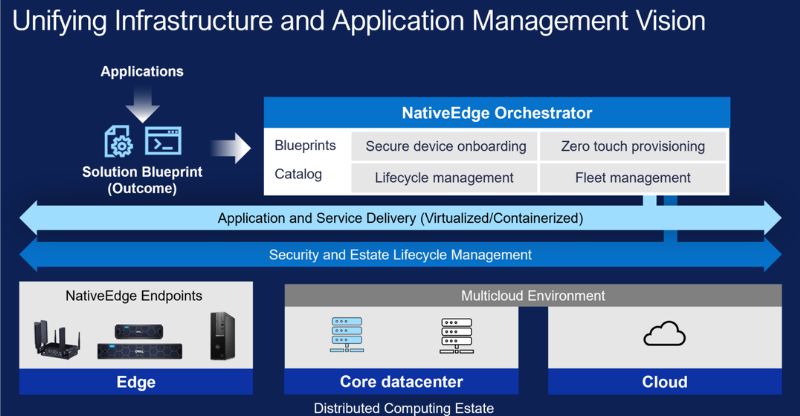
Orchestration with Dell NativeEdge. Image used courtesy of Dell Technologies
With centralized management, zero-touch deployment, and predictive maintenance, Dell NativeEdge helps grid operators reduce downtime and improve efficiency. Its open, secure design supports AI solutions that balance energy supply and demand.
Siemens: PCs by NVIDIA
Siemens has launched a suite of industrial PCs powered by NVIDIA GPUs, bringing advanced AI capabilities to the factory floor. The Simatic IPC BX-35A, part of Siemens’ Industrial Operations X portfolio, offers 25-fold acceleration in AI execution, enabling applications such as predictive maintenance, quality inspection, and robotics.
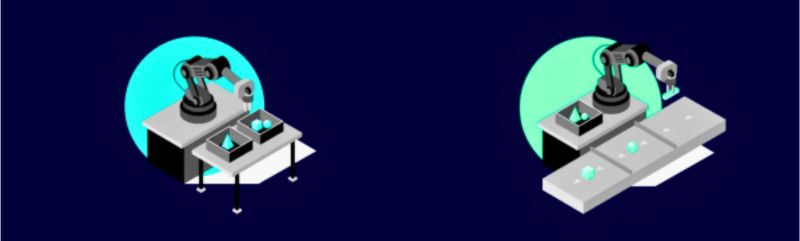
The Simatic Robot Pick AI powered by NVIDIA. Image used courtesy of Siemens
With no-code tools and pre-integrated software, Siemens is also making AI more accessible to automation engineers. This accessibility reduces the need for coding expertise while enabling real-time optimization of industrial processes. By integrating AI into production lines, Siemens is lowering costs and accelerating time-to-market for its customers.
Nexans: AI Digital Twins
As grids evolve to accommodate increasing demand and renewable integration, Nexans is applying AI and digital twin technology to improve system management and reliability. Virtual models of physical networks allow operators to simulate grid behavior, anticipate potential issues, and optimize resource allocation. These capabilities are valuable for managing the variability of renewable energy sources, which require flexible and responsive grid operations.
AI-driven tools also enhance the monitoring and maintenance of critical components, such as medium-voltage cables. These technologies help reduce downtime and extend infrastructure lifespan by enabling predictive maintenance and real-time diagnostics.
The Future of AI in Energy and Industry
These AI-driven solutions illustrate technology’s transformative potential in addressing the complexities of modern energy and industrial systems. By improving forecasting operations and optimizing resource use, AI enables industries to adapt to a rapidly changing world while supporting sustainability goals.