Facebook
 Google
 GitHub
 Linkedin
3 Steps to Turning Data Center Energy Hogs Into Grid Assets
As AI data centers multiply, what can data center owners and grid operators do to ensure grid stability?
Artificial intelligence data centers strain the power grid with enormous energy consumption. While a traditional data center uses about 7.5 kW for an entire server rack, data centers used for generative AI consume 10 kW for a single server.
What’s causing the AI data center energy crisis? Video used courtesy of CNBC
Tech giants like Google, Microsoft, and OpenAI are building dozens of data centers in the U.S. to accommodate their growing AI services. At the same time, utilities struggle to increase capacity, replace outdated equipment, and build new transmission lines to meet the demand.
Instead, what if these AI data centers could benefit local utilities? A report from the American Council for an Energy-Efficient Economy (ACEEE), a nonprofit research organization, says it’s possible and outlines three steps to turn data centers into grid assets:
- Share knowledge about AI center designs and operations
- Improve energy efficiency and integration with local grid infrastructure
- Develop demand-side policies to optimize energy use
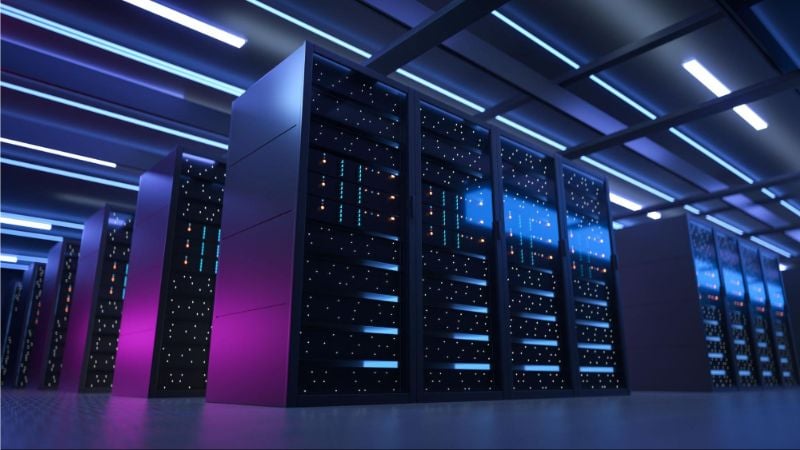
AI data center. Image used courtesy of Adobe Stock
It’s Not Just Data Centers
AI data centers are a major cause of the sharp rise in energy consumption, but they are not the only culprits, according to the ACEEE. Funding from the Bipartisan Infrastructure, Inflation Reduction, and CHIPS Acts has caused a resurgence in U.S. industrial manufacturing.
Together, the trends are creating an unprecedented grid load. The ACEEE reports that electricity demand is expected to increase from 130 TWh in 2023 to 307 TWh by 2030. This growth surpasses projections for electric vehicle power demands (from 18.3 TWh in 2023 to 131 TWh in 2030).
Yet, grid stress is most keenly felt in areas where data centers are concentrated—the Southeast, Southwest, and Midwest. For example, the 50 data centers in Santa Clara, California, consume about 60% of the city’s electricity. In Virginia, another data center hub, Dominion Energy, plans a $7 billion project to modernize grid infrastructure and increase power generation, much of it from renewable sources and nuclear power.
Data centers’ power needs also challenge sustainability goals, as companies and utilities have been forced to lower expectations or push back their net-zero targets.
Big Tech’s Energy Efforts
Tech companies are taking several steps to offset their data center impacts, from investing in renewable energy projects to developing nuclear generators. However, these projects take time, and data centers need more power immediately.
Some tech giants are floating the idea of bypassing conventional grid protocols and plugging directly into power plants.
OpenAI, which just launched Stargate, a $100 billion AI venture, is building 10 new data centers in Texas and plans to expand to other states. The company has partnered with Chevron, GE Vernova, and Chevron to co-locate the data centers with natural gas power plants. The deal could link the centers directly to the plant, so the energy will not “flow initially through the existing transmission grid,” according to the Associated Press.
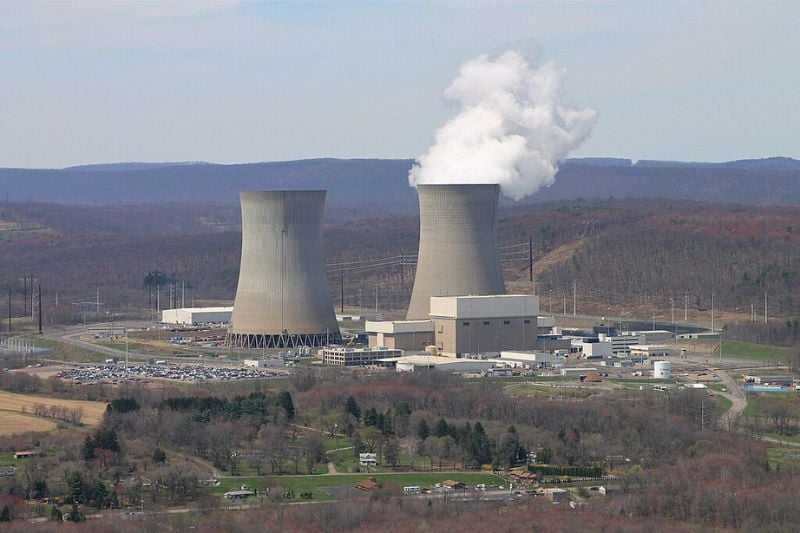
Amazon will build a data center near the Susquehanna nuclear plant. Image used courtesy of Wikimedia Commons
Amazon is also looking for a direct power plant connection. It’s building a data center next to a nuclear plant in eastern Pennsylvania. The company is discussing a deal to connect to the plant “behind-the-meter” before power enters the grid.
However, the Federal Energy Regulatory Commission (FERC) would have to approve the agreement. So far, FERC has rejected a deal to divert about 40% of the plant’s capacity (about 960 MW) to the data center.
Turning Grid Liabilities into Assets
Until technology companies develop more power for their data centers, grid operators can take measures to better meet demand. Here’s what ACEEE recommends.
1. More Transparency in Data Center Energy Needs
AI data centers have unique electricity consumption patterns needed for graphic or tensor processing, which has led to sharp increases in server rack density and the quantity of power consumed. They also require more cooling equipment, which is another huge energy user. Yet, tech companies like Google, Meta, and Microsoft don’t completely disclose their data center usage to energy providers.
ACEEE recommends that policymakers establish regulations requiring data center owners to report AI data center energy metrics before they can connect to the grid. Moreover, setting national standards and protocols would streamline procedures and decrease costs.
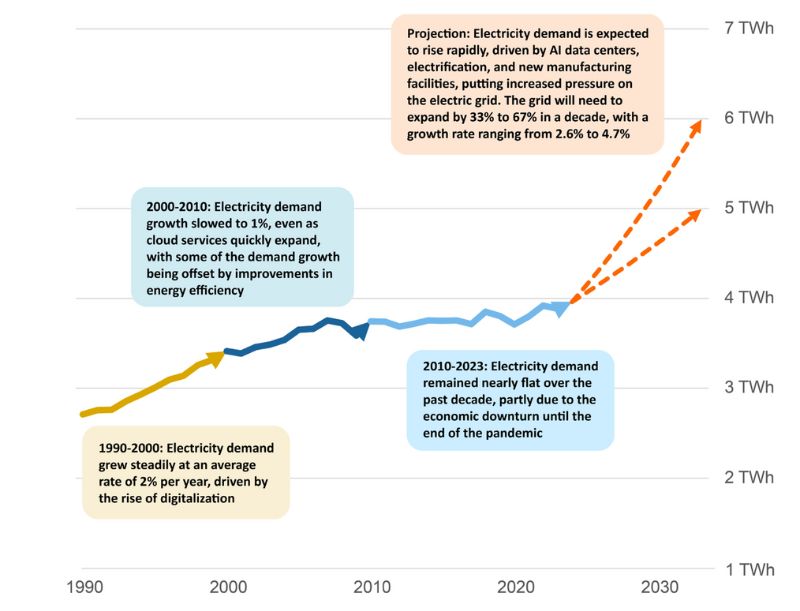
AI data centers’ energy demand is projected to rise sharply over the next decade. Image used courtesy of ACEEE
2. Grid Connections and Energy Efficiency
Grid connections are complex and differ according to local conditions and regulations. ACEEE says there is “no one-size-fits-all” solution, but data centers and policymakers must work together at state and regional levels to share information, assess energy needs, and develop creative approaches. Streamlining procedures for zoning changes and permitting is also helpful.
ACEEE also mentions several strategies for increasing energy efficiency, from improving chip efficiency to better data center cooling methods. It also recommends co-locating data centers to optimize resource use. For example, in Dublin, an Amazon data center sends its waste heat to nearby schools, apartment buildings, and commercial structures.
3. Develop Demand-Side Policies
Implementing demand-side actions can stabilize the grid and meet demand for data centers and other users. ACEEE recommends installing smart meters and using load forecasting and dynamic controls to better coordinate grid conditions and renewable energy with consumption patterns.
Overall, collaboration among data center owners, utilities, legislators, and supporting industries is the key to transforming AI data centers into grid assets, according to ACEEE.