Facebook
 Google
 GitHub
 Linkedin
Beyond Mobility: Delivering Proven SiC Technology Where Performance and Reliability Matter the Most
Learn how Mitsubishi Electric’s latest Unifull SiC modules combine advanced performance with enhanced power cycling capability enabled by improved materials and packaging technology.
This article is published by EEPower as part of an exclusive digital content partnership with Bodo’s Power Systems.
Article co-authored by Mitsubishi Electric's D. Yosho and Victor Tolstopyatov.
The accelerating global commitment to carbon neutrality is driving different industries to push towards power electronics with the highest efficiency and power density. As conventional Si IGBT modules are almost reaching their limits, SiC MOSFET modules are able to provide the performance leap needed by offering higher switching speed and improved thermal behavior.

Image used courtesy of Adobe Stock
Especially in critical applications such as railway, but also grid infrastructure or energy storage, failures are unacceptable. These systems must deliver the highest performance under demanding electrical, thermal, and environmental conditions over an extended operating lifetime. Mitsubishi Electric’s latest Unifull™ SiC modules have been designed to meet these requirements through the use of advanced materials, optimized packaging technologies, and a design approach focused on long-term reliability.
From Silicon to Silicon Carbide: System-Level Impact
The advantages of SiC MOSFETs over Si IGBTs are well known simply based on datasheet comparison on a device-level. However, the full extent of this technology change becomes evident when looking at system-level improvements. In the following, some exemplary applications are analyzed under this aspect.
Battery Train Application
A representative example is a 3.3 kV traction converter for a battery electric multiple unit (BEMU) upgraded from Si IGBTs to SiC MOSFET modules [1]. As illustrated in Figure 1, the reduced dynamic losses of the SiC devices enable a significant increase in switching frequency, which in turn allows a substantial reduction of the output inductance and the associated magnetic components. This architectural shift leads to overall significantly lower converter losses and mass.
When evaluated over standardized driving cycles (EN 50591), these improvements directly translate into measurable vehicle-level benefits, including reduced battery discharge, higher energy efficiency, enhanced regenerative braking capability, as well as lower acoustic noise and an overall vehicle range increase by 15-20% [1]. This example highlights the primary value of SiC in traction applications in its system-level impact on converter design, magnetics, and thermal margins rather than just incremental device-level improvements alone.
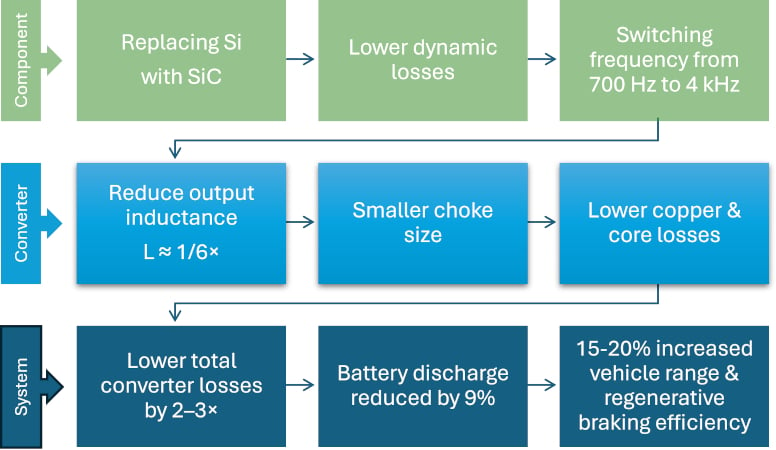
Figure 1. System-Level cause-and-effect chain achieved by replacing Si IGBT with SiC MOSFET modules based on [1]. Image used courtesy of Bodo’s Power Systems [PDF]
MMC STATCOM Application
Another representative application is a medium-voltage STATCOM based on a Modular Multilevel Converter (MMC) with delta-connected H-bridge submodules. Although MMCs operate at low switching frequencies (~300 Hz), SiC MOSFETs still deliver cost benefits compared with conventional Si IGBTs [2].
A ±18 MVAr STATCOM for a 12 kV grid consisting of 12 submodules per phase is used as a reference. Each submodule was analyzed using PSCAD simulations with electro-thermal models and datasheet-based device behavior in combination with application-oriented climate and operation profiles. Across all temperatures and loading conditions, SiC MOSFETs consistently exhibit lower losses compared to Si IGBTs, resulting in significantly lower annual energy losses of the overall system.
Based on the considered component prices [2], the additional initial investment in SiC modules pays back within 1-3.5 years, with favorable scenarios even in less than a year depending on the load profile and electricity prices [2]. The results demonstrate that even in low-frequency applications, SiC offers clear economic benefits over Si. A similar advantage of SiC over Si is observed in HVDC applications, where switching frequencies are also modest, underscoring the long-term relevance of SiC beyond high-frequency converters for high reliability applications.
Battery Energy Storage Systems
System-level benefits of SiC over Si can also be observed in large-scale PV and battery energy storage inverters, where switching frequencies remain modest [3]. SiC MOSFETs deliver higher efficiency due to their linear ohmic behavior, which results in lower conduction losses - especially at partial load - compared to the logarithmic forward characteristics of IGBTs.
The advantage becomes even more pronounced in energy storage applications, where losses occur twice during charge and discharge cycles. By reducing both switching and conduction losses, SiC-based inverters increase usable energy and improve round-trip efficiency, directly translating into lower operational costs and a faster return on investment of the SiC technology. These benefits are achieved alongside improved thermal robustness and reduced passive component requirements, reinforcing the relevance of SiC well beyond high-frequency power converters.
From System-Level Performance to Module Reliability
Despite the demonstrated system-level advantages of SiC, hesitation still remains, especially in applications where failure is not an option. Against this background, the following sections describe the Unifull™ module concept and the proven reliability-focused design measures that enable these application-level benefits in practice.
Unifull Concept and Lineup
The Unifull product family uses Mitsubishi Electric’s latest high-voltage SiC technology in the standardized LV100 package, delivering a symmetrical, low-inductance layout that is optimized for fast switching operation [2]. The lineup as shown in Figure 2 consists of 3.3 kV half-bridge modules from 200 A to 800 A rating as well as two 800 A chopper variants for greater design flexibility.
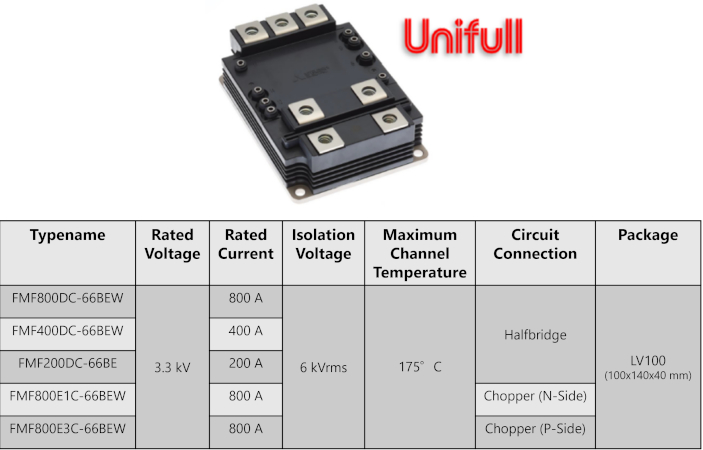
Figure 2. Unifull™ Product Family. Image used courtesy of Bodo’s Power Systems [PDF]
A key feature is the integration of an antiparallel Schottky Barrier Diode (SBD) into the MOSFET structure, which, on the one hand, prevents body diode conduction, eliminating the risk of bipolar degradation, and, on the other hand, additionally reduces conduction losses in synchronous rectification mode and avoids reverse recovery losses by the inherent bipolar body diode. Optimized chip design and higher switching speeds further enhance the dynamic performance of the module, while AlN substrates and a low thermal resistance solder further improve the thermal performance for high-performance applications. Previous publications already show that the 400 A-rated FMF400DC-66BEW can outperform the previous generation 750 A-rated SiC module generation, providing a more efficient and cost-effective improvement by Unifull™ modules [4].
Highest Reliability and Robustness in Unifull Modules
One major reliability risk in SiC MOSFETs is bipolar degradation by bipolar conduction through the body diode. While the conventional countermeasure to add a separate antiparallel Schottky Barrier Diode (SBD) suppresses this mechanism, it increases module area and cost. Unifull™ modules overcome this limitation by integrating the SBD directly into the MOSFET structure, ensuring bipolar-degradation-free operation. Although SBD embedded MOSFETs are typically associated with a reduced I²t capability, this drawback has already been addressed and compensated by Mitsubishi Electric’s proprietary BMA technology [5].
Beyond device-level robustness, extensive reliability testing has been conducted. AC and DC power cycling tests shown in Figure 3 (a) and (b) confirm the stable long-term behavior of the threshold voltage Vth. DC cycling shows no significant impact for both positive and negative gate bias, while AC cycling, based on JEP195, only results in a small Vth increase. When extrapolated to the target cycle counts relevant for automotive and photovoltaic applications, the projected Vth shift remains well below 1 V over the device's expected lifetime, demonstrating robust long-term operational stability. As Vth drift directly correlates with gate oxide quality, these results confirm a highly reliable gate oxide compared to other manufacturers. In addition, HV-H3TRB testing per ECPE guideline shown in Figure 3 (c) verifies excellent resistance to humidity-induced degradation [6] [7].
For mechanical reliability under long service lifetimes, Unifull modules employ an AlSiC baseplate, providing proven outstanding thermal cycling performance.
Power Cycling Lifetime Improvement by the usage of advanced materials
Although SiC power modules provide numerous performance and efficiency benefits, the power cycling capability is known to be lower compared to conventional Si modules due to the difference in material properties and thus, stress, which finally may limit the long-term usage of these modules.
Power cycling lifetime in modules is strongly influenced by the wirebonding technology. While alternative approaches, such as copper bonding or planar wiring to solder, can improve the power cycling lifetime, these solutions often increase cost and complexity and are less suitable for mass production. To achieve a reasonable tradeoff, Mitsubishi Electric focused on improving conventional aluminum wire bonding through the development of advanced Al alloy bond wires [8].
Al alloy wires offer significant flexibility, as their mechanical properties can be adjusted based on alloy composition and heat treatment, while they can still be processed using existing Al wire bonding equipment. This enables a cost-effective improvement of cycling lifetime. All investigated Al alloy samples indicate an improvement in the cycling lifetime, which has been observed to increase with finer grain size of the Al alloy wire, being the primary influencing factor. It is well established that smaller grain sizes lead to higher yield stress, as described by the Hall-Petch relationship:
\[\sigma_{y}=\sigma_{0}+k/\sqrt{d}\]
where σy is the yield stress, σ0 and k are material constants, and d is the grain size.
Grain refinement increases yield stress by having more grain boundaries per unit volume, so that the overall dislocation movement is hindered. The higher yield stress leads to a larger proportion of elastic deformation and a reduced contribution of plastic deformation during power cycling, directly lowering the fatigue damage accumulation and extending the power cycling lifetime.
When enhancing the bond wire material, it is also important to investigate the chip surface metallization, as it can become the new bottleneck in the power cycling lifetime when the crack propagation of the chip surface becomes an earlier issue. This is particularly dangerous as it may lead to chip damage and needs to be avoided. Therefore, different metallizations have been investigated in Figure 4 (a)-(c), and the solution is to use a hard metallization layer mainly composed of Ni to suppress crack propagation into the chip surface to ensure stable long-term behavior while applying Al alloy for superior power cycling performance.
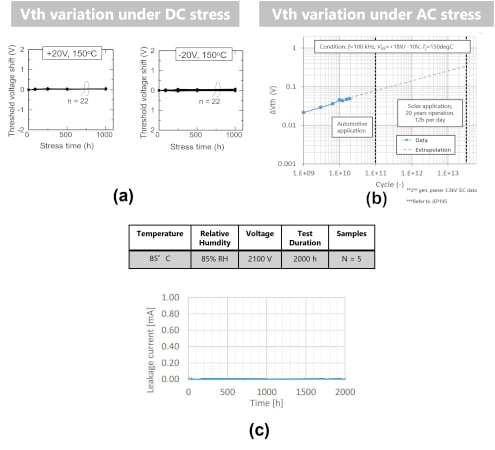
Figure 3. (a) DC-Cycling Test, (b) AC-Cycling Test, (c) HV-H3TRB test based on ECPE guideline in [7]. Image used courtesy of Bodo’s Power Systems [PDF]
The selected Al alloy wire with fine grain size was subsequently implemented in a prototype 3.3 kV SiC power module with an Ag sintered die attach to investigate its actual power cycling capability. The tests were performed at ∆Tvj=90 K, ton=5 s, and Tvjmax=150°C with diode current flow, and the failure criterion was defined at 5% increase in VSD. The result is shown in Figure 4 (d), being a five times cycling lifetime improvement compared to conventional Al wire modules [8]. These results confirm that the combination of optimized Al alloy wire bonding and compatible chip metallization provides a practical and highly effective solution for enhancing power cycling reliability in SiC modules.
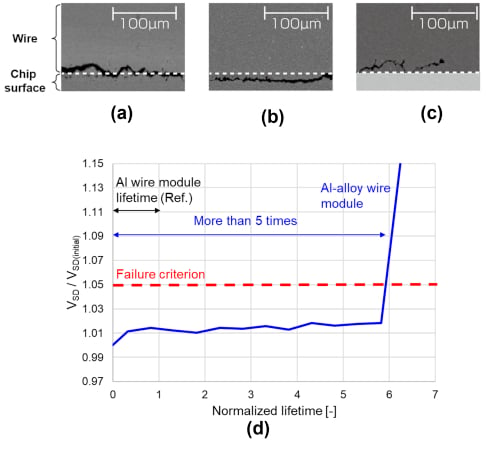
Figure 4. (a): Al wire + Al Surface, (b): Al-Alloy wire + Al Surface, (c): Al-Alloy wire + Hard Surface Metallization, (d): Power Cycling Test Result of Al-Alloy Wire Sample. Lifetime data is normalized by Al wire reference sample. Image used courtesy of Bodo’s Power Systems [PDF]
Conclusion
The future of electrification extends far beyond only railway applications but into all critical designs where not only high performance but also long-term reliability are key requirements. Mitsubishi Electric’s latest Unifull™ SiC modules have been developed to address these challenges through a combination of robustness in design, usage of advanced materials and reliability validation through various tests.
References
[1] E. Szwal, M. Glinka, A. März, M. Glinka and A. Nagel, “EnergySaving operation of Battery Rail Vehicles using SiC,” in ECCE Europe, Birmingham, 2025.
[2] C. Ö. Gerçek and R. Aggarwal, “Cost Comparison between SiC MOSFET and Si IGBT in use case of a MMC based delta STATCOM,” in ECCE Europe, Darmstadt, 2024.
[3] A. Tügel, “The Switch from IGBTs: How SiC MOSFETs Represents the Next Level of Performance for Large-Scale Power Conversion Systems,” SMA Solar Technology AG, 2025.
[4] N. Soltau, D. He, R. Tsuda and S. Yamamoto, “How a Unifull SiC Power Module Reduces Carbin Emissions in the Transportation Sector,” Bodo’s Power Systems, pp. 16-21, 2024.
[5] A. Iijima, K. Kawahara, K. Sugawara, S. Hino, K. Fujiyoshi, Y. Oritsuki, Takeshi, T. Takahashi, Y. Kagawa, Y. Hironaka and K. Nishikawa, “Improving Surge Current Capability of SBDEmbedded SiC-MOSFETs in Parallel Connection by Applying Bipolar Mode Activation Cells,” in 35st International Symposium on Power Semiconductor Devices & ICs, Hong Kong, 2023.
[6] Y. Hironaka, S. Okimoto, M. Matsuo, S. Saito, K. Hatori and N. Soltau, “3.3kV SBD-Embedded SiC-MOSFET Module for Traction Use,” in PCIM Europe, Nuremberg, 2024.
[7] E. W. Group, “PSRRA 01 - Railway Applications HV-H3TRB tests for Power,” ECPE European Center for Power Electronics e.V., Nuremberg, 2024.
[8] D. Yosho, Y. Hironaka, Y. Sakai, T. Uraji, M. Taya, S. Uegaki, Y. Sato, R. Hanada, S. Idaka, N. Soltau and K. Hatori, “Investigation of Power Cycling Lifetime: Extension from Si to SiC and Enhancement of SiC Module Lifetime by Advanced Materials,” in ECCE Europe, Birmingham, 2025.
This article originally appeared in Bodo’s Power Systems [PDF] magazine and is co-authored by D. He, V. Tolstopyatov, Mitsubishi Electric Europe B.V., Germany, and D. Yosho, Mitsubishi Electric Corporation, Japan
Related Content