Facebook
 Google
 GitHub
 Linkedin
Nuclear Redux: The Complexities of Recommissioning
Should Three Mile Island and other closed nuclear reactors start operating again? Part 1 of this two-part series examines the possible benefits.
In 1979, a partial meltdown occurred in the Three Mile Island nuclear power plant in the Unit 2 reactor—the most serious nuclear incident at a U.S. commercial power plant. Unit 2 was taken offline, but Unit 1 continued to function until 2019, when owner Exelon shut it down for financial reasons. The plant is slated for decommissioning in 2079.
Can aging nuclear power plants operate safely? Video used courtesy of the Department of Energy
With growing energy demand and pressure mounting for cleaner energy sources, some are considering restarting Three Mile Island and other permanently closed nuclear plants worldwide (210 total).
While nuclear recommissioning isn’t easy, it could be beneficial.
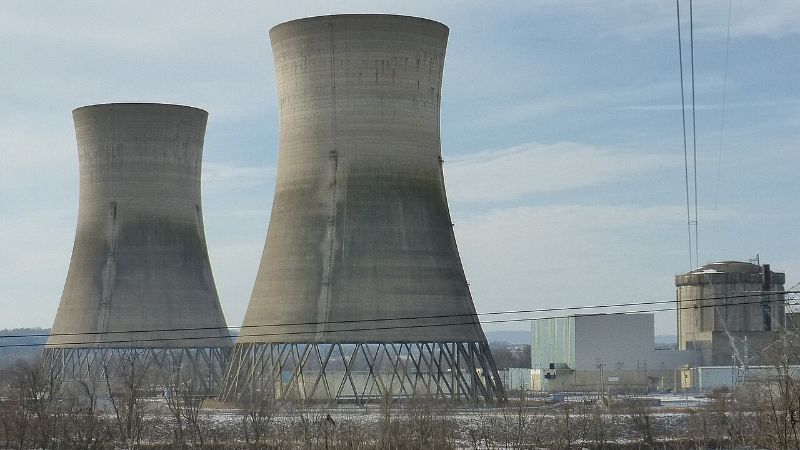
Three Mile Island, closed since 1979. Image used courtesy of Wikimedia Commons
Nuclear Context
Currently, about 440 nuclear reactors operate worldwide across 32 countries. The United States has 92 operational nuclear reactors. Nuclear power generation was first commercialized in the 1950s. About 19 percent of electricity is generated by U.S. nuclear power plants today.
Nuclear power is considered a clean energy production form since it produces no climate-altering carbon dioxide (CO2). However, the fission of uranium or plutonium fuel results in nuclear waste products with high levels of radioactivity.
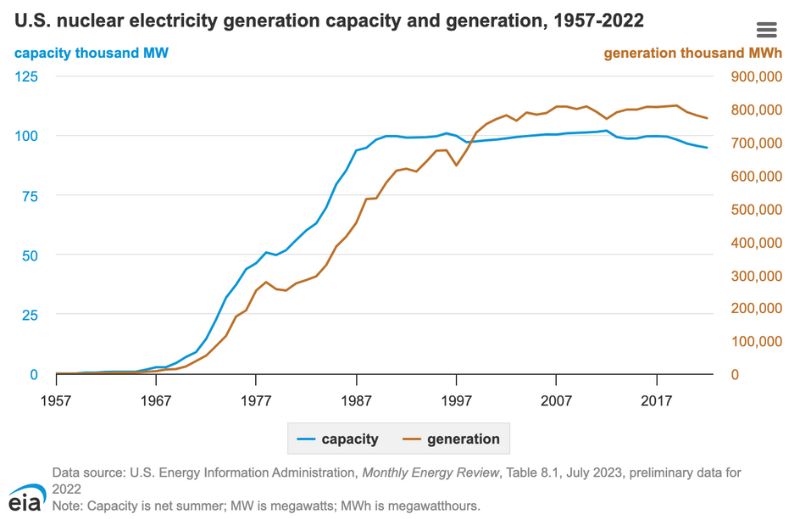
Growth of nuclear power. Image used courtesy of Energy Information Administration
Nuclear energy is not as cheap as it appears. In 1954, Lewis Strauss, once the United States Atomic Energy Commission chairman, told the National Association of Science Writers that nuclear power would be "too cheap to meter." Strauss envisioned a future in which advancements in nuclear technology would make electricity so inexpensive that it would not be worth metering.
However, this prediction has not materialized due to the high costs associated with nuclear power plant construction, operation, and decommissioning. What’s more, the huge amounts of natural gas, a CO2-producing fossil fuel available through fracking, are cheaper in producing electricity, even at the cost of vastly higher CO2 emissions.
More than 20 nuclear reactors in the U.S. have been shut down, including six since 2013. An additional eight reactors are scheduled for retirement by 2025. While age is a factor (the average age of a U.S. nuclear reactor is 42 years), it is not the primary reason for shutdowns. Many reactors can operate safely and efficiently well beyond their initial 40-year licenses. The Nuclear Regulatory Commission (NRC) has granted 20-year license extensions to many plants, allowing them to operate for up to 60 years, with the potential for further extensions up to 80 years. Older reactors often work better now than when they first opened due to ongoing maintenance, upgrades, and operational experience. When reactors in the United States close today, they typically do so because of unfavorable economics rather than age-related issues.
Restarting a Nuclear Plant
To date, no power plants in the U.S. have been restarted. However, there are ongoing efforts to revive the Palisades Nuclear Power Plant in Michigan. Palisades was shut down in May 2022 after 50 years of operation. Holtec International, the plant’s new owner, is working to restart the plant with support from the U.S. Department of Energy (DOE) and the state of Michigan. The DOE has provided a conditional loan commitment of $1.52 billion to support the restart, and the state of Michigan has allocated $300 million in funding.
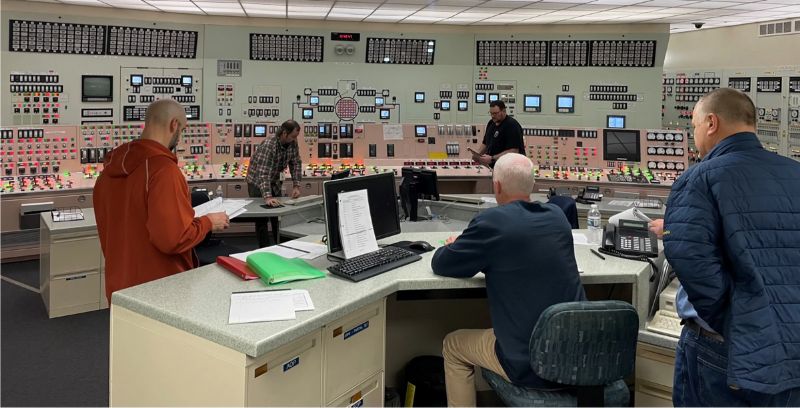
Palisades engineers prepare for restarting the nuclear facility. Image used courtesy of Holtec
The restart involves overcoming technical, administrative, and regulatory hurdles, including maintenance, upgrades, and obtaining necessary regulatory NRC approvals.
Benefits of Restarting Nuclear Plants
Restarting nuclear power plants in the U.S. offers several significant benefits.
- Reduced greenhouse gas emissions: Nuclear power plants make electricity without emitting carbon dioxide or other greenhouse gases during operation. Restarting closed plants can prevent yearly emissions equivalent to nearly one million gas-powered cars.
- Clean baseload power: Nuclear energy provides reliable, continuous baseload power that complements intermittent renewable sources like wind and solar. This helps maintain grid stability while reducing reliance on fossil fuels.
- Immediate impact on emissions reduction: Restarting existing nuclear plants is a faster way to increase clean energy capacity than building new power plants, allowing for more rapid progress toward emissions reduction.
- Preservation of existing clean energy infrastructure: By restarting rather than decommissioning plants, valuable clean energy infrastructure is maintained, avoiding the need for new construction and its associated environmental impacts.
- Support for renewable energy integration: Nuclear power's consistent output can help balance the grid as more variable renewable sources are added, facilitating a smoother transition to a low-carbon energy mix.
- Reduced dependence on fossil fuels: In Japan, restarting nuclear reactors has led to decreased imports of liquefied natural gas (LNG), reducing reliance on fossil fuels for electricity generation.
- Long-term clean energy production: Nuclear plants can provide a stable source of carbon-free electricity for decades.
- Cheaper than building new: Restarting shutdown plants is generally much less expensive than creating new ones, though exact costs vary depending on the plant's condition and how long it has been inactive. The costs for building new nuclear plants in the U.S. range from $8,475 to $13,925 per kW. The recently completed Plant Vogtle Unit 3 in Georgia cost approximately $15 billion for 1117 MW capacity, equating to about $13,400 per kilowatt. Total costs for a new 1-gigawatt reactor in the U.S. could be around $5.4 billion to $13.9 billion, excluding financing costs.
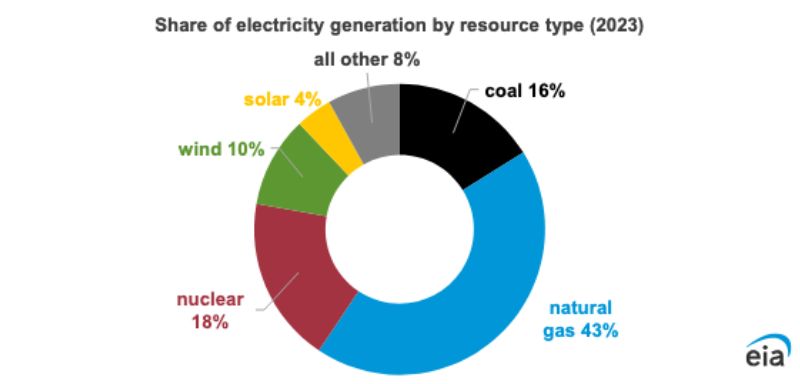
Fossil fuels still dominate energy production. Image used courtesy of Energy Information Administration
Not So Fast
Restarting a nuclear power plant carries challenges and risks. Part 2 will examine these difficulties and revisit restoring operations to Three Mile Island.