Facebook
 Google
 GitHub
 Linkedin
From Efficiency Gains to Faster Designs: Highlights from PCIM
PCIM 2024 displayed innovations to advance the power electronics industry, and EEPower was there. We share the highlights in Part 2 of our onsite coverage.
Power electronics leaders showcased their newest products and innovations at the 2024 Power Conversion and Intelligent Motion (PCIM) conference in Nuremberg, Germany. Advancements ranged from semiconductors to FETS, ICs, and equipment using the latest wide-bandgap technologies.
EEPower was on site to examine the highlights.
_meeting_with_Rhode__Schwartz_at_PCIM_2024.jpg)
EEPower’s Dale Wilson (right) meeting with Rhode & Schwartz at PCIM 2024. Image used courtesy of EEPower
Power Integrations: High-Voltage IC
Power Integrations introduced a high-voltage integrated half-bridge (IHB) motor-driver IC family targeting motor applications up to 746 W, or 1 horsepower (HP). The BridgeSwitch2 ICs feature high- and low-side drivers and advanced FREDFETs (fast recovery epitaxial diode field-effect transistors) with integrated lossless current sensing, delivering up to 99 percent inverter efficiency. The ICs cover applications ranging from 30 W to 1 HP, including heat exchanger fans, refrigerator compressors, fluid and circulation pumps, gas boiler combustion fans, washing machine drums, and kitchen blenders and mixers.
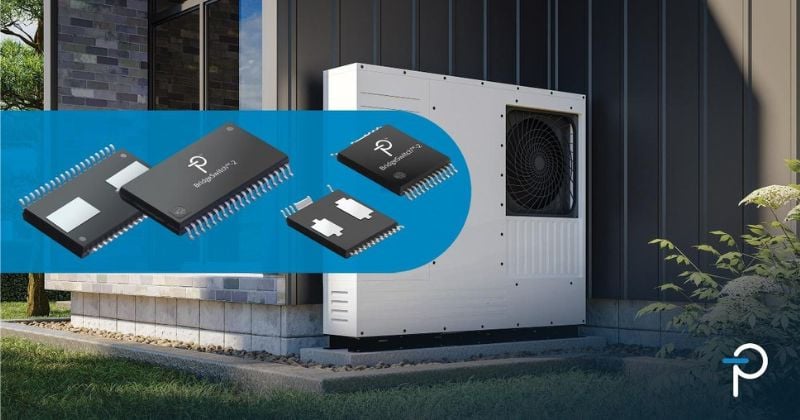
BridgeSwitch2. Image used courtesy of Power Integrations
The IHB architecture reduces component count by 50 percent and PCB space by 30 percent. The design eliminates shunt resistors (improving efficiency) and associated signal conditioning circuits. Real-time reporting of phase current (IPH) information ensures precise motor control. BridgeSwitch2 ICs also feature DC overvoltage protection and current limits to protect the system and its inverter and do not need to rely on system software.
Power Integrations’ MotorXpert software backs the BridgeSwitch2. MotorXpert features single-phase trapezoidal control and three-phase sensorless field-oriented control modules. This software suite supports the accelerated development of inverters and motor systems.
Cissoid: Onboard Inverter Reference Designs
Cissoid, the Belgium-based leader in power semiconductor solutions, launched the compact EVK-PLA1060 series of On-Board Inverter Reference Designs. This innovative technology significantly reduces time to market for R&D engineers in the rapidly evolving e-mobility sector, where speed to market can determine commercial success or failure.
While existing bench-top Inverter Reference Designs are suitable for laboratory and bench-based motor testing, the On-Board Inverter Reference Design is nearly production-ready. This complete solution is designed for integration into vehicles undergoing in-vehicle and field testing, drastically reducing the time required for system development.
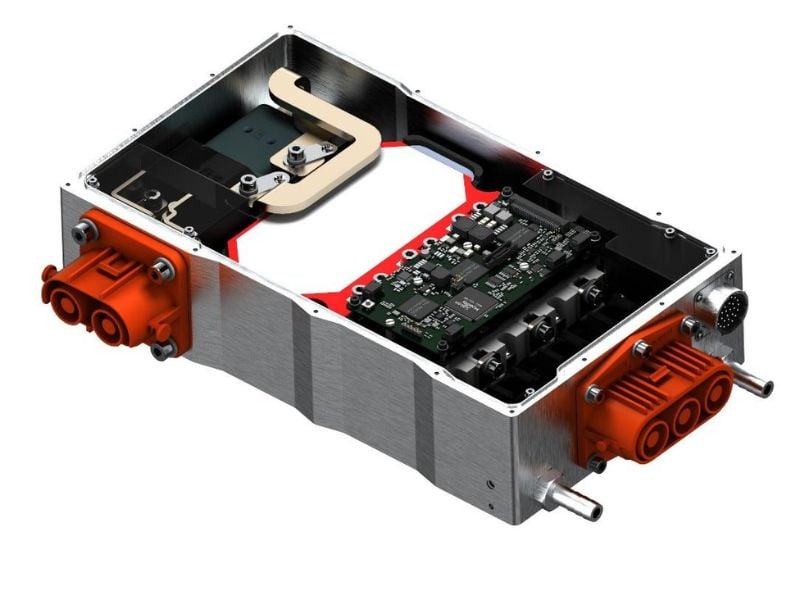
On-Board Inverter Reference Design. Image used courtesy of Cissoid
The EVK-PLA1060 On-Board Inverter Reference Design features compact, lightweight, and robust aluminum housing for easy vehicle mounting with minimal design effort. The motor control software also allows user customization and configuration, further simplifying the process.
Powered by Silicon Mobility’s ultra-fast OLEA T222 FPCU (field programmable control unit), dedicated to e-motor control, this application-specific processor accelerates response times to critical events, offloads processor cores, and enhances functional safety.
As a highly modular solution, the EVK-PLA1060 On-Board Inverter Reference Design is configurable and customizable to meet specific needs. It includes a power module, control board, low equivalent series inductance (ESL), DC-link capacitor, compact EMC (electro-magnetic compatibility) filter, and current sensors.
Rhode & Schwartz: Isolated Probing System
Rhode & Schwarz (R&S) provided a sneak preview of its next-generation R&S RT-ZISO isolated probing system. The system promises to set new standards in isolated probing technology and deliver unmatched accuracy, sensitivity, dynamic range, and bandwidth for developing and testing next-generation wide bandgap (WBG) power designs with SiC and GaN.
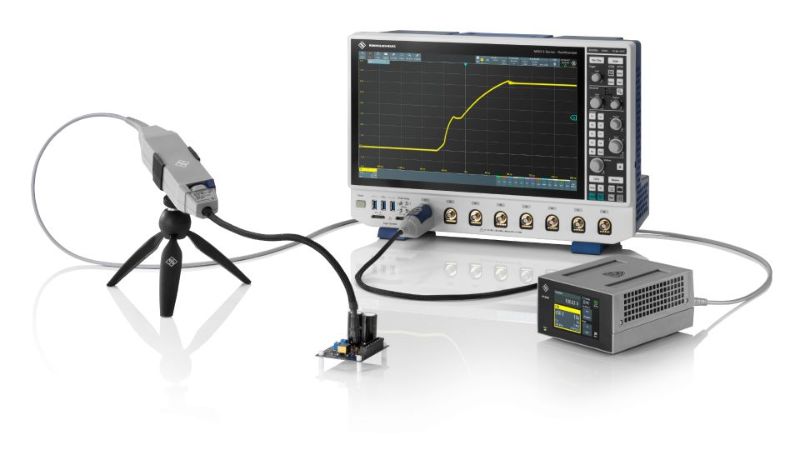
RT-Z-ZISO isolated probing system. Image used courtesy of Rhode & Schwartz
The R&S RT-ZISO Isolated Probing System is engineered to address challenges in high-voltage and fast-switching environments. Its power-over-fiber architecture provides galvanic isolation for the device under test, ensuring the highest common mode rejection ratio up to 1 GHz. The system compensates for thermal drifts and gain errors, achieving superior signal fidelity without compromise.
Novosense: Automotive, Industrial Solutions
China-based Novosense Microelectronics showcased its latest sensor, signal chain, and power management ICs for simplified automotive design and industrial control.
Highlighted was the NSUC1610 motor driver system-on-chip (SoC) solution. The NSUC1610 integrates a Cortex M3 processor, MOSFET, and DAC into a single chip, simplifying peripheral circuits and reducing system costs. It is equipped with 4-wire LIN bus support. It has a dual-channel temperature sensor, which can be used for power-side over temperature shutdown and low-voltage-side temperature detection inside the chip, allowing it to meet the demand for high integration levels in SoC development.
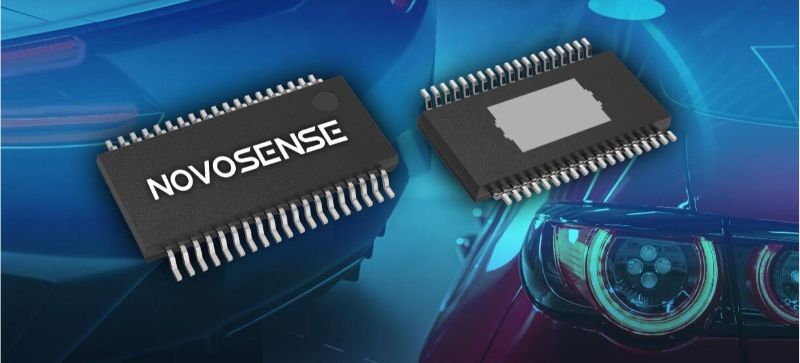
16/24 IC for automotive LED applications. Image used courtesy of Novosense
Novosense also demonstrated a 16/24-channel driver IC for automotive LED applications. Compact and highly integrated, the NSL21916/24 driver is an automotive-qualified device with up to 16/24 channels and flexible dimming and control capabilities. It meets the demand for high-channel-count linear LED drivers from new and emerging automotive lighting systems.
WeEn Semiconductors: SiC MOSFETs, SBDs, IGBTs
WeEn Semiconductors, based in Shanghai, China, had several product introductions at PCIM 2024.
The company launched a range of SiC MOSFETs and SiC Schottky barrier diodes (SBDs) in TSPAK packages suitable for electric vehicle (EV) charging, onboard chargers, solar inverters, and high-power density power supply unit (PSU) applications. These MOSFETs come in 650 V, 750 V, 1200 V, and 1700 V variants, with resistances ranging from 20mΩ to 150mΩ.
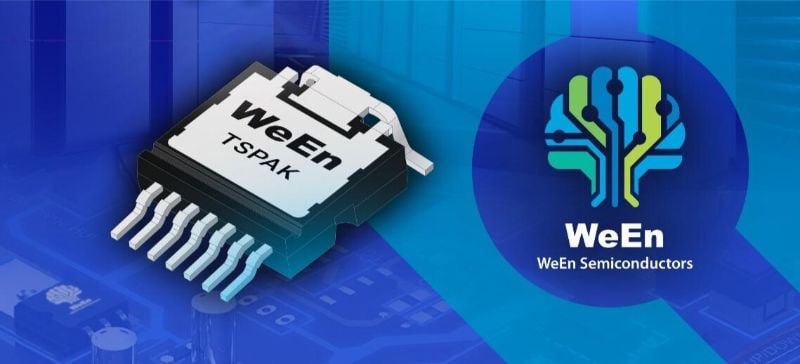
MOSFETs and SBDs. Image used courtesy of WeEn
The company also showcased a range of integrated SiC power modules. Available in a variety of configurations maximizing design flexibility, including half-bridge, four-pack, six-pack, dual booster, and NPC 3L topologies, the SiC modules are ideal for applications such as EV charging, energy storage systems, solar inverters, motor drives, industrial PSUs and test instrumentation.
WeEn’s thyristor/diode modules were also on display. Suitable for mainstream industrial applications like UPS, inverters, and soft starters, they have VDRM up to 1600 V and IT(RMS) up to 250 A. Using planar chip technology and state-of-the-art module manufacturing capability, the modules can be configured in half-bridge, parallel, antiparallel, or other customized designs.
In addition, WeEn's IGBTs feature low leakage currents and excellent conduction and switching performance at both high and low temperatures. These IGBTs have been tested to safely withstand up to 175°C junction temperatures. They are customized for specific applications, optimizing switching behaviors, conduction losses, short circuit capabilities, environmental durability, and freewheeling diode characteristics. Using advanced fine trench gate field-stop technology, the IGBTs ensure a uniform electric field, support higher breakdown voltages, and offer improved dynamic control. Available in 1200 V and 650 V variants, they come in bare dies, discrete components, and PIMs. They provide the best balance between conduction and switching losses and enhanced EMI design, maximizing efficiency in mid- to high-frequency power conversion applications.
Infineon Technologies AG: Power System Modeling
Infineon Technologies AG introduced an innovative solution addressing the increasing challenges data centers and telecom infrastructures face due to system power supply failures. Power system reliability modeling addresses the urgent need for seamless operations and mitigation of financial impact. Power outages account for 39 percent of downtimes, costing an average of $687,700 per downtime. Infineon’s power monitoring solution allows organizations to enhance operational resilience and reduce their carbon footprint while achieving substantial cost savings.

Power system modeling. Image used courtesy of Infineon
Power system reliability modeling uses an algorithm on a digital power controller, allowing software and hardware integration. The system enables real-time power supply health monitoring and lifetime estimation based on dynamic system operating parameters, a power supply system model, and a reliability prediction procedure. Targets for the solution include DC-DC converters, AC-DC rectifiers, and IBC modules utilized in data centers, artificial intelligence servers, GPUs, and telecom networks. The Infineon approach expands product capabilities and scope and allows customers to create more value while scaling their operations faster.
Infineon also expanded its next-generation OptiMOS 7 MOSFETs portfolio, improving on-state resistance, design robustness, and switching efficiency in automotive applications.
The MOSFETs are optimized for all current and future automotive 48 V applications, including electric power steering, braking systems, power switches in new zone architectures, battery management, e-fuse boxes, DC-DC converters, and BLDC drives in various 12 V and 48 V electrical system applications. Additionally, they are suitable for other transportation applications such as light electric vehicles, e2-wheelers, e-scooters, e-motorcycles, and commercial and agricultural vehicles.
Vishay Intertechnology: SiC MOSFETs
Vishay Intertechnology exhibited its broad portfolio of power management solutions to address trends in power electronics, including e-mobility, high-efficiency power conversion, energy storage, and grid management.
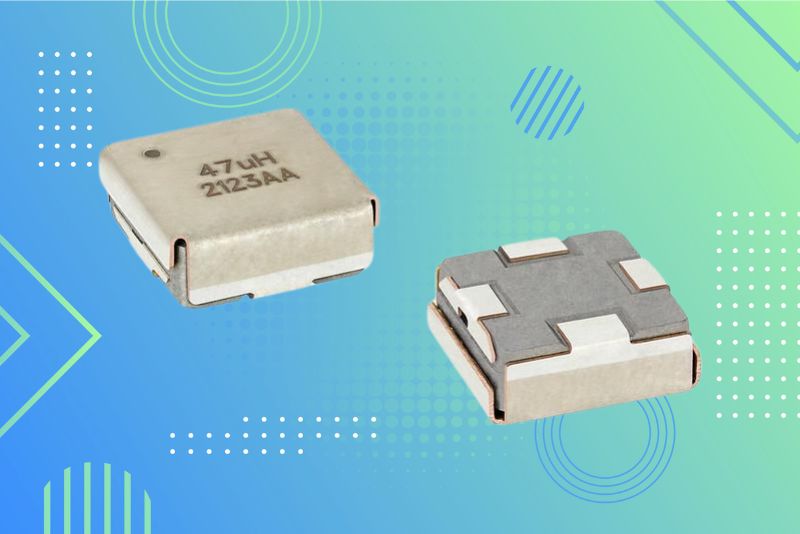
SiC MOSFETs. Image used courtesy of Vishay
Specifically, Vishay highlighted the company's newly released 1200 V MaxSiC series silicon carbide (SiC) MOSFETs. The device delivers on-resistances of 55 mΩ, 95 mΩ, and 280 mΩ in standard packages for industrial applications. Custom product solutions are also available. Vishay also provided information and details on its 650 V to 1700 V SiC MOSFETs with on-resistances ranging from 10 mΩ to 1 Ω.
The Vishay SiC platform is based on proprietary MOSFET technology enabled by the company's acquisition of MaxPower Semiconductor, Inc. The SiC platform will allow Vishay to address market demands in traction inverters, photovoltaic energy conversion and storage, onboard chargers, and charging station applications.