Facebook
 Google
 GitHub
 Linkedin
Briefs: Renewables and AI Data Centers Drive Tech Innovations
Sineng Electric, Onsemi, Crusoe, Redwood, FluxPoint Mitsubishi, Rohm, and Toshiba are planning for future energy needs.
Tech companies are responding to the need for solar energy, AI data centers, and secure supply chains by forming partnerships and securing access to essential components. Sineng Electric will use Onsemi’s hybrid power module in its 430 kW energy storage systems and solar inverters. Crusoe and Redwood Energy are teaming up to expand a solar + storage microgrid servicing an AI data center campus in Nevada.
Meanwhile, a Texas startup is building a uranium conversion plant to secure a domestic supply of nuclear fuel, while Mitsubishi Electric, Rohm, and Toshiba are joining talks to coordinate a secure semiconductor supply.
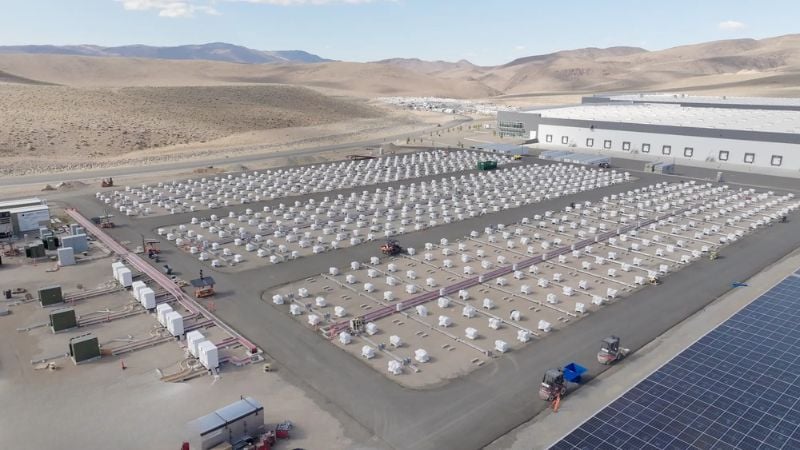
The Crusoe-Redwood solar + storage microgrid for AI data centers. Image used courtesy of Redwood Energy
Sineng Enhances Solar Inverters and ESS With Onsemi PIM
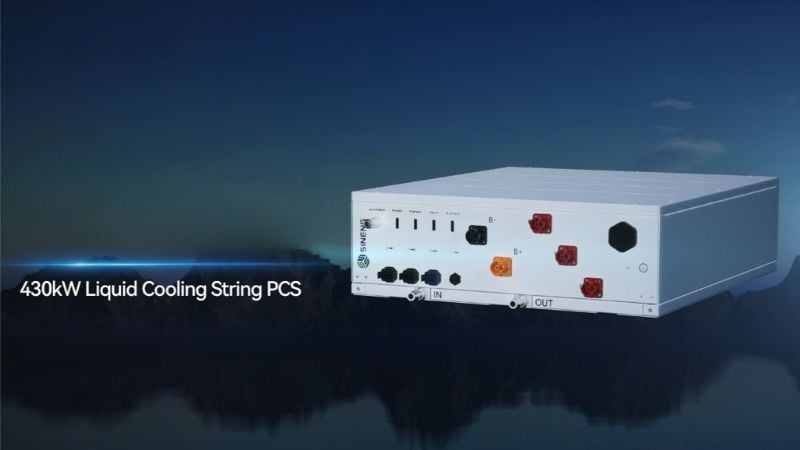
Onsemi’s hybrid power integrated module (PIM) will be implemented in Sineng Electric’s next-generation 430 kW liquid-cooled energy storage systems and its 320 kW grid-scale solar string inverter. Sineng aims to improve efficiency and performance in renewable energy applications.
The PIM includes onsemi’s FS7 insulated-gate bipolar transistor (IGBT) and EliteSic technology. The modules offer 32% higher power generation and 0.1% higher efficiency, while maintaining the same footprint as previous generations. Onsemi states that the PIM can increase a solar inverter’s power from 320 kW to 350 kW.
The PIM uses a high-density F5BP package. It can lower power dissipation by 8% and switching losses by 10%, while offering high power density. In benchmark testing, onsemi’s hybrid PIM outperformed similar power modules, achieving a 0.07% improvement in efficiency. It reduced losses by 225 W in a 320 kW solar inverter configuration.
 c
c
Sineng 430 kW string PCS. Image used courtesy of Sineng Electric
Sineng expects the hybrid PIM, when integrated in its 430 kW string ESS, will provide a 0.75% increase in round-trip efficiency and a 5% reduction in auxiliary power consumption.
Nevada Microgrid Expands With Second-Life EV Batteries
Crusoe Energy will use second-life electric vehicle batteries to expand North America’s largest renewable energy microgrid to power AI compute. The expansion will add four to 24 Crusoe Spark modular data centers, increasing compute capacity 7 times.
The data center campus opened in June 2026, powered by a microgrid of large-scale solar, storage, and Redwood’s repurposed EV batteries. The 12 MW/63 MWh microgrid reached 99.2% operational uptime, demonstrating that repurposed EV batteries can deliver reliable power for AI workloads.
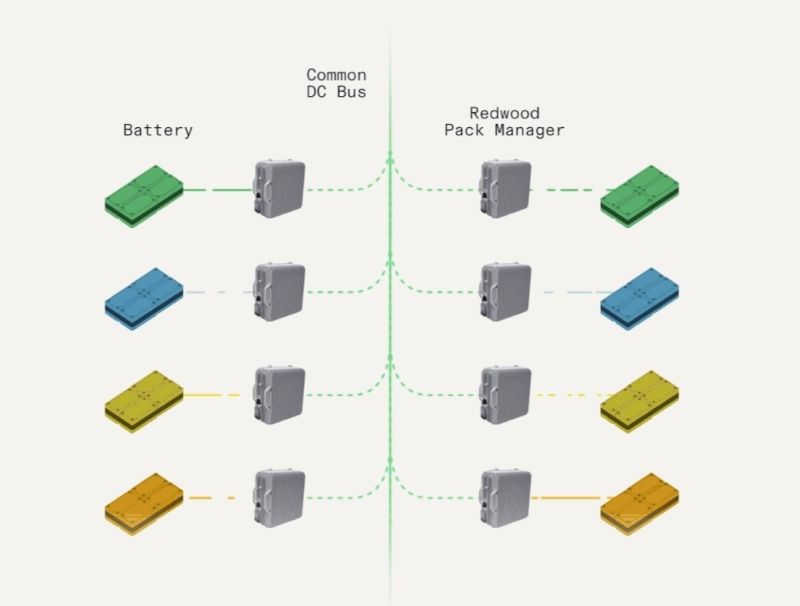
Redwood Energy’s Pack Manager. Image used courtesy of Redwood
The system uses Redwood Energy’s Pack Manage technology, which integrates the used EV batteries into large-scale energy storage.
Both Crusoe’s data centers and Redwood’s energy storage systems are modular for fast deployment. Crusoe aims to create an ‘AI factory’ model that can operate off-grid.
Texas Startup To Build the First U.S. Uranium Conversion Plant in 70 Years
The surge in AI data centers has sparked renewed interest in nuclear power, including conventional power plants and small modular reactors. FluxPoint Energy aims to meet the need for fuel by building the first U.S.-based uranium conversion plant in 70 years.
The plant will convert uranium oxide into uranium hexafluoride at its facility in Texas. So far, FluxPoint has secured the site and conducted market and technical feasibility studies. Front-end engineering is underway, and the company is reviewing federal regulatory guidelines.
FluxPoint has not revealed details of its proposed facility. However, the typical conversion process begins with yellowcake uranium, a concentrated powder version of the ore. After processing with fluorine, it becomes uranium hexafluoride, which is then changed into a gas. The product is cooled to a liquid and drained. It then settles into a solid state, which can be transported to enrichment facilities.
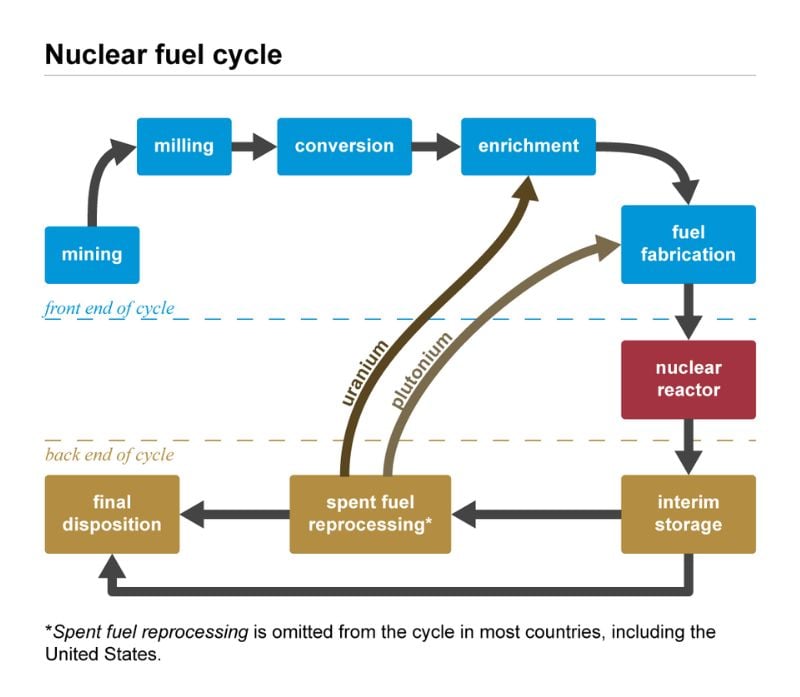
Uranium conversion is the first step in producing fuel-grade uranium. Image used courtesy of Energy Information Administration/The Radiation Science and Engineering Center at Pennsylvania State UniversityPennsylvania State University Radiation Science and Engineering Center
The U.S. has only one uranium conversion plant, Honeywell International in Metropolis, Illinois, but it is not active.
Mike Chilton, who has more than 30 years of experience in uranium processing and nuclear fuel, founded the company.
Mitsubishi, Rohm, and Toshiba in Talks To Integrate Semiconductor Businesses
Mitsubishi Electric, Rohm, and Toshiba Electronic Devices & Storage have agreed to a memorandum of understanding to begin discussions on integrating their semiconductor and power device businesses. Other participants include Japan Industrial Partners and TBJ Holdings, Inc.
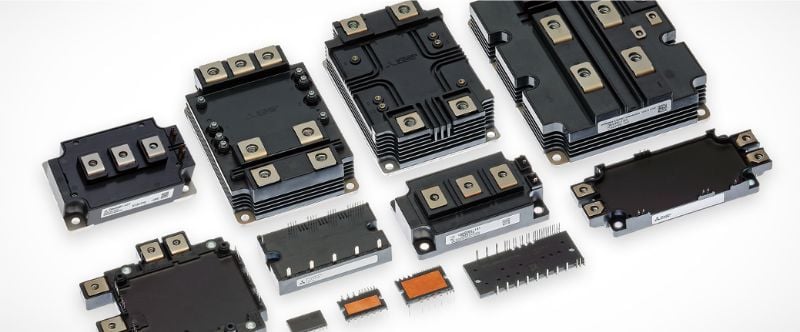
Mitsubishi power devices. Image used courtesy of Mitsubishi
The group proposes to combine efforts to reach a diversified market in the business and industrial sectors. Mitsubishi joined the discussions after the other four partners began negotiations in 2024. The idea began in December 2023, after Japan’s Ministry of Economy, Trade, and Industry recognized Mitsubishi and Toshiba’s plan to ensure a secure semiconductor supply amid global competition and uncertainty.
The companies will release details of the discussion and any decisions reached at a later date.