Facebook
 Google
 GitHub
 Linkedin
Briefs: Investing in BESS, Solid-State, EV Chargers, and Solar
Tesla, NetPower, QuantumScape, Honda, Nissan, and PowerBank are investing to advance battery, EV, and solar technologies.
From massive battery energy storage deals to advancements in solid-state lithium-metal technology and smart electric vehicle charging, recent developments signal a broad push toward sustainable infrastructure.
Tesla and NatPower are teaming up to expand battery energy storage in Europe, while Honda is collaborating with QuantumScape to develop next-generation solid-state batteries. Nissan is focusing on creating a smart EV, while PowerBank is constructing solar canopies for off-grid charging for the U.S. Army.
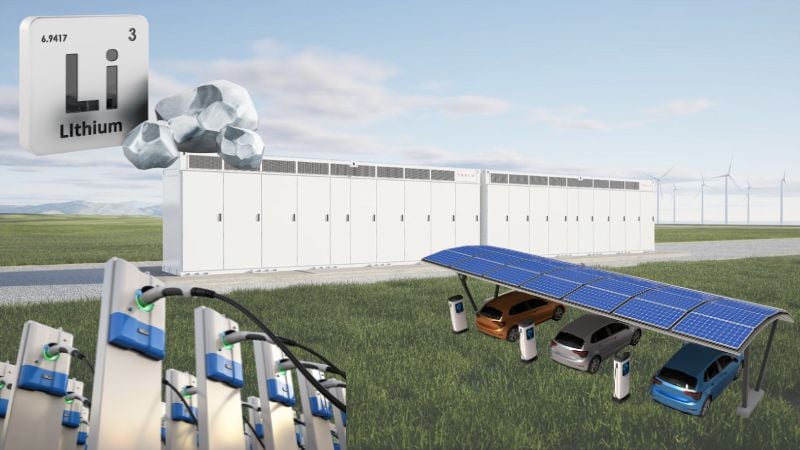
Battery storage, EV charging, and solar energy.
Tesla and NatPower Sign $5 Billion Deal for Battery Energy Storage
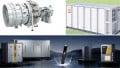
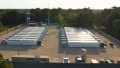
Tesla and NatPower are teaming up to develop and distribute 25 GWh of battery energy storage systems (BESS) in Italy and the U.K. The $4- to $5-billion deal is the first of five projects that will eventually exceed 100 GWh of total capacity.
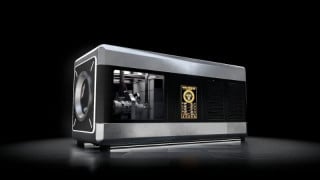
Under the collaboration, NatPower will own and operate the infrastructure facilities, while Tesla will provide its advanced Megapack technology and comprehensive engineering, procurement, and construction services. Tesla will also integrate financial solutions and energy trading optimization using its advanced Autobidder platform, offering valuable long-term revenue warranties for the assets.
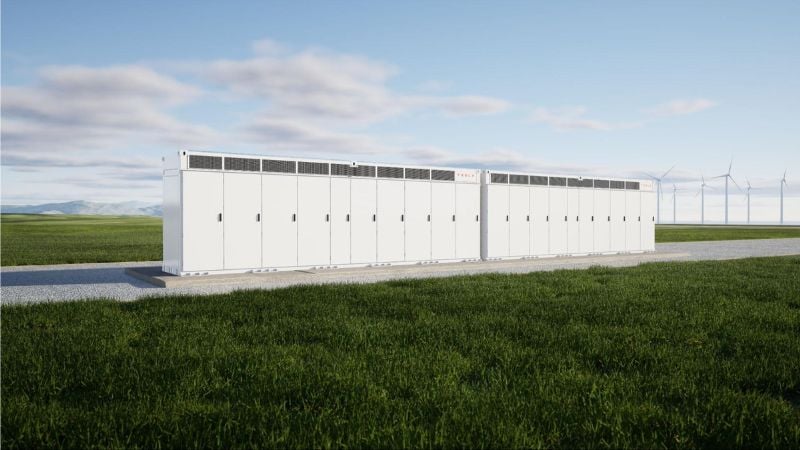
Tesla Megapack. Image used courtesy of Tesla
The multi-year agreement aims to resolve grid constraints, secure manufacturing capacity, and accelerate renewable energy integration. The BESS assets will provide grid stability as Europe’s power demand increases, due to electrification and AI data centers.
Honda and QuantumScape Team Up on Solid-State Battery Research Project
QuantumScape Corporation and Honda R&D Col, a subsidiary of Honda Motor Company, will collaborate to develop and manufacture next-generation solid-state lithium-metal battery technology. The multi-year joint research project will center on QuantumScape’s QSE-5 battery, which uses an anode-free technology that eliminates traditional graphite and silicon anodes found in conventional lithium-ion cells.
Instead, the QuantumScape cell is manufactured in a discharged state. On the cell's initial charge, pure lithium metal plates directly onto a unique, flexible solid ceramic separator that prevents dendrites, or dangerous electrical shorts. The innovation results in a lighter and smaller battery with an energy density of over 800 Wh/L. It also charges faster, from 10% to 80% in under 15 minutes.
Honda recently conducted an in-depth evaluation of QuantumScape’s solid-state technology.
Learn more about the solid-state lithium-ion battery. Video used courtesy of QuantumScape
While solid-state batteries were initially envisioned for electric vehicles, they could also be used in battery energy storage systems, which are in high demand to support power grids and provide backup for AI data centers and microgrids.
Like many automakers, Honda recently decided to slow its EV manufacturing and is exploring BESS options. Earlier this year, the company canceled development and release of planned EV models and suspended plans to build a $15 billion EV facility in Ontario. The company repurposed its Ohio EV plant to manufacture BESS units for AI data centers.
Nissan Leads £10 Million Project To Research EV Chargers
Nissan Technical Centre Europe will lead a three-year, £10 million research initiative called Project SUITE (Smart Use of Integrated Technology for EVs). The initiative creates a consortium of 10 business and academic partners to address how EVs are powered, charged, and experienced. The U.K. government’s DRIVE 35 program is backing the effort.
Nissan will lead the project to integrate advanced power electronics, AI technology, and renewable energy into an EV. The project aims to create a cohesive, smart mobility ecosystem using a British-built, all-electric Nissan Leaf EV.
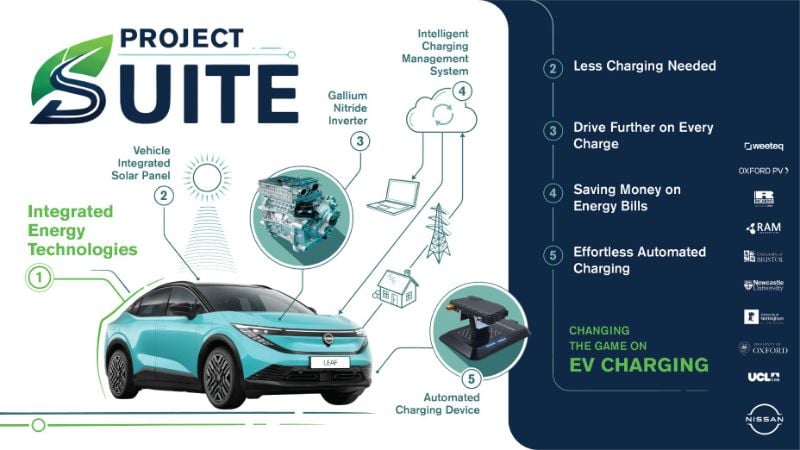
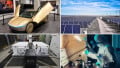
Project SUITE overview. Image used courtesy of Nissan
The project will include vehicle-integrated tandem solar panels, an intelligent charging management system, a bidirectional automated charging device, a high-efficiency traction inverter with gallium nitride, and advanced AI control systems.
Project SUITE participants are Nissan Technical Centre Europe, Weeteq, Oxford PV, Ricardo, RAM Innovations, the University of Bristol, Newcastle University, the University of Nottingham, the University of Oxford, and University College London.
PowerBank Secures $2.95 Million DOE, Army Contract for Solar Canopies
The U.S. government has awarded a $2.95 million contract to PowerBank and its U.S. subsidiary, Abundant Solar Power, Inc., to construct solar-based electric vehicle charging infrastructure for the U.S. Department of Defense, the Department of the Army, and the Armed Forces Reserve Center (AFRC) in New York.
The U.S. Army Corps of Engineers will administer the project to construct the solar canopy arrays and install EV charging stations at the AFRC. PowerBank will provide the engineering, procurement, and construction.
PowerBank’s solar canopies can be installed in parking lots, providing shade for the vehicles and off-grid energy generation for the charging stations.